Leçon 08 | 14 Janvier 1959
原文 · s6-08-0001
Le rêve d’Ella Sharpe (1)
埃拉·夏普之梦(1)
原文 · s6-08-0002
Puisque nous avons beaucoup parlé les dernières fois du désir, nous allons commencer d’aborder la question de l’interprétation. Le graphe doit nous servir à quelque chose. Ce que je vais vous dire aujourd’hui sur un exemple, à savoir sur l’interprétation d’un rêve, je veux l’introduire par quelques remarques sur ce qui résulte des indications que nous donne FREUD précisément sur l’interprétation du rêve.
前几次我们大量讨论了欲望,现在开始处理解释的问题。图总得对我们有所用处。今天,我会借一个例子、即一则梦的解释来说明;不过,我先用几点说明作引入,谈谈弗洛伊德就梦的解释所给出的指示会带来什么结果。
原文 · s6-08-0003
Voici en effet à peu près le sens de la remarque de FREUD que je vise actuellement, c’est dans un chapitre où il s’intéresse au sentiment intellectuel regardant le rêve. Par exemple au moment où le sujet rapporte un rêve, il a le sentiment qu’il y manque quelque chose qu’il a oublié, ou que quelque chose est ambigu, douteux, incertain.
我眼下所针对的弗洛伊德意见,大意如下。它出现在一章中,弗洛伊德在那里关注主体面对梦时的理智感受。例如,主体讲述一则梦时,感觉梦里少了某种自己已经忘记的东西,或者感觉某处暧昧、可疑、不确定。
原文 · s6-08-0004
Dans tous ces cas, nous dit FREUD, ce qui est dénoncé par le sujet à propos du rêve, concernant son incertitude, sa mise en doute, son ambiguïté…
弗洛伊德告诉我们,在所有这些情形里,主体针对梦所指出的不确定、怀疑与暧昧……
原文 · s6-08-0005
à savoir : « c’est ou ceci ou cela… », « je ne me souviens plus… », « je ne peux plus dire… »
原文 · s6-08-0006
…même son degré de réalité, c’est-à-dire le degré de réalité avec lequel il a été vu, soit que ce fut quelque chose qui s’affirme dans le rêve avec un tel degré de réalité que le sujet le remarque, ou au contraire que ce fut un rêve [abstrait], tout ceci nous dit FREUD, dans tous ces cas, doit être pris pour énonçant ce que FREUD appelle « une des pensées latentes du rêve ». Ce qui en somme est dit par le sujet en note marginale concernant le texte du rêve, à savoir tous les accents de tonalité, ce qui dans une musique s’accompagne d’annotations comme allegro, crescendo, decrescendo, tout cela fait partie du texte du rêve.
……甚至梦的“现实程度”,也就是梦被看见时所带有的现实程度——有时某件事在梦中以如此强的现实感得到肯定,以至于主体特别注意;相反,也可能是一则〔抽象的〕梦——弗洛伊德说,在所有这些情形里,都必须把它们当作在陈述他所谓“梦的一项潜在思想”。“主体围绕梦的文本以旁注形式所说的一切”,包括全部语调重音——就像乐谱所附的 allegro(快板)、crescendo(渐强)、decrescendo(渐弱)等标注——全都属于梦的文本。
原文 · s6-08-0007
Je ne pense pas que pour le plus grand nombre d’entre vous que je suppose avoir déjà pris connaissance de la Traumdeutung, de la technique, ceci soit nouveau. C’est là quelque chose de vraiment fondamental pour ce qui est de l’interprétation d’un rêve. Je ne fais donc que le rappeler car je n’ai pas le temps d’en donner des exemples qui sont dans FREUD, et je vous renvoie au texte de la Traumdeutung. Vous verrez l’usage que fait FREUD de ce rappel essentiel. Il interprète le rêve en intégrant le sentiment de doute, par exemple qu’il y a dans ce rêve au moment où le sujet le raconte, comme un des éléments du rêve sans lequel le rêve ne saurait être interprété.
我假定你们中多数人已经了解《梦的解析》和这项技术,所以这并不新鲜。它确实是解释梦的一项根本原则。我这里只作提醒,因为没有时间讲弗洛伊德给出的“例子”;请你们回查《梦的解析》正文。你们会看到弗洛伊德怎样运用这个关键提醒。例如,他把主体讲梦时所带的怀疑感作为梦的一个要素纳入解释;没有它,梦就无法解释。
原文 · s6-08-0008
Nous partons donc de l’interprétation freudienne, et nous nous posons la question de savoir ce que ceci comporte d’implication. Il ne suffit pas d’accepter ce fait, ou cette règle de conduite, comme devant être reçue religieusement comme l’ont fait bien des disciples de FREUD, sans chercher à voir plus loin, faisant confiance à l’inconscient en quelque sorte. Qu’est-ce que cela implique que FREUD nous dise, ce n’est pas seulement la tension de votre inconscient qui est là au moment où votre rappel du rêve se dérobe, ou au contraire se met sous une certaine rubrique, sous un certain accent. Il dit : « Ceci fait partie des pensées latentes du rêve lui-même… ». C’est donc ici que, ce que nous sommes convenus d’appeler le graphe nous permet de préciser, d’articuler d’une façon plus évidente, plus certaine, ce dont il s’agit quand FREUD nous donne une telle règle de conduite dans l’interprétation du rêve.
因此,我们从弗洛伊德式解释出发,追问它包含什么。不能只是像弗洛伊德的许多门徒那样,把这个事实或操作规则当作一项必须虔诚接受的东西,不再向前看,仿佛信任无意识就够了。弗洛伊德告诉我们的并不只是:你回忆梦时,记忆会“逃开”或反而归入某个标题、带上某种重音,这是无意识的“张力”。他说:“这属于梦本身的潜在思想。”正是在这里,我们约定称作“图”的东西,使我们可以更清楚、更确定地指明并表述:弗洛伊德给出这样一条梦的解释规则时,问题究竟何在。
原文 · s6-08-0009
Voici en effet ce que nous pouvons dire. Que faisons-nous quand nous communiquons un rêve, que ce soit dans ou hors l’analyse ? On n’a pas attendu l’analyse pour que nous puissions donner de l’énonciation d’un rêve une formule qui la spécifie dans l’ensemble des énonciations possibles comme ayant une certaine structure par rapport au sujet.
我们可以这样说。在分析内或分析外向人传达一则梦时,我们做了什么?在分析出现以前,人们早已能够为“梦的言说”给出一个公式:它在一切可能言说中具有某种同主体相关的特定结构。
原文 · s6-08-0010
Dans ce que nous pouvons, dans un discours, apporter comme énoncés événementiels, nous pouvons légitimement distinguer ceci : que parmi ces énoncés concernant des événements, il y en a qui ont une valeur tout à fait digne d’être distinguée au regard du registre signifiant :
在一套话语中,我们可以提出关于事件的各种陈述;其中有一类事件陈述,就能指语域而言,具有完全值得单独区分的价值:
原文 · s6-08-0011
- ce sont les énoncés que nous pouvons mettre sous cette rubrique générale d’être du discours indirect,
- 这些陈述可归入“间接话语”这个一般标题;
原文 · s6-08-0012
- ce sont les énoncés concernant les énonciations d’autres sujets,
- 它们是关于其他主体之言说的陈述;
原文 · s6-08-0013
- c’est ce qui est rapport des articulations signifiantes de quelqu’un d’autre.
- 它们报告别人的能指表述。
原文 · s6-08-0014
Et beaucoup de choses s’introduisent par là, y compris d’autres énoncés, c’està-dire le ouï-dire :
很多东西都由此引入,包括其他陈述,也就是“听说”:
原文 · s6-08-0015
- « on m’a raconté… »,
- “有人告诉我……”;
原文 · s6-08-0016
- « un tel a attesté que ceci s’est passé… »,
- “某人作证说发生了这件事……”;
原文 · s6-08-0017
- « tel ou tel… ».
- “这个人或那个人……”。
原文 · s6-08-0018
Ce qui est la forme, ou une des formes les plus fondamentales du discours universel, la plupart des choses dont nous avons nous-mêmes à rendre compte faisant partie de ce que nous avons recueilli de la tradition des autres.
这是普遍话语最根本的形式之一,因为我们自己必须报告的大部分事情,都来自从他人传统中收集的材料。
原文 · s6-08-0019
Disons donc un rapport d’énoncé pur et simple, factuel, que nous prenons à notre compte, et d’autre part ceci, comportant d’une façon latente la dimension de l’énonciation qui n’est pas forcément mise en évidence, mais qui le devient dès lors qu’il s’agit de rapporter l’énoncé de quelqu’un d’autre.
因此,一边是我们自行承担的纯粹事实性“陈述”报告;另一边则潜在包含“言说”维度,这个维度不一定被突出,但一旦涉及报告别人的陈述,就会显露出来。
原文 · s6-08-0020
Ce peut être aussi bien du nôtre qu’il s’agit. Nous pouvons dire que nous avons dit telle chose, que nous avons porté témoignage devant tel autre, et nous pouvons même nous faire l’énonciation que l’énoncé que nous avons fait est complètement faux. Nous pouvons témoigner que nous avons menti. Une de ces possibilités est celle qui retient notre attention à l’instant. Qu’est-ce que nous faisons dans l’énonciation d’un rêve ?
涉及的也完全可能是我们自己的陈述。我们可以说自己讲过某件事,曾在某人面前作证;甚至可以在言说中指出自己先前的陈述完全虚假。我们可以作证说自己撒过谎。眼下吸引我们注意的是其中一种可能。我们在“梦的言说”中做了什么?
原文 · s6-08-0021
Nous faisons quelque chose qui n’est pas unique de sa classe, tout au moins dans la façon que nous allons avoir de la définir maintenant. Car d’une façon dont il est intéressant de souligner que c’est la façon spontanée qu’on a vis à vis d’un rêve, avant que nous soyons entrés dans « la querelle des sages »…
至少按照我们现在将采用的定义,它并非同类中独一无二的东西。有一点值得强调:在我们进入“智者之争”以前,人们面对梦自发采取的方式是……
原文 · s6-08-0022
à savoir : « le rêve n’a aucune signification, c’est un produit de décomposition de l’activité psychique »,
qui est la position dite « scientifique » qui a été tenue pendant une assez courte période de l’histoire
“梦没有任何意义,它是精神活动分解后的产物”;
这就是历史上维持时间相当短的所谓“科学”立场
原文 · s6-08-0023
…FREUD faisait remarquer lui-même qu’il ne faisait que rejoindre la tradition.
……弗洛伊德本人则指出,他只是在重新接上传统。
原文 · s6-08-0024
C’est déjà une chose considérable que ce que nous avons avancé à l’instant, à savoir que la tradition n’a jamais été sans poser - tout le moins concernant le rêve - un point d’interrogation quant à sa signification. En d’autres termes, ce que nous énonçons en produisant l’énoncé du rêve, c’est quelque chose à quoi est donné…
我们刚才提出的已经是一件分量十足的事:传统至少从未不针对梦的意义提出“问号”。换句话说,当我们产生一则梦的陈述时,所陈述的东西被赋予……
原文 · s6-08-0025
dans la forme même sous laquelle nous la produisons à partir du moment
où nous racontons notre rêve à quelqu’un d’autre
从我们向别人讲述自己的梦开始,在我们用来产生它的形式本身之中
原文 · s6-08-0026
…ce point d’interrogation qui n’est pas n’importe lequel, qui suppose que quelque chose est sous ce rêve, dont ce rêve est le signifiant.
……“这个问号”。它不是任意问号,而是假定“梦下面存在某种东西,梦就是它的能指”。
原文 · s6-08-0027
Je veux dire, nous pouvons écrire ceci dans notre formalisation, qu’il s’agit d’une énonciation, d’un énoncé qui a lui-même un indice d’énonciation, qui est supposé lui-même prendre valeur, bien entendu non pas factuelle, événementielle. Il faut que nous y ajoutions un accent supplémentaire pour raconter cela d’une façon et dans une dimension purement descriptive.
我的意思是,在形式化中可以这样书写:这里涉及一项言说、一项自身带有言说指标的陈述;这项陈述被假定取得的当然不是事实或事件价值。若要以纯粹描述的方式和维度讲述它,我们还必须加上一个额外重音。
原文 · s6-08-0028
L’attitude qui reste spontanée, l’attitude traditionnelle, tellement ambiguë du petit enfant qui commence à vous raconter ses rêves, qui vous dit : « Cette nuit j’ai rêvé… ». Si l’on observe les choses, tout se passe comme si, à quelque moment, avait été découverte à l’enfant la possibilité qu’il a d’exprimer ces choses-là, et c’est au point que très fréquemment on ne peut pas vraiment savoir…
自发态度、“传统态度”可见于一个刚开始讲梦的小孩,其暧昧性十足。他对你说:“昨晚我梦见……”仔细观察便会发现,一切仿佛是儿童在某个时刻发现自己可以表达这类事情;甚至经常很难真正知道……
原文 · s6-08-0029
à l’âge où commence cette activité confidentielle de l’enfant concernant ses rêves
在儿童开始围绕自己的梦进行这种倾诉活动的年龄
原文 · s6-08-0030
…si après tout ce qu’il vous raconte est vraiment bien quelque chose qu’il a rêvé ou quelque chose qu’il vous apporte parce qu’il sait qu’on rêve et qu’on peut raconter des rêves.
……他讲的究竟真是梦到的东西,还是因为知道人会做梦、可以讲梦,才把某种东西带给你。
原文 · s6-08-0031
Ces rêves de l’enfant ont ce caractère d’être à la limite de l’affabulation, comme le contact avec un enfant le fait sentir. Mais justement, si l’enfant le produit ainsi et le raconte ainsi, c’est avec le caractère de ce petit e indice d’énonciation : E(e).
同儿童接触会让人感到,这些梦“具有处在编造边界上的性质”。但儿童正是以这种方式产生并讲述它,带着这个作为言说指标的小写 \(e\):\(E(e)\)。
原文 · s6-08-0032
Quelque chose est au-delà. Avec cela justement il joue avec vous le jeu d’une question, d’une fascination. Et pour tout dire, la formule de toute espèce de rapport concernant le rêve, qu’elle soit intra ou extra-analytique, étant celle-ci : E(e), ce que nous dirons être la formule générale de quelque chose qui, donc, n’est pas particulier au rêve, est celle de l’énigme.
彼岸还有某种东西。他正借此同你进行一场提问与迷恋的游戏。说到底,任何关于梦的报告——无论在分析内还是分析外——都有公式 \(E(e)\)。我们会说,它并非梦所独有,而是一种东西的“一般公式”:谜。
原文 · s6-08-0033
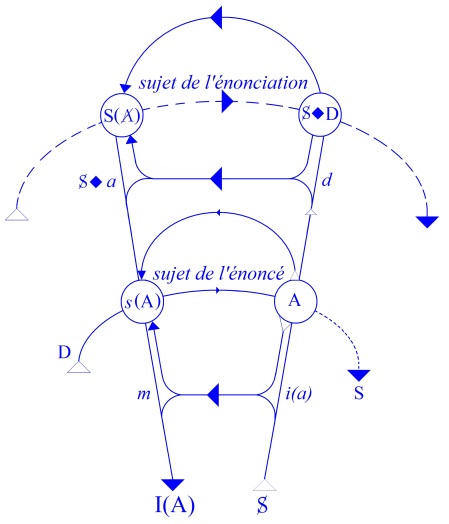
À partir de là, que signifie ce que FREUD veut dire ? Voyons-le sur notre petit graphe qui se propose comme ceci à l’occasion, à savoir que si nous supposons que la production du rêve… Pour voir comment nous allons nous servir de ce graphe pour y projeter les différents éléments de cette formalisation. Il peut y avoir plusieurs façons.
由此出发,弗洛伊德的话意味着什么?让我们放到这张小图上来看;在这个例子里,图这样呈现:如果我们假定梦的产生……为了看看如何用这张图投射上述形式化的不同要素,可能有不止一种方式。
原文 · s6-08-0034
L’intérêt structural du graphe, c’est que c’est une structure qui nous permet de repérer le rapport du sujet avec le signifiant…
图的结构意义在于:“这个结构使我们能够定位主体同能指的关系”……
原文 · s6-08-0035
pour autant que nécessairement, dès que le sujet est pris dans le signifiant - et il est essentiel qu’il y soit pris, c’est ce qui le définit, c’est le rapport de l’individu avec le signifiant
因为主体一旦被纳入能指——而且他必须被纳入,这正是他的定义,即个体同能指的关系——
原文 · s6-08-0036
…une structure - et un réseau - à ce moment s’impose qui reste en quelque sorte toujours fondamentale.
……一套结构、一个网络便在“此刻”强加自身,并可以说“始终保持根本地位”。
原文 · s6-08-0037
Tâchons ici de voir comment nous pouvons répartir les diverses fonctions intéressées dans l’énonciation du rêve dans ledit graphe dans ce cas. Ce dont il s’agit, le point pivot, l’énoncé je dirai total, le rêve dans ce fait que création spontanée, il se présente comme quelque chose qui dans son premier aspect a un caractère de relative totalité, il est le fait d’un certain bloc. On dit « j’ai fait un rêve », on le distingue de l’autre rêve qui a suivi et qui n’est pas le même.
现在看看,在这个例子里,如何把“梦的言说”所牵涉的各种功能分配到这张“图”中。核心、可以说完整的陈述就是梦;梦作为一项“自发创造”,起初以某种相对完整的东西呈现,是一个特定的整体。人们说“我做了一个梦”,并把它同紧随其后的另一个不同之梦区分开来。
原文 · s6-08-0038
Il a le caractère de ce discours, il se réfléchit en tant que rien n’y fait apparaître, au moment où nous le faisons, ce morcellement, cette décomposition du signifiant sur laquelle nous avons toutes sortes d’indices rétroactifs que ce morcellement est là incident dans la fonction de tout discours.
它具有这套话语的性质,并这样反映自身:我们做梦时,其中没有任何东西显出能指的碎片化与分解,尽管各种回溯性标志都告诉我们,这种碎片化影响着一切话语的功能。
原文 · s6-08-0039
Mais le discours, pour autant que le sujet s’y tienne, suspend à chaque instant notre choix au moment de pousser un discours, sans cela notre façon de communiquer aurait quelque chose d’autrement ardu.
但主体维持在话语中时,每当推进话语,我们的选择都会在每个时刻得到悬置;若非如此,我们交流的方式会艰难得多。
原文 · s6-08-0040
Ce rêve il nous est donné comme un tout. C’est cet énoncé qui se produit, si je puis dire, au niveau inférieur du graphe. C’est une chaîne signifiante qui se présente sous cette forme d’autant plus globale qu’elle est fermée, qu’elle se présente justement sous la forme habituelle du langage, qu’elle est quelque chose sur quoi le sujet a à faire un rapport, une énonciation, à se situer par rapport à elle, à vous le faire passer justement avec tous ses accents, qu’il a à y mettre le plus ou moins d’adhésion à ce qu’il vous raconte.
梦作为一个整体被交给我们。我会说,产生这项“陈述”的是图的下层。它是一条以整体形式呈现的“能指链”;而且它越封闭、越以语言的通常形式呈现,就越显得整体。主体必须报告它、围绕它进行“言说”、相对于它安置自身;他必须把它连同全部重音传达给你,并对自己所讲之事表现出不同程度的认同。
原文 · s6-08-0041
原文 · s6-08-0042
C’est-à-dire qu’en somme c’est au niveau du discours pour l’autre, qui est aussi le discours où le sujet l’assume ce rêve, que va se produire ce quelque chose qui accompagne le rêve et le commente en quelque sorte de sa positon plus ou moins assumée par le sujet. C’est-à-dire qu’ici, pendant le récit de ce qui s’est passé, il se présente déjà lui-même à l’intérieur de cela comme l’énoncé du rêve. C’est ici, dans le discours où le sujet l’assume pour vous à qui il le raconte, que nous allons voir se produire ces différents éléments, ces différentes accentuations qui sont toujours des accentuations de plus ou moins d’assomption par le sujet :
也就是说,某种伴随并可以说评论梦的东西,将在“面向小他者的话语”层次产生;主体也正是在这套话语中承担梦,而评论取决于他在多大程度上承担自己的位置。在这里,当主体叙述发生之事时,他已经在其中把自己呈现为梦的陈述。正是在主体为听他讲述的你承担梦的这套话语中,我们会看到各种要素和重音产生;这些重音始终对应主体不同程度的承担:
原文 · s6-08-0043
- « Il me semble, il m’est apparu que ceci s’est passé à ce moment-là. »
- “我好像、我觉得当时发生了这件事。”
原文 · s6-08-0044
- « À ce moment-là tout s’est passé comme si tel sujet était en même temps tel autre, ou se transformait en tel autre ».
- “当时一切仿佛是这个人同时又是另一个人,或者变成了另一个人。”
原文 · s6-08-0045
C’est ce que j’ai appelé tout à l’heure ses accents. Ces divers modes d’assomption du vécu du rêve par le sujet se situent ici dans la ligne qui est celle du « je » de l’énonciation, pour autant que justement, vis à vis de cet événement psychique, il l’assume plus ou moins dans son énonciation. Qu’est-ce à dire, sinon que ce que nous avons là c’est justement ce qui dans notre graphe, se présente sous la forme de la ligne morcelée, discontinue, qu’il vous indique comme étant la caractéristique de ce qui s’articule au niveau de l’énonciation en tant que ceci intéresse le signifiant.
这就是我刚才所谓梦的重音。主体以各种方式承担梦中亲历;它们位于言说之“我”那条线上,因为主体面对这一精神事件,恰恰在自身“言说”中或多或少承担它。这意味着什么?无非是:我们在这里拥有的,恰恰就是图中以碎片化、不连续的线呈现的东西;图向你们表明,当言说牵涉能指时,这种不连续正是言说层次之表述的特征。
原文 · s6-08-0046
Car remarquez ceci :
请注意:
原文 · s6-08-0047
- s’il est vrai que ce qui justifie la ligne inférieure, celle sur laquelle à chaque occasion nous avons placé cette rétroaction du code sur le message qui à chaque instant donne à la phrase son sens,
- 下线之所以成立,是因为我们每次都把编码对信息的回溯作用放在那里;它在每个时刻赋予句子意义;
原文 · s6-08-0048
- cette unité phrastique est d’ampleur diverse : à la fin d’un long discours, à la fin de mon séminaire ou à la fin de mes séminaires, il y a quelque chose qui boucle rétroactivement le sens de ce que je vous ai énoncé auparavant,
- 这种句子统一的范围大小不一:在一篇长篇话语、我一堂研讨课甚至整个系列研讨班的结尾,会有某种东西回溯性地闭合我先前向你们陈述的意义;
原文 · s6-08-0049
- mais jusqu’à un certain point, de chacune des parties de mon discours, chacun des paragraphes, il y a quelque chose qui se forme.
- 但在某种程度上,我的话语的每个部分、每个段落也都会形成某种东西。
原文 · s6-08-0050
Il s’agit de savoir à quel degré le plus réduit il faut nous arrêter pour que cet effet que nous appelons l’effet de signification en tant qu’il est quelque chose d’essentiellement nouveau, qui va au–delà de ce qu’on appelle les emplois du signifiant, constitue une phrase, constitue justement cette création de signification faite dans le langage.
必须知道,我们要停在怎样的最小尺度,才能让所谓意义效果——它本质上是某种全新的、超出所谓“能指用法”的东西——构成一句话,构成恰恰在语言中产生的这项意义创造。
原文 · s6-08-0051
Où cela s’arrête ? Cela s’arrête évidemment à la plus petite unité qui soit et qui est la phrase, justement à cette unité qui dans l’occasion se présente là d’une façon tout à fait claire dans le rapport du rêve, sous la forme de ceci que le sujet : assume ou n’assume pas, croit ou ne croit pas, rapporte quelque chose ou doute de ce qu’il nous raconte.
它停在哪里?“显然停在最小的统一体,也就是句子。”在梦的报告中,这个统一体恰好以十分清楚的方式呈现为:主体“承担或不承担、相信或不相信、报告某事或怀疑自己所讲之事”。
原文 · s6-08-0052
Ce que je veux dire dans l’occasion, c’est que cette ligne, ou boucle de l’énonciation, elle se fait sur des fragments de phrases qui peuvent être plus courts que l’ensemble de ce qui est raconté.
我在这里想说的是,这条言说线或言说回路,是在一些可能短于整段讲述的句子片段上完成的。
原文 · s6-08-0053
Le rêve, à propos de telle ou telle partie du rêve, vous apporte une assomption par le sujet, une prise énonciative d’une portée plus courte que l’ensemble du rêve. En d’autres termes, elle introduit une possibilité de fragmentation, d’ampleur beaucoup plus courte au niveau supérieur qu’au niveau inférieur. Ceci nous met sur la voie de ce qu’implique FREUD en disant que cet accent d’assomption par le sujet fait partie des pensées latentes du rêve.
针对梦的某个部分,梦会带来主体的一次承担;它是一项范围短于整则梦的言说把握。换句话说,上层引入的碎片化可能,其尺度比下层短得多。这使我们开始理解,弗洛伊德所谓主体的承担重音属于梦的潜在思想,意味着什么。
原文 · s6-08-0054
C’est nous dire que c’est au niveau de l’énonciation et pour autant qu’elle implique cette forme de mise en valeur du signifiant qui est impliqué par l’association libre. C’est à savoir que si la chaîne signifiante a deux aspects :
这告诉我们,问题处在“言说”层次;只要言说包含自由联想所牵涉的那种能指突显形式,就是如此。也就是说,如果能指链有两个方面:
原文 · s6-08-0055
- celui qui est l’unité de son sens, la signification phrastique, le monolithisme de la phrase, l’holophrasisme ou plus exactement à savoir qu’une phrase peut être prise comme ayant un sens unique, comme étant quelque chose qui forme un signifiant mettons « transitoire », mais qui le temps qu’il existe, tient à lui tout seul comme tel,
- 一方面是其意义统一、句子意义与句子的整块性,即“整句作用”;更确切地说,一句话可以被看作具有单一意义,形成一个姑且称作“过渡性”的能指,而且在它存在的那段时间里,能凭自身作为这样的东西成立;
原文 · s6-08-0056
- et l’autre face du signifiant, qu’on appelle association libre, comporte que pour chacun des éléments de cette phrase - et aussi loin qu’on peut aller dans la décomposition, s’arrêtant strictement à l’élément phonétique - quelque chose peut intervenir qui, faisant sauter un de ces signifiants, y implante à la place un autre signifiant qui le supplante.
- 能指的另一面则由所谓自由联想表现:对句子的每一个要素——无论分解到多深,直至严格停在语音要素——都可能有某种东西介入;它使其中一个能指跳脱,在原处植入并让另一个能指取而代之。
原文 · s6-08-0057
Et c’est là-dedans que gît la propriété du signifiant c’est quelque chose qui se rapporte à ce côté-là du vouloir du sujet. Quelque chose, une incidente, à chaque instant le recroise, qui implique…
“能指的特性”就寓于其中;某种东西在这里同主体意欲的那一面相关。某个插入项每时每刻同它重新交叉,并意味着……
原文 · s6-08-0058
sans que le sujet le sache et d’une façon pour lui inconsciente
主体对此并不知情,而且它对主体而言属于无意识
原文 · s6-08-0059
…que dans ce discours même, dirigé au-delà de son intention, quelque chose dans le choix de ces éléments intervient dont nous voyons émerger à la surface les effets, sous la forme par exemple la plus élémentaire du lapsus phonématique : qu’il s’agisse d’une syllabe changée dans un mot, qui montre là la présence d’une autre chaîne signifiante qui peut venir se recouper avec la première et enter, implanter un autre sens.
……在“同一套话语内部”,某种超出主体意图而指向别处的东西介入了这些要素的选择;我们看到其“效果”浮出表面,例如最基本的“音位性口误”:一个词中的一个音节发生改变,显出另一条能指链的在场。它可以同第一条链相交,并嫁接、植入另一项意义。
原文 · s6-08-0060
Ceci nous est indiqué par FREUD : de qui…
弗洛伊德向我们指明:“是谁的”……
原文 · s6-08-0061
au niveau de l’énonciation, au niveau en apparence donc le plus élaboré de l’assomption du sujet,
au point où le « je » se pose comme conscient par rapport à, nous ne dirons pas « sa propre production »
puisque justement l’énigme reste entière
在“言说”层次,也就是主体承担看似最充分加工的层次;
在“我”相对于某物把自己设定为有意识的点——我们不会说相对于“他自己的产物”,因为“谜”恰恰仍然完整
原文 · s6-08-0062
…de qui est cet énoncé dont on parle ?
……“人们所谈的这项陈述是谁的?”
原文 · s6-08-0063
Le sujet ne tranche pas. S’il dit « j’ai rêvé », c’est avec une connotation et un accent propre qui fait que celui qui a rêvé, est tout de même quelque chose qui, par rapport à lui, se présente comme problématique. Le sujet de cette énonciation, contenue dans l’énoncé dont il s’agit, et avec un point d’interrogation, a longtemps été considéré comme étant « le Dieu », avant de devenir le « lui-même » du sujet (c’est à peu près avec ARISTOTE).
主体并未作出裁断。他说“我梦见”时,带着一种特定含义与重音,使那个做梦者相对于他自己仍作为问题呈现。包含在这项带着问号的“陈述”里的“言说主体”,长期被视为“神”,后来才成为主体的“他自己”——大致从亚里士多德开始。
原文 · s6-08-0064
Pour revenir à cet « au-delà du sujet » qu’est l’inconscient freudien, toute une oscillation, toute une vacillation se produit qui ne le laisse pas moins dans une permanente question de son altérité. Et ce que, de cela, le sujet reprend ensuite est de la même nature morcelante, a la même valeur d’élément signifiant que ce qui se produit dans le phénomène spontané de substitution, de dérangement du signifiant, qui est ce que FREUD nous montre d’autre part être la voie normale pour déchiffrer le sens du rêve.
当我们回到弗洛伊德式无意识这个“主体彼岸”时,会产生全部摆动与颤动,使它始终处于自身他异性的问题中。主体随后从中重新取回的东西,具有同样碎片化的性质、同样的能指要素价值,类似于能指自发“替代”和移位现象中发生的东西;弗洛伊德从另一方面向我们表明,这正是“破译梦的意义”的正常道路。
原文 · s6-08-0065
En d’autres termes, le morcellement qui se produit au niveau de l’énonciation…
换句话说,言说层次发生的碎片化……
原文 · s6-08-0066
en tant que l’énonciation est assomption du rêve par le sujet
只要“言说就是主体对梦的承担”
原文 · s6-08-0067
…est quelque chose dont FREUD nous dit qu’elle est sur le même plan et de la même nature que ceci, dont le reste de la doctrine nous montre que c’est la voie de l’interprétation du rêve, à savoir la décomposition signifiante maximale, l’épellement des éléments signifiants, pour autant que c’est dans cet épellement que va résider la mise en valeur des possibilités du rêve.
……弗洛伊德告诉我们,它同其余学说所展示的梦之解释道路处在同一平面、具有同一性质:也就是“最大限度的能指分解”,逐项拼读能指要素;因为只有在这种拼读中,梦的可能性才会得到突出。
原文 · s6-08-0068
C’est-à-dire de ces entrecroisements, de ces intervalles qu’il laisse et qui n’apparaissent que pour autant que la chaîne signifiante est mise en rapport, est recoupée, entrecroisée par toutes les autres chaînes qui, à propos de chacun des éléments du rêve, peuvent s’entrecroiser, s’entremêler avec la première. En d’autres termes, c’est pour autant…
也就是能指链留下的交叉与间隙。只有当“能指链”被联系到所有其他链、同它们重新交叉时,这些间隙才会显现;针对梦的每一个要素,其他链都能同第一条链交叉并缠绕。换句话说,正因为……
原文 · s6-08-0069
et d’une façon plus exemplaire à propos du rêve que par rapport à n’importe quel autre discours
梦比任何其他话语都更具示范性
原文 · s6-08-0070
…c’est pour autant que :
……正因为:
原文 · s6-08-0071
- dans le discours du sujet, dans le discours actuel, nous faisons vaciller, nous laissons se décrocher de la signification actuelle ce qui est intéressé de signifiant dans cette énonciation,
- 在主体的当前话语中,我们使这项言说所牵涉的能指发生颤动,让它从当前意义上“脱钩”;
原文 · s6-08-0072
- c’est dans cette voie que nous nous approchons de ce qui chez le sujet est appelé, dans la doctrine freudienne « inconscient ».
- 我们才沿这条道路接近弗洛伊德学说所谓主体的“无意识”。
原文 · s6-08-0073
C’est dans la mesure où le signifiant est intéressé, c’est dans les possibilités de rupture, dans les points de rupture de cet inconscient, que gît ce sur la piste de quoi nous sommes, ce que nous sommes là pour rechercher, c’est à savoir ce qui s’est passé d’essentiel dans le sujet qui maintient certains signifiants dans le refoulement.
只要能指被牵涉,在线条可能断裂的地方、在无意识的断裂点,就存在我们追踪并来到这里寻找的东西:主体内部发生了什么根本事情,使某些能指维持在压抑中。
原文 · s6-08-0074
Et ce quelque chose va nous permettre d’aller sur la voie précisément de son désir, à savoir de ce quelque chose du sujet qui, dans cette prise par le réseau signifiant est maintenu, doit pour ainsi dire - pour être révélé - passer à travers ces mailles, est soumis à ce filtrage, à ce criblage du signifiant, et est ce que nous avons pour but de restituer et de restaurer dans le discours du sujet.
这个东西会使我们走上通往主体欲望的道路:也就是“主体的某种东西”被“能指网络”捕获后仍维持自身;为了显露,可以说它“必须穿过网眼”,经受能指的过滤和筛选。我们的目标,就是在主体话语中归还并恢复它。
原文 · s6-08-0075
Comment pouvons-nous le faire ? Que signifie que nous puissions le faire ? Je vous l’ai dit, le désir est essentiellement lié par la doctrine, par la pratique, par l’expérience freudienne, dans cette position : il est exclu, énigmatique, ou il se pose par rapport au sujet être essentiellement lié à l’existence du signifiant, refoulé comme tel, et sa restitution, sa restauration est liée au retour de ces signifiants.
怎样做?我们能够这样做意味着什么?我已经说过,弗洛伊德学说、实践与经验从根本上把欲望置于这样一个位置:欲望被排除、成为谜;或相对于主体被设定为从根本上同能指的存在相连,并作为这样的东西遭到压抑;它的归还与恢复,同“这些能指的回返”相连。
原文 · s6-08-0076
Mais ce n’est pas dire que la restitution de ces signifiants énonce purement et simplement le désir :
但这并不是说,归还这些能指就纯粹而简单地陈述了欲望:
原文 · s6-08-0077
- autre chose est ce qui s’articule dans ces signifiants refoulés et qui est toujours une demande,
- 在这些遭压抑的能指中得到表述的是一回事,而且它始终是一项索求;
原文 · s6-08-0078
- autre chose est le désir, pour autant que le désir est quelque chose par quoi le sujet se situe, du fait de l’existence du discours, par rapport à cette demande.
- 欲望是另一回事;因为欲望是主体凭借话语的存在,相对于这项索求定位自身的东西。
原文 · s6-08-0079
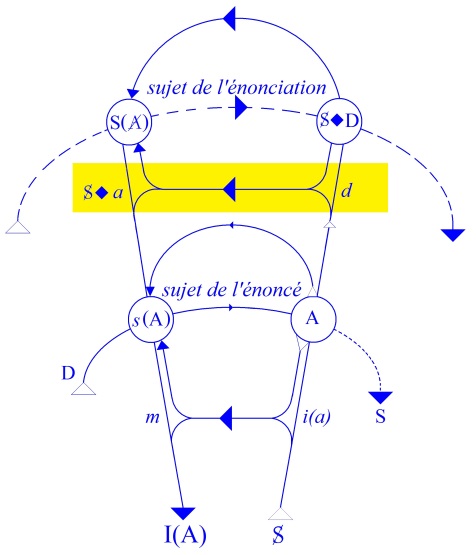
Ce n’est pas de ce qu’il demande qu’il s’agit, c’est de ce qu’il est en fonction de cette demande et ce qu’il est dans la mesure où la demande est refoulée, est masquée, et c’est cela qui s’exprime d’une façon fermée dans le fantasme de son désir. C’est son rapport à un être dont il ne serait pas question s’il n’y avait pas la demande, le discours qui est fondamentalement le langage, mais dont il commence à être question à partir du moment où le langage introduit cette dimension de l’être et en même temps la lui dérobe.
问题不在他索求什么,而在于他依据这项索求是什么;在索求遭压抑、受到遮蔽时,他又是什么。这正是其欲望幻想以封闭形式表达的东西。它是主体同一种存在的关系:若没有索求、没有根本上就是语言的话语,这种存在根本不会成为问题;但语言一旦引入存在维度,同时又从主体那里把它夺走,这种存在便开始成为问题。
原文 · s6-08-0080
原文 · s6-08-0081
La restitution du sens du fantasme, c’est-à-dire de quelque chose d’imaginaire, vient entre les deux lignes :
“幻想意义”的恢复——也就是某种“想象性”东西的恢复——发生在两条线之间:
原文 · s6-08-0082
- entre l’énoncé de l’intention du sujet,
- 一边是主体意图的陈述;
原文 · s6-08-0083
- et ce quelque chose que d’une façon décomposée il lie, cette intention profondément morcelée, fragmentée, réfractée par la langue.
- 另一边是主体以分解方式连接起来的某种东西,是这项意图经语言深度碎片化、分割与折射后的形式。
原文 · s6-08-0084
Entre les deux est ce fantasme [S◊a] où d’habitude il suspend son rapport à l’être. Mais ce fantasme est toujours énigmatique, plus que n’importe quoi d’autre. Et que veut-il ? Ceci : que nous l’interprétions ! Interpréter le désir, c’est restituer ceci, auquel le sujet ne peut pas accéder à lui tout seul, à savoir l’affect qui désigne, au niveau de ce désir qui est le sien…
二者之间就是幻想〔\(\bar S\mathbin{\lozenge}a\)〕,主体通常把自己同存在的关系悬置于其中。但这个幻想总是比任何东西都更加“谜样”。它要什么?要我们解释它!解释欲望,就是恢复某种主体凭自身无法抵达的东西:也就是在他的这项欲望层次作出标示的情动……
原文 · s6-08-0085
je parle du désir précis qui intervient dans tel ou tel incident de la vie du sujet,
du désir masochiste, du désir-suicide, du désir oblatif à l’occasion
我说的是介入主体生命中某个具体事件的确切欲望;
例如受虐欲望、自杀欲望、奉献欲望
原文 · s6-08-0086
…il s’agit que ceci, qui se produit sous cette forme fermée pour le sujet, en reprenant sa place, son sens par rapport au discours masqué qui est intéressé dans ce désir, reprenne son sens par rapport à l’être, confronte le sujet par rapport à l’être, reprenne son sens véritable, celui qui est par exemple défini par ce que j’appellerai « les affects positionnels par rapport à l’être ».
……问题是:这个以封闭形式为主体产生的东西,要在重新取得相对于欲望中所牵涉之隐蔽话语的位置与意义时,重新取得相对于存在的意义;使主体面对存在,并恢复其真正意义。例如,这种意义由我所谓“相对于存在的位置性情动”规定。
原文 · s6-08-0087
C’est cela que nous appelons amour, haine ou ignorance essentiellement, et bien d’autres termes encore dont il faudra que nous fassions le tour et le catalogue.
这首先就是我们所谓“爱、恨或无知”;此外还有很多术语,以后必须逐一巡查并列出目录。
原文 · s6-08-0088
Pour autant que ce qu’on appelle « l’affect » n’est pas ce quelque chose de purement et simplement opaque et fermé…
所谓“情动”并非某种纯粹“晦暗而封闭”的东西……
原文 · s6-08-0089
qui serait une sorte d’au-delà du discours, une espèce d’ensemble,
de noyau vécu dont on ne saurait pas de quel ciel il nous tombe
仿佛它是话语彼岸的一种整体、一颗亲历的核心;
人们不知道它从哪片天空掉到我们身上
原文 · s6-08-0090
…mais pour autant que l’affect est très précisément et toujours quelque chose qui se connote dans une certaine position du sujet par rapport à l’être, je veux dire par rapport à l’être en tant que :
……“情动”恰恰始终指示主体相对于存在的某种位置;我的意思是,相对于如下意义上的存在:
原文 · s6-08-0091
- ce qui se propose à lui dans sa dimension fondamentale est symbolique,
- 在根本维度中向主体提出的东西属于“象征界”;
原文 · s6-08-0092
- ou bien qu’au contraire, à l’intérieur de ce symbolique, il représente une irruption du réel, cette fois fort dérangeante.
- 或者相反,主体在象征界内部代表一次“实在”的闯入,而这一次颇为扰乱。
原文 · s6-08-0093
Et il est fort difficile de ne pas s’apercevoir qu’un affect fondamental comme celui de la colère n’est pas autre chose que cela : le réel qui arrive au moment où nous avons fait une fort belle trame symbolique, où tout va fort bien, l’ordre, la loi, notre mérite et notre bon vouloir. On s’aperçoit tout d’un coup que les chevilles ne rentrent pas dans les petits trous ! C’est cela, l’origine de l’affect de la colère : tout se présente bien pour « le pont de bateaux au Bosphore »1 mais il y a une tempête, qui fait battre la mer. Toute colère, c’est faire battre la mer !
很难不看见,愤怒这样的根本情动无非就是:正当我们编出一幅极其漂亮的“象征织物”、一切都进行得很好——“秩序、法律、我们的功绩与善意”——实在突然到来。人猛然发现,木钉插不进小孔!这就是愤怒情动的起源:“博斯普鲁斯海峡上的浮桥”[注1]一切准备妥当,却来了一场风暴,掀动海面。一切愤怒,都是在掀动海面!
[注1] 参见希罗多德《历史》第VII卷第10节。公元前479年,斯巴达统帅指挥普拉提亚与米卡莱之战获胜;国王列奥提奇达斯二世受命摧毁波斯人在博斯普鲁斯海峡搭建的浮桥,以阻止波斯军队返回,但一场风暴替他完成了任务。
原文 · s6-08-0094
Et puis aussi bien, c’est quelque chose qui se rapporte à l’intrusion du désir lui-même et qui est aussi quelque chose qui détermine une forme d’affect sur laquelle nous reviendrons. Mais l’affect est essentiellement et comme tel…
同样,这也涉及欲望本身的闯入,并规定一种我们以后还会回来的情动形式。但情动本身从根本上……
原文 · s6-08-0095
au moins pour toute une catégorie fondamentale d’affects
至少对整整一类根本情动而言
原文 · s6-08-0096
…connotation caractéristique d’une position du sujet, d’une position qui se situe, si nous voyons essentiellement les positions possibles, dans cette mise en jeu, mise en travail, mise en œuvre de lui-même par rapport aux lignes nécessaires que lui impose comme tel son enveloppement dans le signifiant.
……是主体某种位置的特征性标注。如果考察可能的位置,这个位置就在主体相对于能指包裹对他强加的必然线条时,对自身的“投入游戏、投入工作与付诸实行”中。
原文 · s6-08-0097
Voyons maintenant un exemple. Cet exemple, je l’ai pris dans la postérité de FREUD. Il nous permet de bien articuler ce qu’est le [rêve dans ?] l’analyse. Et pour procéder d’une façon qui ne laisse pas place à un choix plus spécialement arbitraire, j’ai pris le chapitre V de Dream Analysis 2 de Ella SHARPE, où l’auteur prend comme exemple l’analyse d’un rêve simple – je veux dire d’un rêve qu’elle prend comme tel en poussant autant que possible jusqu’au bout son analyse.
现在来看一个例子。我从弗洛伊德的后继者那里选取它;它使我们能够清楚表述分析中的〔梦〕是什么。为了不留下格外任意选择的余地,我选了埃拉·夏普《梦的分析》第五章[注2]。作者在那里以一则简单的梦为例——我的意思是,她把它当作一则简单的梦,并尽可能把分析推到底。
[注2] 埃拉·夏普·弗里曼:《梦的分析》,伦敦:霍加斯出版社与精神分析研究所,1937年;纽约:Brunner/Mazel 出版社,1978年重印本,页码相同。
原文 · s6-08-0098
Vous entendez bien que dans les chapitres précédents, elle a montré un certain nombre de perspectives, de lois, de mécanismes, par exemple l’incidence du rêve dans la pratique analytique, ou même plus loin, les problèmes posés par l’analyse du rêve ou de ce qui se passe dans les rêves des personnes analysées. Ce qui fait le point pivot de ce livre, c’est justement le chapitre où elle nous donne un exemple singulier d’un rêve exemplaire dans lequel elle met en jeu, en œuvre, elle illustre tout ce qu’elle peut avoir d’autre part à nous produire concernant la façon dont la pratique analytique nous montre que nous devons être effectivement guidés dans l’analyse d’un rêve.
你们自然明白,在前几章中,她已经展示许多“视角、规律与机制”,例如梦在分析实践中的影响,乃至更进一步,分析梦或被分析者之梦中所发生之事提出的问题。这本书的枢纽,恰恰是她给出一则具有示范性的独特梦之例子的那一章;在那里,她投入并实行、说明了自己围绕“分析实践表明我们实际应当如何被引导去分析一则梦”所能提出的一切。
原文 · s6-08-0099
Et nommément ceci d’essentiel qui est ce que le praticien apporte de nouveau après la Traumdeutung, qu’un rêve n’est pas simplement quelque chose qui s’est révélé avoir une signifiance - c’est la Traumdeutung - mais quelque chose qui, dans la communication analytique, dans le dialogue analytique, vient jouer son rôle actuel, non pas à tel moment de l’analyse comme à tel autre, et que justement le rêve vient d’une façon active, déterminée, accompagner le discours analytique pour l’éclairer, pour prolonger ses cheminements, que le rêve est un rêve en fin de compte fait non seulement pour l’analyse mais souvent pour l’analyste.
尤其有一项根本内容,是《梦的解析》以后实践者带来的新东西:梦不只是某种被发现具有意义的东西——《梦的解析》讲的是这一点——而且在“分析交流”和“分析对话”中发挥当下作用。它不会在分析的任意时刻都发挥相同作用;梦会以积极而特定的方式伴随分析话语,照亮它、延伸它的路径。归根到底,梦不只“为分析”而做,往往还“为分析家”而做。
原文 · s6-08-0100
Le rêve, à l’intérieur de l’analyse, se trouve en somme porteur d’un message. L’auteur en question ne recule pas, pas plus que les auteurs qui ont depuis eu à parler de l’analyse des rêves.
梦在分析内部,总之成为一则信息的承载者。这里的作者并不回避这点,后来谈过“梦的分析”的作者也没有回避。
原文 · s6-08-0101
Il s’agit seulement de savoir quelle pensée, quel accent nous lui donnerons. Et, vous le savez, j’ai attiré l’attention Là-dessus dans mon rapport de Royaumont, ce n’est pas la moindre question que pose la question de la pensée à l’égard du rêve, que certains auteurs croient pouvoir s’en détourner pour autant qu’ils y voient quelque chose comme une activité, du moins assurément, c’est quelque chose.
问题只在于,我们赋予它什么思想和重音。你们知道,我在鲁瓦约蒙报告中曾提醒大家注意这一点。面对梦的思想问题提出了绝不次要的问题;有些作者以为自己可以绕开,因为他们把梦视为某种活动——无论如何,梦至少确实是某种东西。
原文 · s6-08-0102
Je veux dire que le fait en effet que le rêve se présente comme une matière à discours, comme matière à élaboration discursive est quelque chose que, si nous ne nous apercevons pas que l’inconscient n’est point ailleurs que dans les latences, non pas de je ne sais quelle besace psychique où il serait à l’état inconstitué, mais bel et bien, en tant qu’inconscient, en deçà ou - c’est une autre question - immanent à la formulation du sujet, au discours de lui-même, à son énonciation, nous verrons comment il est bel et bien légitime de prendre le rêve, comme il a toujours été considéré, pour la voie royale de l’inconscient.
我的意思是,梦确实作为话语材料、话语加工的材料呈现。只有看到无意识不在别处,而在潜在性中——不是在某个精神口袋里以尚未构成的状态存放,而是确确实实作为无意识存在于主体表述、自身话语与言说的下方,或者内在其中——我们才会看到,把梦像历来那样视为“通往无意识的康庄大道”完全正当。
原文 · s6-08-0103
Voici donc comment les choses se présentent dans ce rêve que nous présente l’auteur. Je vais commencer par lire le rêve lui-même. Je vais montrer la façon dont les problèmes se posent à son propos. Elle nous donne d’abord un bref avertissement sur le sujet, dont nous aurons à faire grand cas. Tout le chapitre devra d’ailleurs être revu, critiqué, pour nous permettre de saisir comment ce qu’elle nous énonce est à la fois - mieux que dans tout autre registre - applicable sur les repères qui sont les nôtres, et en même temps comment ces repères, peut-être pourraient nous permettre de mieux nous orienter.
作者呈现的这则梦就是如此。我要先读梦本身,再说明围绕它怎样提出问题。她先简要“提醒”我们主体的情况;我们必须高度重视。整章还须重新检查和批评,才能把握:她的陈述一方面如何比其他语域更适合用我们的坐标来定位,另一方面这些坐标又如何可能帮助我们更好地辨明方向。
原文 · s6-08-0104
Le patient arrive à sa séance ce jour-là dans certaines conditions que je rappellerai tout à l’heure. C’est seulement après certaines associations dont vous verrez qu’elles sont extrêmement importantes, qu’il se rappelle : « Ceci me rappelle… » Je reviendrai sur ces associations naturelles.
患者当天在某些“条件”下前来会谈,我稍后会重提。只有经过若干你们将看到极为重要的联想以后,他才想起:“这让我想起……”我会回到这些自然联想。
原文 · s6-08-0105
« Je ne sais pourquoi, je viens justement de penser – dit-il – à mon rêve de la nuit dernière. C’était un rêve terrible, (tremendous). J’ai dû rêver pendant des éternités …//… je ne vais pas vous embêter avec cela pour la bonne raison que je ne m’en souviens plus. Mais c’était un rêve très excitant, plein d’incidents et plein d’intérêt. Je me suis réveillé chaud et transpirant. »
“不知道为什么,我现在恰好想起昨晚的梦,”他说,“那是个可怕、庞大的梦〔tremendous〕。我好像梦了无穷无尽的时间……我不会拿它来烦你,理由很简单:我已经不记得了。但那是个非常激动人心的梦,充满事件和趣味。我醒来时浑身发热、满身是汗。”
原文 · s6-08-0106
[I do not know why I should now think of my dream last night. It was a tremendous dream. It went on for ages and ages. …//… I shall not bore you with it all *for the simple reason that I cannot recall it. But it was an exciting dream, full of incident, full of interest. I woke hot and perspiring. p.*132]
〔英文原文意为:我不知道为何现在会想到昨晚的梦。那是个极其庞大的梦,持续了很久很久……我不会把全部内容讲来烦你,因为我已经想不起来。但它令人兴奋,充满事件与趣味。我醒来时发热出汗。第132页。〕
原文 · s6-08-0107
Il dit qu’il ne se souvient pas de cette infinité de rêve, de cette mer de rêve, mais ce qui surgit c’est cela : une scène assez courte qu’il va nous raconter.
他说自己不记得这无穷的梦、这片梦的海洋;但有一幕浮现出来:他接下来会讲述的一个相当短的场景。
原文 · s6-08-0108
« J’ai rêvé que je faisais un voyage avec ma femme…» [I dreamt I was taking a journey with my wife around the world…. p.132]
“我梦见自己同妻子一起作环球旅行……”〔I dreamt I was taking a journey with my wife around the world. 第132页。〕
原文 · s6-08-0109
Il y a ici une très jolie nuance qui n’est peut-être pas assez accentuée quant à l’ordre normal des compléments dans la langue anglaise. Je ne crois pas me tromper pourtant en disant que : « J’avais entrepris un voyage avec ma femme autour du monde… » est quelque chose qui mérite d’être noté. Il y a une différence entre « un voyage autour du monde avec ma femme » ce qui semblerait l’ordre français normal des compléments circonstanciels, et « j’ai entrepris un voyage avec ma femme autour du monde ». Je crois qu’ici, la sensibilité de l’oreille en anglais doit être la même.
这里有一个非常漂亮的细微差别;考虑到英语中补语的通常次序,它或许没有得到足够强调。我想自己并没有弄错:“我同妻子一起展开一场环球旅行……”这句话值得注意。“同妻子进行一次环球旅行”似乎是法语中状语的正常次序;但它不同于“我展开一场旅行,同妻子一起,环绕世界”。我相信,英语听觉也会感到这种差异。
原文 · s6-08-0110
« …nous sommes arrivés en Tchécoslovaquie, où toutes sortes de choses arrivèrent. Je rencontrais une femme sur une route, une route qui maintenant me fait remémorer la route que je vous ai décrite dans deux autres rêves il y a quelque temps, et dans lesquels j’avais un jeu sexuel avec une femme devant une autre femme. » […and we arrived in Czechoslovakia where all kinds of things were happening. I met a woman on a road, a road that now reminds me of the road I described to you in the two other dreams lately in which I was having sexual play with a woman in front of another woman. p.132]
“……我们抵达捷克斯洛伐克,那里发生了各种事情。我在一条路上遇见一个女人;这条路现在让我想起不久前向你描述的另外两个梦里的路。在那两个梦里,我当着另一个女人的面同一个女人进行性游戏。”〔英文原文同义,见第132页。〕
原文 · s6-08-0111
Là-dessus, c’est à juste titre que l’auteur change la typographie, car c’est une réflexion latérale :
作者在这里正确地改变了字体,因为这是一段侧面反思:
原文 · s6-08-0112
« C’est ainsi que cela se passait dans ce rêve. » [So it happened in this dream.]
“这则梦里,事情就是这样发生的。”
原文 · s6-08-0113
« …Cette fois - il reprend le récit du rêve - ma femme était là pendant que l’événement sexuel se produisait. La femme que je rencontrais avait un aspect très passionné, very passionned looking… » […This time my wife was there while the sexual event occurred. The woman I met was very passionate looking… p. 132]
“……这一次,”他回到梦的叙述,“性事件发生时,我妻子在那里。我遇见的女人看上去非常热情,very passionate looking……”
原文 · s6-08-0114
Et là, changement typographique à juste titre parce que c’est un commentaire, c’est déjà une association :
这里再次正确地改变字体,因为这是一项评论,已经是一次联想:
原文 · s6-08-0115
« Et ceci me faisait me rappeler une femme que j’avais vue la veille dans un restaurant. Elle était brune, dark, et avait les lèvres très pleines, très rouges, passionned looking - même expression, même aspect passionné - et il est évident que si je lui avais donné le moindre encouragement, elle aurait répondu. Elle peut bien avoir stimulé ce rêve. »
“这让我想起昨天在餐厅见过的一个女人。她是深色头发,嘴唇十分丰满、鲜红,看上去很热情——同一个表达,同一种热情外貌。很明显,只要我稍加鼓励,她就会回应。大概是她刺激了这个梦。”
原文 · s6-08-0116
[…and I am reminded of a woman I saw in a restaurant yesterday. She was dark and had very full lips, very red and passionate looking, and it was obvious that had I given her any encouragement she would have responded. She must have stimulated the dream, I expect.]
〔英文原文意为:我想起昨天在餐厅见过的一个女人。她肤发深色,嘴唇非常丰满、鲜红,看上去充满激情;显然,只要我给她一点鼓励,她就会回应。我想,一定是她激发了这个梦。〕
原文 · s6-08-0117
« Dans ce rêve*, la femme voulait avoir avec moi un rapport sexuel et elle prenait l’initiative, ce qui, comme vous le savez, est une chose qui m’aide grandement*… » - et il commente - « Si la femme veut bien faire cela, je suis grandement aidé. » [In the dream the woman wanted intercourse with me and she took the initiative wich as you know is a course wich helps me a great deal. If the woman will do this I am greatly helped. (p.133)]
“梦中,这个女人想同我性交,而且由她采取主动;如你所知,这会极大地帮助我……”他评论说:“如果女人愿意这样做,我会得到很大帮助。”〔英文原文同义,第133页。〕
原文 · s6-08-0118
« Dans le rêve la femme réellement était sur moi. Cela vient juste de me venir à l’esprit. Elle avait évidemment l’intention de s’introduire mon pénis. […] Je n’étais pas d’accord, mais elle était très désappointée, en sorte que je pensais que je devrais bien la masturber, but she was so désappointed I thought I would masturbate her. »
“梦里,这个女人实际压在我身上。我刚刚才想起来。她显然打算把我的阴茎放进自己体内。〔……〕我不同意,但她非常失望,所以我想自己应该给她手淫。”
原文 · s6-08-0119
[In the dream the woman actually lay on top of me; that has only just come to my mind. She was evidently intending to put my penis in her body. I could tell that by the manœuvres she was making. I disagreed with this, but she was so disappointed I thought that I would masturbate her. (p.133)]
〔英文原文补充:我从她的动作看出,她打算把我的阴茎放进自己身体。我不同意,但她非常失望,所以我想给她手淫。第133页。〕
原文 · s6-08-0120
Ici, reprise du commentaire :
这里又回到评论:
原文 · s6-08-0121
« Cela sonne tout à fait mal, wrong, d’user de ce verbe d’une façon transitive, on doit dire I masturbated, je me masturbais »
“以‘及物’方式使用这个动词,听起来完全不对,wrong。应当说 I masturbated,即‘我手淫了’。”
原文 · s6-08-0122
Le propre du verbe anglais est de ne pas avoir la forme réfléchie qu’il a dans la langue française. Quand on dit « I masturbate » en anglais cela veut dire « Je me masturbe ».
英语动词的特点,是没有法语中那种反身形式。英语说 I masturbate,意指“我给自己手淫”。
原文 · s6-08-0123
« …cela est tout à fait correct, mais il est tout à fait incorrect - fait-il remarquer - d’user du mot transitivement. »
“……这样完全正确;但把这个词用作及物动词,就完全不正确。”他特别指出。
原文 · s6-08-0124
[It sounds quite wrong to use that verb transitively. One can say «I masturbated » and that is correct, but it is all wrong to use the word transitively.]
〔英文原文:“把那个动词用作及物动词,听来十分错误。人可以说‘I masturbated’,那是正确的;但及物地使用这个词完全错误。”〕
原文 · s6-08-0125
L’analyste ne manque pas de tiquer sur cette remarque du sujet, et le sujet à ce propos, fait en effet quelques remarques confirmatives, il commence d’associer sur ses propres masturbations. Ce n’est d’ailleurs pas là qu’il en reste.
分析家没有错过主体的这项“评论”。主体又作出几项确认性的评论,开始联想自己的手淫;不过,他并未停在这里。
原文 · s6-08-0126
Voici l’énoncé de ce rêve. Il doit amorcer l’intérêt de ce que nous allons dire. C’est, je dois dire, un mode d’exposition tout à fait arbitraire d’une certaine façon, je pourrais m’en passer. Ne croyez pas non plus que ce soit la voie systématique sur laquelle je vous conseille de vous appuyer pour interpréter un rêve. C’est seulement histoire de jeter un jalon qui montre ce que nous allons chercher de voir et de démontrer.
这就是梦的陈述;它应当开启我们接下来讨论的兴趣。不得不说,这种呈现方式在某种意义上完全“任意”,我本可以不用它。也不要以为这是我建议你们赖以解释梦的一条系统道路;这里只是立一块标桩,表明我们将尝试看到和证明什么。
原文 · s6-08-0127
De même que dans le rêve de FREUD, pris dans FREUD - rêve de mort dont nous avons parlé - nous avons pu désigner d’une façon dont vous avez pu voir en même temps qu’elle ne manque pas d’artifice, quels sont les signifiants du « il est mort …selon son vœu », que son fils le souhaitait. De même ici d’une certaine façon on le verra, le point où culmine effectivement le fantasme du rêve à savoir :
在取自弗洛伊德的那则死者之梦里,我们曾指出“他死了……依照他的愿望”、儿子曾希望父亲死亡这些“能指”;你们同时也看到,这种指出不无人工构造。这里同样可以看到,梦的幻想实际抵达顶点的位置是:
原文 · s6-08-0128
« Je n’étais pas d’accord, mais elle était très désappointée, en sorte que je pensais que je devrais la masturber. »
“我不同意,但她非常失望,所以我想自己应该给她手淫。”
原文 · s6-08-0129
Avec la remarque, que le sujet fait tout de suite, que « c’est tout à fait incorrect d’employer ce verbe transitivement ». Toute l’analyse du rêve va nous montrer que c’est effectivement en rétablissant cette intransitivité du verbe que nous trouvons le sens véritable de ce dont il s’agit.
主体立即评论说,“把这个动词用作及物动词完全不正确”。对梦的全部分析将向我们展示,恰恰要恢复这个动词的不及物性,我们才能找到问题的真正意义。
原文 · s6-08-0130
Elle est « très désappointée… » de quoi ? Il semble que tout le texte du rêve l’indique suffisamment. À savoir du fait que notre sujet n’est guère participant quoiqu’il indique que tout dans le rêve soit fait pour l’y inciter, à savoir qu’il serait normalement très grandement aidé dans une telle position.
她“非常失望”……因为什么?梦的全部文本似乎已经充分指出:我们的主体几乎没有参与,尽管他说明梦里的一切都在诱使他参与,而且他在这种位置上通常会得到极大帮助。
原文 · s6-08-0131
Sans doute estce là ce dont il s’agit et nous dirons que la seconde partie de la phrase tombe bien dans ce que FREUD nous articule comme étant une des caractéristiques de la formation du rêve, c’est à savoir l’élaboration secondaire : qu’il se présente comme ayant un contenu compréhensible.
问题无疑在此。我们会说,这句话的后半正好落入弗洛伊德所谓梦形成的一项“特征”:次级加工,即梦把自己呈现为具有“可理解内容”。
原文 · s6-08-0132
Néanmoins le sujet nous fait remarquer lui-même que cela ne va pas tout seul puisque le verbe même qu’il emploie est quelque chose dont il nous indique qu’il ne trouve pas que cet emploi sonne bien. Selon même l’application de la formule que nous donne FREUD, nous devons retenir cette remarque du sujet comme nous mettant sur la voie, sur la trace de ce dont il s’agit, à savoir de la pensée du rêve. Et c’est là le désir.
然而,主体自己提醒我们,事情并不顺畅,因为他所用的动词本身听起来就不对。按照弗洛伊德给出的公式,我们必须保留主体的这项评论,把它当作一条把我们带上问题之路、带到梦的思想之踪迹的线索。而问题就是欲望。
原文 · s6-08-0133
En nous disant que « I thought… » doit comporter comme suite, que la phrase soit restituée sous la forme suivante : « I thought she could masturbate », ce qui est la forme normale dans laquelle le vœu se présenterait : « Qu’elle se masturbe si elle n’est pas contente ! », le sujet nous indique ici avec assez d’énergie que la masturbation concerne une activité qui n’est pas transitive au sens de passant du sujet sur un autre mais, comme il s’exprime, intransitive.
主体告诉我们,I thought…(我想……)后面应接的内容,必须把句子恢复为:“I thought she could masturbate”(我想她可以自己手淫)。愿望以正常形式应呈现为:“如果她不满意,就让她自己手淫!”主体在这里相当有力地指出,手淫不是从主体传递到另一个人的及物活动,而像他所说,是不及物活动。
原文 · s6-08-0134
Ce qui veut dire dans l’occasion une activité du sujet sur lui-même. Il la souligne bel et bien :
在这个例子里,它意指主体作用于自身的活动。他确实着重说明:
原文 · s6-08-0135
« Quand on dit « I masturbated » cela veut dire «* je me suis masturbé* ». »
“说 I masturbated 时,意思就是‘我给自己手淫了’。”
原文 · s6-08-0136
Ceci est un procédé d’exposition, car l’important ce n’est pas, bien entendu, de trancher sur ce sujet, encore que, je le répète, il soit important de nous apercevoir qu’ici, d’ores et déjà, immédiatement, la première indication que nous donne le sujet soit une indication dans le sens de la rectification de l’articulation signifiante.
这只是一种呈现办法;关键当然不是对这个问题作出裁断。不过我再说一遍,必须看到,主体立刻给出的第一项指示已经朝向修正能指表述。
原文 · s6-08-0137
Qu’est-ce que cela nous permet, cette rectification ? C’est à peu près ceci : tout ce que nous allons maintenant avoir à considérer est, au premier abord, l’entrée en jeu de cette scène, de cette séance. L’auteur nous la donne par une description qui n’est pas nécessairement une description générale du comportement de son sujet, même elle a été jusqu’à nous donner un petit préambule de ce qui concerne sa constellation psychique.
这项修正能让我们做什么?大致是这样:现在首先必须考虑的是“这一幕”、这次会谈如何投入游戏。作者通过一段描述把它交给我们;这不一定是对主体一般行为的描述,但她甚至还加了一小段关于其精神星丛的前言。
原文 · s6-08-0138
En bref, nous aurons à y revenir puisque ce qu’elle a mis dans ces prémisses se retrouvera dans ses résultats, et que ces résultats nous aurons à les critiquer. Pour aller tout de suite à l’essentiel…
简言之,我们还得回来,因为她放进前提的东西会重新出现在结果中,而这些结果又必须接受我们的批评。为了直接进入关键……
原文 · s6-08-0139
je veux dire : à ce qui va nous permettre d’avancer
我的意思是,进入会让我们“前进”的东西
原文 · s6-08-0140
…nous allons dire qu’elle nous fait remarquer que ce sujet est un sujet évidemment très doué et qu’il a un comportement… on le verra de mieux en mieux à mesure que nous allons centrer les choses.
……可以说,她提醒我们,这位主体显然极有天赋,并有一种行为方式……随着我们逐渐集中问题,这会变得“越来越”清楚。
原文 · s6-08-0141
C’est un monsieur d’un certain âge, déjà marié, qui a une activité, nommément au barreau. Et elle nous dit - cela vaut la peine d’être relevé dans les termes propres dont le sujet se sert - que :
他是一位已有些年纪、已经结婚的先生,从事某种职业,具体说是律师。她用主体自己的术语告诉我们——这值得记下:
原文 · s6-08-0142
« Dès que le sujet a commencé son activité professionnelle, il a développé de sévères phobies. À poser les choses brièvement…
“主体刚开始职业活动,就发展出严重的恐惧症。简要说来……”
原文 · s6-08-0143
c’est à ceci que se limite l’exposé du mécanisme de la phobie
对恐惧症机制的说明仅限于此
原文 · s6-08-0144
…cela signifie…
……“这意味着……”
原文 · s6-08-0145
dit-elle, et nous lui faisons grande confiance car c’est une des meilleures analystes, une des plus intuitives et pénétrantes qui ait existé
她这样说;我们十分信任她,因为她是曾经出现过的最好、最有直觉也最具洞察力的分析家之一
原文 · s6-08-0146
…non pas qu’il n’ose pas travailler avec succès, successfully, mais qu’il doit s’arrêter de travailler en réalité parce qu’il ne serait que trop successfull. »
……“不是说他不敢成功地工作,而是他实际上必须停下工作,因为他只会‘过于成功’。”
原文 · s6-08-0147
[« When the time came for him to practise at the bar he developed severe phobias. Put briefly this meant not that he dare not work successfully but that he must stop working in reality because he would be only too successful ». p.127.]
〔英文原文:“到了他应当从事律师工作的时刻,他发展出严重的恐惧症。简单说,这并不意味着他不敢成功工作,而意味着他实际必须停止工作,因为他只会过于成功。”第127页。〕
原文 · s6-08-0148
La note que l’analyste apporte ici, que cela n’est pas d’une affinité à l’échec qu’il s’agit mais que le sujet s’arrête, si l’on peut dire, devant la possibilité immédiate de mise en relief de ses facilités, est quelque chose qui mérite d’être retenu. Vous verrez quel usage nous en ferons par la suite.
分析家在此作出的标注值得保留:这里不是同“失败”具有亲和性;而是主体可以说在自己的“才干”即将得到突出以前停住。你们会看到,后来我们怎样运用它。
原文 · s6-08-0149
Laissons de côté ce que, dès le début, l’analyste indique comme étant quelque chose qui ici peut être mis en rapport avec le père. Nous y reviendrons. Sachons seulement que le père est mort quand le sujet avait trois ans et que pendant très longtemps, le sujet ne fait pas d’autre état de ce père que précisément de dire qu’il est mort.
暂且撇开分析家一开始就指出、可以同父亲联系起来的东西。以后会回来。只须知道:主体三岁时父亲去世;在很长时间里,他提到父亲时只会说父亲已经死了。
原文 · s6-08-0150
Ce qui, à bien juste titre, retient l’attention de l’analyste, dans ce sens qu’elle entend par là - ce qui est bien évident - qu’il ne veut point se souvenir que son père ait vécu, ceci ne parait guère pouvoir être contesté, et que « quand il se souvient de la vie de son père, assurément, dit-elle*, c’est un événement tout à fait startling* [saisissant] », il l’effraie, il produit en lui une espèce d’effroi. [It was a startling moment when one day he thought that his father had also lived… (p. 126)]
这完全有理由吸引分析家的注意;她由此理解——这很明显——“主体不愿记得”父亲曾经活过,这点似乎几乎无法争议。她说,“当他想起父亲曾经活过时,那无疑是一件完全 startling(骇人而惊人的)事件”;它吓到他,在他内部产生某种惊恐。〔“有一天,他想到父亲也曾经活过;那是个骇人的时刻……”第126页。〕
原文 · s6-08-0151
Très vite, la position du sujet de l’analyse impliquera que le vœu de mort que le sujet a pu avoir à l’endroit de son père est là au ressort et de cet oubli, et de toute l’articulation de son désir, pour autant que le rêve le révèle. Entendons bien pourtant que rien, vous allez le voir, ne nous indique d’aucune façon cette agressive intention en tant qu’elle serait à l’origine d’une crainte de rétorsion. C’est justement ce qu’une étude attentive du rêve va nous permettre de préciser. En effet, que nous dit l’analyste de ce sujet ? Elle nous dit ceci :
很快,分析中主体的位置将意味着:主体可能针对父亲产生过的死亡愿望,正是这种遗忘以及梦所揭示之全部欲望表述的杠杆。不过必须听清:你们将看到,没有任何东西以任何方式表明,这种攻击性意图是害怕遭到报复的起源。仔细研究梦会让我们精确说明这点。分析家怎样描述主体?她说:
原文 · s6-08-0152
« Ce jour-là comme les autres jours, je ne l’ai pas entendu arriver. » [On the day …//… I did not hear him coming upstairs. I never do.]
“那天同往常一样,我没有听见他到来。”〔“那天……我没有听到他上楼。我从来都听不到。”〕
原文 · s6-08-0153
Là, petit paragraphe très brillant concernant la présentation extra-verbale du sujet, et qui correspond à une certaine mode. À savoir tous ces menus incidents de son comportement qu’un analyste qui a l’œil, sait repérer : « Celui-là, nous dit-elle, je ne l’entends jamais arriver. » On comprend dans le contexte qu’on arrive dans son bureau en montant un escalier :
接下来是一小段非常精彩的文字,谈“主体的非言语呈现”;这符合当时的一种风尚,即关注行为中的各种细小事件,有眼力的分析家懂得辨认。“这个人,”她告诉我们,“我从来听不见他到来。”从语境看,进入她的诊室需要上楼梯:
原文 · s6-08-0154
« Il y a ceux qui montent deux marches par deux marches, et ceux-là, je les repère par un pff, pff… » [One patient comes up two stairs at a time and I hear just the extra thud… ( p.129)]
“有些人一次跨两级台阶;我会凭‘砰、砰’声认出他们……”〔“有位患者每次跨两级,我只听到格外沉的一声……”第129页。〕
原文 · s6-08-0155
Le mot anglais « thud », n’a pas d’équivalent. En anglais, il veut dire un bruit mat, sourd, ce bruit qu’un pied a sur une marche d’escalier couverte par une moquette, et qui devient un peu plus fort lorsqu’on monte deux marches à la fois.
英语 thud 没有对应词。它指一种沉闷、低钝的声音,是脚踩在铺有地毯的楼梯上发出的声音;一次跨两级时,声音会更响一点。
原文 · s6-08-0156
« …un autre arrive, se précipite… » […another hurries…]
“……另一个人则匆匆冲上来……”
原文 · s6-08-0157
Tout le chapitre est comme cela, et il est littérairement fort savoureux. C’est d’ailleurs un pur détour car la chose importante est ce que fait le patient. Le patient a cette attitude d’une parfaite correction un peu guindée :
整章都是这样,在文学上“极有滋味”。不过这只是绕行;重要的是患者做什么。患者的态度是“一丝不苟、略显拘谨的得体”:
原文 · s6-08-0158
«…qui ne change jamais. Il ne va jamais vers le divan que d’une seule façon. Il fait toujours un petit salut parfaitement conventionnel avec le même sourire, un sourire tout à fait gentil, qui n’a rien de forcé et qui n’est pas non plus couvrant d’une façon manifeste des intentions hostiles. »
“……而且从不改变。他总是以同一种方式走向躺椅,总作一个完全合乎习俗的小小招呼,带着同一个微笑。那微笑十分友善,并不勉强,也没有明显掩盖敌意。”
原文 · s6-08-0159
[He never varies. He always gets on the couch one way. He always gives a conventional greeting with the same smile, a pleasant smile, not forced or manifestly covering hostile impulses. (p130)]
〔英文原文意为:他从不变化,总以同一种方式躺上躺椅,总带着同一个微笑作惯常问候;微笑令人愉快,并不勉强,也没有明显掩饰敌意冲动。第130页。〕
原文 · s6-08-0160
Ici, le tact de l’analyste s’y oriente très bien :
分析家的敏锐在这里方向十分准确:
原文 · s6-08-0161
« Il n’y a rien qui puisse révéler qu’une chose pareille puisse exister. […] rien n’est laissé au hasard, les vêtements sont parfaitement corrects, […] pas un cheveu qui bouge,[…] Il s’installe, il croise ses mains, il est bien tranquille… »
“从来没有任何东西会暴露出这种事情可能存在。〔……〕没有任何随意之处,衣着完全端正,〔……〕一根头发都不乱,〔……〕他躺好,双手交叉,安安静静……”
原文 · s6-08-0162
[There is never anything as revealing as that would be. […] nothing haphazard, no clothes awry; […] no hair out of place. […] He lies down and makes himself easy. (p130)]
〔英文原文意为:从来没有什么会那样暴露他;没有任何杂乱、衣服没有歪斜、头发一丝不乱;他躺下来,使自己安顿好。第130页。〕
原文 · s6-08-0163
Et jamais aucune espèce d’événement tout à fait immédiat et dérangeant comme le pourrait être le fait que justement, avant de partir, sa bonne lui ait fait quelque tour, ou l’ait mis en retard, on ne saura jamais cela qu’après un long moment tout à fait à la fin de la séance, ou voire de la séance suivante.
任何即时而令人不安的事件——比如临行前女佣捉弄了他,或使他迟到——都绝不会立刻讲出。分析家只能在很久以后、会谈最后,甚至下一次会谈才知道。
原文 · s6-08-0164
« Ce qu’il racontera pendant toute l’heure, il le fera d’une façon claire, avec une excellente diction, sans aucune hésitation, avec beaucoup de pauses. De cette voix distincte et tout à fait égale, il exprime tout ce qu’il pense et jamais – ajoute-t-elle – ce qu’il sent. » [He talks the whole hour, clearly, fluently, in good diction, without hesitation and with many pauses. He speaks in a distinct and even voice for it expresses thinking and never feeling.]
“整整一小时,他清楚流畅地讲述,咬字出色,毫不犹豫,却有许多停顿。他以清晰而完全平稳的声音表达自己所‘想’的一切,却从不表达,”她补充说,“自己的‘感受’。”
原文 · s6-08-0165
Ce qu’il faut penser d’une distinction de la pensée et du sentiment, bien sûr nous serons tous du même avis devant une présentation comme celle-là, l’important est évidemment de savoir ce que signifie ce mode particulier de communication. Tout analyste penserait qu’il y a là chez le sujet une chose qu’il redoute, une sorte de stérilisation du texte de la séance, ce quelque chose qui doit faire désirer à l’analyste que nous ayons dans la séance quelque chose de plus vécu. Mais naturellement, le fait de s’exprimer ainsi doit bien avoir aussi un sens. Et l’absence de sentiments, comme elle s’exprime, n’est tout de même pas quelque chose qui ne soit absolument rien à porter dans la rubrique du chapitre sentimental.
面对这种呈现,我们当然都会对“思想”与“感受”的区分抱相同看法;关键显然是知道“这种特殊交流方式”意味着什么。任何分析家都会认为,主体在那里害怕某种东西,制造了一种“会谈文本的无菌化”;它会让分析家希望会谈中出现某种更为“亲历”的东西。但这种表达方式当然也必定具有意义。正如她所说,“感受的缺席”毕竟不是在情感章节下全然无物的东西。
原文 · s6-08-0166
Tout à l’heure, j’ai parlé de l’affect comme concernant le rapport du sujet à l’être et le révélant. Nous devons nous demander ce qui dans cette occasion peut, par cette voie, communiquer. Il est d’autant plus opportun de se le demander, que c’est bien là-dessus, ce jour-là, que s’ouvre la séance.
刚才我谈过“情动”如何关涉并揭示主体同存在的关系。我们必须追问,在这个例子里,这种方式能传达什么。这个问题格外适时,因为当天会谈恰恰以此开始。
原文 · s6-08-0167
Et la discordance qu’il y a entre la façon dont l’analyste aborde ce problème de cette sorte de […] passant devant elle, et la façon qui - Elle-même le note - le surprend, montre bien quelle sorte de pas supplémentaire est à faire sur la position ordinaire de l’analyste pour, justement, apprécier ce qu’il en est spécialement dans ce cas.
分析家怎样处理这种从她面前经过的〔……〕所带来的问题,同随后令她本人也感到惊讶的方式之间,存在不一致。她自己也记录了这一点;这清楚表明,为了准确评价这个病例,必须比分析家的通常位置再多迈一步。
原文 · s6-08-0168
Car ce qui commence à s’ouvrir là, nous le verrons de plus en plus s’ouvrir jusqu’à l’intervention finale de l’analyste et son fruit stupéfiant. Car il est stupéfiant pas seulement que ce soit produit, mais que ce soit consigné comme une interprétation exemplaire par son côté fructuel et satisfaisant.
因为这里开始敞开的东西,会像我们将看到的那样不断敞开,直到分析家的最后干预及其惊人结果。惊人的不只是它得以产生,而且它竟被记录为一项具有成果、令人满意的示范性解释。
原文 · s6-08-0169
L’analyste, ce jour-là, est frappée de ceci : qu’au milieu de ce tableau - qui se distingue par une sévère rectitude, une « tenue à carreau » du sujet avec lui-même - quelque chose se produit qu’elle n’a jamais jusque là entendu. Il arrive à sa porte et, juste avant d’entrer, il fait « hum, hum ! ». Ce n’est pas encore trop, c’est la plus discrète des toux. C’était une femme fort brillante, tout l’indique dans son style. Elle fut quelque chose comme institutrice avant d’être analyste et c’est un très bon point de départ pour la pénétration des faits psychologiques. Et c’est certainement une femme d’un très grand talent.
当天,分析家注意到:在这个以严格端正、主体对自身“循规蹈矩”为特点的画面中,发生了某种她从未听见过的事情。他来到门口,刚进门前发出“嗯哼、嗯哼!”还不算太夸张,只是“最轻微的一声咳嗽”。她是一位才华出众的女性,文风处处显明这一点。她成为分析家以前似乎做过教师;这是一条进入心理事实的很好起点。她无疑是“一位极有天分”的女人。
原文 · s6-08-0170
Elle entend cette « petite toux » comme l’arrivée de la colombe dans l’Arche de NOÉ. C’est une annonciatrice, cette toux : il y a quelque part, derrière, l’endroit où vivent des sentiments.
她听见这声“小咳嗽”,就像听见鸽子飞回诺亚方舟。这咳嗽是一名报信者:后面某处存在感受栖居的地方。
原文 · s6-08-0171
« Oh, mais jamais je ne vais lui parler de cela car si j’en dis un mot, il va tout rengainer ! » [I made no reference to it hoping it might get louder.]
“哦,但我绝不会同他谈这件事;因为只要说一个字,他就会把一切收回去!”〔“我没有提它,希望咳声会变响。”〕
原文 · s6-08-0172
C’est la position classique en pareil cas : ne jamais faire de remarque à un patient à une certaine étape de son analyse - au moment où il s’agit de le voir venir - sur son comportement physique, sa façon de tousser, de se coucher, de boutonner ou déboutonner son veston, tout ce que comporte l’attitude motrice réflexive sur son propre compte, pour autant qu’elle peut avoir une valeur de signal, pour autant que cela touche profondément à ce qui est du registre narcissique.
这是这种情形里的“经典位置”:在分析的某个阶段——正要看着患者自己走来时——绝不评论患者的身体行为、咳嗽方式、躺下方式、扣上或解开外套的方式。凡是主体朝向自身的反身运动态度,只要可能具有信号价值、深深触及自恋语域,就适用这项原则。
原文 · s6-08-0173
C’est là que se distingue la puissance, la dimension symbolique pour autant qu’elle s’étend, qu’elle s’étale sur tout ce qui est du registre du vocal.
象征维度的力量正在这里显出,因为它延伸并铺展到全部发声语域。
原文 · s6-08-0174
C’est que la même règle ne s’appliquera pas du tout à quelque chose comme « une petite toux » parce qu’une toux, quoi qu’il en soit et indépendamment de ce que cela donne par l’impression d’un événement purement somatique, cela est de la même dimension que ces « hum, hum… », ces « ouais, ouais… » que certains analystes utilisent quelquefois tout à fait décisivement, qui ont décidément toute la portée d’une relance. La preuve, c’est qu’à sa grande surprise, c’est la première chose dont lui parle le sujet. Il lui dit très exactement avec sa voix ordinaire, tout à fait égale mais très délibérée :
同一规则完全不适用于“一声小咳嗽”这样的东西。因为无论咳嗽给人的纯粹“躯体”事件印象如何,它都同某些分析家有时极具决定性地使用的“嗯哼、嗯哼”“是啊、是啊”处于同一维度;这些声音完全具有重新推动话语的效力。证据是,令分析家极为惊讶地,主体首先同她谈的正是这件事。他以平常那种完全平稳、却十分审慎的声音说:
原文 · s6-08-0175
« Je suis en train de remarquer cette petite toux que j’ai eue juste avant d’entrer dans la chambre. Ces jours derniers j’ai toussé, je m’en suis rendu compte, et je me demande si vous l’avez remarqué. Aujourd’hui quand la camériste qui est en bas m’a dit de monter, j’ai préparé mon esprit en me disant que je ne voulais pas tousser. À mon grand ennui, j’ai tout de même toussé quand j’ai fini de monter l’escalier. C’est tout de même embêtant qu’une pareille chose puisse vous arriver, ennuyeux, d’autant plus ennuyeux qu’elle vous arrive en vous et par vous, par soi-même. » [p.131]
“我正在注意自己刚进房间以前发出的那声小咳嗽。过去几天我也咳过;我已经意识到了,不知道你有没有注意。今天,楼下的女佣叫我上来时,我事先对自己说不要咳。可令我非常恼火的是,刚爬完楼梯我还是咳了。这样的事竟会发生在你身上,确实很烦人;更加烦人的是,它在你内部、经由你自己发生。”
原文 · s6-08-0176
[I have been considering that little cough that I give just before I enter the room. The last few days I have coughed I have become aware of it, I don’t know whether you have. To–day when the maid called me to come upstairs I made up my mind I would not cough. To my annoyance, however, I realized I had coughed just as I had finished. It is most annoying to do a thing like that, most annoying that something gœs on in you or by you that you cannot control, or do not control. (p. 131)]
〔英文原文补充:最烦人的是,有些事情在你内部或由你做出,而你无法控制,或者没有控制。第131页。〕
原文 · s6-08-0177
Entendez ce que vous ne pouvez pas contrôler et ce que vous ne contrôlez pas.
请听清:“你无法控制”和“你没有控制”。
原文 · s6-08-0178
« On se demande à quoi sert une pareille chose, on se demande pourquoi cela peut bien arriver, quel purpose peut bien être servi par une petite toux de ce genre. » [One would think some purpose is served by it, but what possible purpose can be served by a little cough of that description it is hard to think.]
“人会想这种事有什么用,为什么会发生;这么一声小咳嗽能服务于什么 purpose(目的)?”〔英文原文意为:人会认为它服务于某个目的,但这样一声小咳嗽究竟可能服务于什么目的,很难想象。〕
原文 · s6-08-0179
L’analyste avance avec « la prudence du serpent » et relance :
分析家带着“蛇的谨慎”向前,再次推动:
原文 · s6-08-0180
- « Mais oui, quel propos cela peut-il servir ? »
- “是啊,它可能服务于什么目的?”
原文 · s6-08-0181
- « Évidemment - dit-il - c’est une chose qu’on est capable de faire si on entre dans une chambre où il y a des amants. » [ (Analyst.) What purpose could be served ? (Patient.) Well, it is the kind of thing that one would do if one were going into a room where two lovers were together.]
- “显然,”他说,“如果要进入一间有一对情人在里面的房间,人就会做这种事。”
原文 · s6-08-0182
Il raconte qu’il a fait quelque chose de semblable dans son enfance, avant d’entrer dans la chambre où était son frère avec sa girl friend. Il a toussé avant d’entrer parce qu’il pensait qu’ils étaient peut-être en train de s’embrasser et que cela valait mieux qu’ils s’arrêtent avant et que comme cela ils se sentiraient moins embarrassés que s’il les avait surpris.
他讲到,小时候进入哥哥和女友所在的房间以前,曾做过类似的事。“他进门前先咳嗽”,因为想到两人也许正在接吻;最好让他们事先停下来,这样比被他撞见更不尴尬。
原文 · s6-08-0183
Elle relance :
她继续推动:
原文 · s6-08-0184
- « À quoi cela peut-il servir que vous toussiez avant d’entrer ici ? »
- “那你进这里以前咳嗽,能有什么用?”
原文 · s6-08-0185
- « Oui, c’est un peu absurde – dit-il – parce que naturellement, je ne peux pas me demander s’il y a quelqu’un ici, car si on m’a dit en bas de monter, c’est qu’il n’y a plus personne.[…]Il n’y a aucune espèce de raison que je puisse voir à cette petite toux. Et cela me remet en mémoire une fantaisie, un fantasme que j’ai eu autrefois quand j’étais enfant. C’était un fantasme qui concernait ceci, d’être dans une chambre où je n’aurais pas dû être, et penser que quelqu’un pourrait entrer, pensant que j’étais là. Et alors je pensais pour empêcher que quiconque n’entre, coming in, et me trouve là, que je pourrais aboyer comme un chien. Cela déguiserait ma présence, parce que celui qui pourrait entrer se dirait : « Oh, ce n’est qu’un chien qui est là ! »
- “是啊,这有点荒谬,”他说,“因为我当然不会怀疑这里有人;既然楼下叫我上来,就说明已经没有别人。〔……〕我看不出这声小咳嗽有任何理由。不过,它让我想起小时候的一个幻想。幻想内容是:我待在一间自己不该出现的房里,想到也许有人会进来,以为我在那里。为了阻止任何人进来发现我,我想到自己可以像狗一样叫。这会掩饰我的在场,因为可能进来的人会想:‘哦,里面不过是一条狗!’”
原文 · s6-08-0186
- (Analyst.) And why cough before coming in here ?
〔分析家:“那为何进这里以前咳嗽?”
原文 · s6-08-0187
- (Patient.) That is absurd, because naturally I should not be asked to come up if someone were here, and I do not think of you in that way at all. There is no need for a cough at all that I can see. It has, however, reminded me of a phantasy I had of being in a room where I ought not to be, and thinking someone might think I was there, and then I thought to prevent anyone from coming in and finding me there I would bark like a dog. That would disguise my presence. The « someone » would then say, « Oh, it’s only a dog in there. » p. 132]
患者:“这很荒谬,因为这里若有人,自然不会叫我上楼;我完全不这样看待你。我看不出有任何咳嗽的必要。不过,它让我想起一个幻想:我待在一间自己不该出现的房间,想到也许有人以为我在那里;为防止别人进来发现我,我会像狗一样叫,借此掩饰自己的在场。那个人会说:‘哦,里面不过是一条狗。’”第132页。〕
原文 · s6-08-0188
- « A dog ? » relance l’analyste avec prudence.
- “一条狗?”分析家谨慎地推动。
原文 · s6-08-0189
- « Ceci me rappelle – continue le patient assez aisément – un chien qui est venu se frotter contre ma jambe, réellement, il se masturbait. Et j’avais assez honte de vous raconter cela parce que je ne l’ai pas arrêté, je l’ai laissé continuer, et quelqu’un aurait pu entrer. »
- “这让我想起,”患者相当顺畅地继续,“有一条狗曾来蹭我的腿,实际上是在给自己手淫。我很羞于告诉你,因为我没有制止它,任它继续;而且当时可能有人进来。”
原文 · s6-08-0190
- [*(*Analyst.) A dog ?
- 〔分析家:“一条狗?”
原文 · s6-08-0191
- (Patient.) That reminds me of a dog rubbing himself against my leg, really masturbating himself. I’m ashamed to tell you because I did not stop him. I let him go on and someone might have come in. (pp.131-132)]
- 患者:“这让我想起一条狗在我腿上蹭,实际上是在给自己手淫。我羞于告诉你,因为我没有制止它,任它继续;可能会有人进来。”第131—132页。〕
原文 · s6-08-0192
Là-dessus, il tousse légèrement et c’est làdessus qu’il embranche son rêve.
说到这里,他轻咳一声,并由此接上自己的梦。
原文 · s6-08-0193
Nous reprendrons ceci en détail la prochaine fois, mais d’ores et déjà, est-ce que nous ne voyons pas qu’ici, le souvenir même du rêve est venu tout de suite après un message que, selon toutes probabilités…
下一次我们会详细处理。但现在难道还看不出,梦的记忆恰好在“一则信息”之后立即到来,而且极有可能……
原文 · s6-08-0194
et d’ailleurs l’auteur bien entendu, n’en doutera pas et le fera entrer dans l’analyse du rêve,
et tout à fait au premier plan
作者当然也毫不怀疑,会把它纳入梦的分析,而且放在最前景
原文 · s6-08-0195
…cette « petite toux » était un message, mais il s’agit de savoir de quoi.
……这声“小咳嗽”是一则信息;问题只在于是什么信息。
原文 · s6-08-0196
Mais elle était d’autre part…
但另一方面,它又是……
原文 · s6-08-0197
en tant que le sujet en a parlé, c’est-à-dire en tant qu’il a introduit le rêve
只要主体谈到它,也就是只要他借此引入梦
原文 · s6-08-0198
…un message au second degré. À savoir de la façon la plus formelle, non pas inconsciente : un message, que c’était un message puisque le sujet n’a pas simplement dit qu’il toussait.
……一则二阶信息。严格说来,它并非无意识信息:这是一则关于“它是一则信息”的信息,因为主体并不只是说自己咳嗽。
原文 · s6-08-0199
Aurait-il dit même « J’ai toussé », c’était déjà un message. Mais en plus il dit « J’ai toussé et cela veut dire quelque chose » et tout de suite après, il commence à nous raconter des histoires qui sont singulièrement suggestives.
即便只说“我咳了一声”,那已经是“一则信息”。但他还说:“我咳了一声,而且这意味着某种东西。”紧接着,他开始讲一些格外具有暗示性的故事。
原文 · s6-08-0200
Cela veut évidemment dire : « Je suis là, si vous êtes en train de faire quelque chose qui vous amuse et qu’il ne vous amuserait pas que cela soit vu, il est temps d’y mettre un terme. » Mais ce ne serait pas voir justement ce dont il s’agit si nous ne tenions pas compte aussi de ce qui, en même temps, est apporté.
它显然意味着:“我在这里。如果你正在做一件让你开心、却不想被看见的事情,现在该停下了。”不过,若不同时考虑它还带来的东西,我们就恰恰看不到问题所在。
原文 · s6-08-0201
C’est à savoir ceci qui se présente comme ayant tous les aspects du fantasme, d’abord parce que le sujet le présente comme tel, et comme un fantasme développé dans son enfance, et en plus parce que peut–être, si le fantasme s’est [construit?] par rapport à un autre objet, il est tout à fait clair que rien ne réalise mieux que ce fantasme, celui dont il nous parle quand il nous dit : « J’ai pensé dissimuler ma présence…
这个东西以具有幻想全部面貌的方式呈现:首先,主体把它当作幻想讲,而且是童年发展出的幻想;其次,即便幻想或许相对于另一个对象〔建构〕而成,也没有什么能比他向我们讲述的幻想更好地实现它:“我想到掩饰自己的在场……”
原文 · s6-08-0202
je dirais comme telle, comme présence de me voir – le sujet – dans une chambre
我会说,把主体自身在房间中看见自己的在场本身掩饰起来
原文 · s6-08-0203
…très précisément en faisant quelque chose dont il est bien évident que ce serait tout à fait fait pour attirer l’attention, à savoir d’aboyer. »
……“准确地说,做一件显然非常容易吸引注意的事:像狗一样叫。”
原文 · s6-08-0204
Cela a bien toutes les caractéristiques du fantasme qui remplit le mieux les formes du sujet pour autant que c’est par l’effet du signifiant qu’il se trouve paré. C’est à savoir de l’usage par l’enfant de ce qui se présente comme étant déjà des signifiants naturels pour servir d’attributs à quelque chose qu’il s’agit de signifier : l’enfant qui appelle un chien « ouah-ouah ». Là nous sommes inclus dans une activité fantasmatique : c’est le sujet lui-même qui s’attribue le ouah-ouah.
这完全具备最充分实现主体形式的幻想之全部特征,因为主体通过“能指效果”装扮自身。也就是,儿童使用那些已经作为自然能指呈现的东西,给某种有待意指的东西赋予属性:儿童把狗叫作“汪汪”。这里我们处在“幻想”活动中:主体自身把“汪汪”归给自己。
原文 · s6-08-0205
Si en somme ici, il se trouve signaler sa présence, en fait il la signale justement en tant que dans le fantasme…
总之,如果主体在这里发出自己在场的信号,他实际上恰恰是“在幻想中”发出它……
原文 · s6-08-0206
ce fantasme étant tout à fait inapplicable
这个幻想完全无法实际应用
原文 · s6-08-0207
…c’est par sa manifestation même, par sa parole même qu’il est censé se faire autre qu’il n’est, se chasser même du domaine de la parole, se faire animal, se rendre absent, naturalisé littéralement.
……主体被认为要通过自己的显现、通过自己的言语,把自己做成不同于自身的东西,甚至把自己逐出言语领域,变成动物,使自己缺席,并按字面说被自然化。
原文 · s6-08-0208
On n’ira pas vérifier que lui est là parce qu’il se sera fait, présenté, articulé bel et bien dans un signifiant le plus élémentaire, comme étant non pas « Il n’y a rien là » mais littéralement « Il y a personne ». C’est vraiment, littéralement ce que nous annonce le sujet dans son fantasme : pour autant que je suis en présence de l’autre, je ne suis personne. C’est le οὔτις [outis] d’ULYSSE en face du Cyclope3. Ce ne sont là que des éléments.
没有人会去核实他在那里,因为他已经借最基本的能指把自己制造、呈现并表述为:不是“那里什么都没有”,而按字面说是“那里有‘无人’”。这正是主体在幻想中按字面向我们宣布的:“只要我处于小他者面前,我就无人。”这是奥德修斯面对独眼巨人时的 οὔτις〔outis,“无人”〕。[注3] 这些还只是要素。
[注3] 参见荷马《奥德赛》中奥德修斯与独眼巨人的故事:独眼巨人问他叫什么,奥德修斯回答 οὔτις〔outis〕,即“无人”。
原文 · s6-08-0209
Mais nous allons voir en poussant plus loin l’analyse que c’est ce que le sujet a associé à son rêve, qui va nous permettre de voir comment se présentent les choses, à savoir en quel sens et comment *est-il personne *?
但随着进一步分析,我们会看到,主体同梦相联想的材料将让我们理解事情怎样呈现:“他在何种意义上、怎样是无人?”
原文 · s6-08-0210
La chose ne va pas sans corrélatifs du côté précisément de l’autre qu’il s’agit là d’avertir, à savoir dans l’occasion qui se trouve être, comme dans le rêve : une femme, ce qui n’est certainement pas pour rien dans la situation, ce rapport avec la femme comme telle.
这必然在需要警告的小他者一边带有相关项;这个小他者碰巧像梦中一样是一位女人。在这里,主体同女人本身的关系当然并非无关紧要。
原文 · s6-08-0211
Ce qui va nous permettre d’articuler concernant le quelque chose que le sujet n’est pas, ne peut pas être, vous le verrez, c’est quelque chose qui nous dirigera vers le plus fondamental – nous l’avons dit – des symboles concernant l’identification du sujet. Si le sujet veut absolument que - comme tout l’indique - sa partenaire féminine se masturbe, s’occupe d’elle, c’est assurément pour qu’elle ne s’occupe pas de lui.
它会使我们能够表述主体不是什么、不能是什么;你们会看到,这将把我们带向主体认同中最根本的象征。若主体像一切材料所指向的那样,绝对希望女性伴侣给自己手淫、自己照料自己,那无疑是为了让她不要照料他。
原文 · s6-08-0212
Pourquoi il ne veut pas qu’elle s’occupe de lui, et comment il ne veut pas, c’est aussi ce qu’aujourd’hui la fin normale du temps qui nous est assigné pour cette séance ne nous permet pas d’articuler et que nous remettrons à la prochaine fois.
“他为何不愿她照料自己,又如何不愿”,今天分配给这次会谈的时间已正常结束,无法再表述;我们留到“下一次”。
原文 · s6-08-0214
Published by Leonard and Virginia Woolf at The Hogarth Press and the Institute of Psycho-Analysis, London 1937, pp.125-148.
伦敦,伦纳德与弗吉尼亚·伍尔夫的霍加斯出版社及精神分析研究所出版,1937年,第125—148页。
原文 · s6-08-0215
1. Phase of analysis at time of dream. 2. Characteristic behaviour in analysis. 3. Analytical material given during one hour and the analyst’s comments. 4. Survey of this material, inferences and interpretation given to the patient. 5. Two subsequent sessions revealing the progress of the analysis.
- 做此梦时分析所处的阶段。2. 分析中的特征性行为。3. 一小时内给出的分析材料及分析家的评论。4. 对这些材料的综览、推论以及向患者作出的解释。5. 随后的两次会谈所显示的分析进展。
原文 · s6-08-0216
This chapter will be devoted to the consideration of all that was said by a patient during an hour in which a dream was related. I shall give a brief summary of the significant psychical events of the two analyses that followed this particular hour and the phase of analysis that developed from it, because only so can one gauge whether one’s interpretations are helping to bring the repressed and suppressed emotional attitudes, phantasies or affective memories to conscious understanding. The dream I have selected is not one that yielded up its significance as easily as did the example I gave of the woman who was in stress concerning micturition. Out of many possible interpretations I had to decide which I would select in order to focus attention upon them. I am going to give one special aspect of this patient’s problems very shortly in order to make the hour I speak of intelligible from the point of view of the stage the analysis had reached. In a case as
本章将考察一位患者在讲述一个梦的一小时内所说的一切。我还会简要概述紧接这一小时之后两次分析中的重要心理事件,以及由此发展出来的分析阶段;因为唯有这样,人们才能判断自己的解释是否有助于把那些遭到压抑或抑制的情感态度、幻想或情感性记忆带入意识的理解之中。我所选的这个梦,并不像我此前举过的那个因排尿而陷入焦虑的女人的例子那样,轻易就显露出它的意义。在许多可能的解释中,我必须决定选择哪些,以便把注意力集中在它们上面。为了让人能够从分析当时所达到的阶段来理解我要谈的这一小时,我先极简短地介绍这位患者问题中的一个特殊方面。在这样一个
原文 · s6-08-0217
(125)
(第125页)
原文 · s6-08-0218
complex as this one is I should confuse the issue by attempting to give you any account of it as a whole. This is the phase at the moment of paramount importance. The patient’s father died when he was three years of age. He was the youngest child. He has the dimmest of memories about his father, really only one of which he can fully say “ I remember this.“ His father was much revered and beloved and the patient has only heard good and admirable things reported of him. So great had been the repression of unconscious problems associated with his father and his father’s death that for nearly three years in analysis his references to his father were almost invariably to the fact that his father was dead. The emphasis has always been on “my father died”, “is dead”. It was a startling moment when one day he thought that his father had also lived, and still more startling when he thought that he must have heard his father speak. After that very slowly came the possibility of understanding the vicissitudes of the first three years of his life and the psychological changes that ensued on his father’s death. Just as the psychical ties to his father have been bound by repression in the unconscious so the transference of those on to myself have remained unconscious. As his father has been “dead”, so as far as the father transference has been concerned I have been “dead” too. He has no thoughts about me. He feels nothing about me. He cannot believe in the theory of transference. Only when he finishes at the end of a term, only when the week–ends come round, dœs he have a dim stirring of anxiety of some kind and only for the last month or so has he been able to entertain,
复杂的病例中,如果试图向你们交代它的全貌,我反而会把问题弄乱。以下是眼下最为重要的阶段。患者三岁时父亲去世。他是家中最小的孩子。他对父亲的记忆极为模糊,真正能够完全肯定“这件事我记得”的其实只有一件。父亲深受敬爱,而患者从别人那里听到的也全是关于父亲的美好而可敬的事情。与父亲及父亲之死相关的无意识问题受到如此强烈的压抑,以至于在将近三年的分析中,他提到父亲时,几乎总是只提父亲已经死了这一事实。重音一直落在“我父亲死了”“他已经死了”上。有一天,他想到父亲也曾经活过,那是一个令人震惊的时刻;而当他想到自己必定曾听父亲说过话时,就更加震惊了。此后,他才极其缓慢地有可能理解自己生命头三年的种种变故,以及父亲去世后随之发生的心理变化。正如他同父亲的心理纽带被压抑束缚在无意识中,这些纽带向我身上的转移也一直处于无意识状态。既然父亲一直是“死的”,那么就父亲转移而言,我也同样一直是“死的”。他不想我,对我没有任何感觉,也无法相信转移理论。只有在一个学期结束、分析告一段落时,只有每逢周末,他才会隐约感到某种焦虑的骚动;而且只是最近一个月左右,他才开始能够接受——
原文 · s6-08-0219
(126)
(第126页)
原文 · s6-08-0220
even intellectually, the idea that this anxiety has anything to do with me or the analysis. He has persistendy attributed it to some real cause he can always find to account for it. I think the analysis might be compared to a long–drawn–out game of chess and that it will continue to be so until I cease to be the unconscious avenging father who is bent on cornering him, checkmating him, after which there is no alternative to death. The way out of this dilemma (for no one will surpass him in the technique of manœuvre since phantastically his life depends on it) is to bring slowly to light his unconscious wish of the first years to get rid of his father, for only this wish alive again in the transference will ever moderate his omnipotent belief that he killed his father in reality. It has to be tested again in the transference and against this all his ego–preservative instincts are enlisted. It is a bodily preservation for which he is phantastically struggling, not at the present even to save his penis; his penis and his body are one thing. It is difficult in a most complicated set of interwoven problems to select one aspect of even one problem as a separate thing. Think of this problem of bodily preservation as it worked out in the patient’s adult life. When the time came for him to practise at the bar he developed severe phobias. Put briefly this meant not that he dare not work successfully but that he must stop working in reality because he would be only too successful. His father’s dying words, repeated to the little son, were: “Robert must take my place,” and for Robert this meant that to grow up was also to die.
哪怕仅仅在理智上——这种焦虑可能同我或分析有关。他始终把它归因于某个现实原因,而且总能找到这样的原因来解释它。我认为,这场分析可以比作一盘旷日持久的棋局;只要我仍是那个一心要把他逼入死角、将死他的无意识复仇之父,而“将死”之后除死亡外别无选择,这盘棋就会继续下去。要走出这个困境——就运筹腾挪的技巧而言,没有人会胜过他,因为在幻想中他的生命就系于此——必须逐渐把他生命最初几年里希望摆脱父亲的无意识愿望带到光下;因为只有当这个愿望在转移中重新活起来,才能缓和他那种全能信念,即相信自己在现实中杀死了父亲。它必须在转移中重新受到检验,而他全部的自我保存本能都被调动起来与之抗衡。他在幻想中拼命争取的是身体的保存;眼下甚至还不只是为了保住阴茎,因为他的阴茎和身体是一回事。在一组极其复杂、彼此交织的问题中,哪怕只把一个问题的一个方面单独挑出来都很困难。请想一想,这个身体保存的问题如何在患者的成年生活中展开。到了应当执业出庭的时候,他出现了严重的恐惧症。简言之,这并不意味着他不敢成功地工作,而是意味着他必须在现实中停止工作,因为他会成功得过了头。他父亲临终时说过一句话,后来这句话又被转述给年幼的儿子:“罗伯特必须接替我。”对罗伯特而言,这意味着长大也就是死去。
原文 · s6-08-0221
(127)
(第127页)
原文 · s6-08-0222
It also meant a re–enforcement of the unconscious phantasy of a devouring mother–imago whose love and care only ended in his father’s death. The task of analysis is to reduce the fear of the aggressive wishes experienced in his first three years. The terror of the aggressive wish and its phantastic consequences will be modified only by bringing this wish to consciousness, and only so will the libidinal wishes not continue to mean death. Moreover, since it is his body–ego that has to be preserved it will only be through or by phantasies of the body and the bodily functions that psychical development will be possible. I mean by this that the problems concern the body–ego.
这也强化了一个吞噬性的母亲意象的无意识幻想:她的爱与照料只有到父亲死亡时才告终。分析的任务,是减轻患者对于生命头三年里所体验到的攻击性愿望的恐惧。只有把这个愿望带入意识,对攻击性愿望及其幻想后果的恐怖才会得到缓和;也只有如此,力比多愿望才不会继续意味着死亡。此外,由于必须保存的是他的身体自我,心理发展也只有通过身体及身体功能的幻想才有可能。我是说,这些问题关涉身体自我。
原文 · s6-08-0223
The psychical–ego can only be thin when its activities are engaged extensively to defend the body itself from phantastic extinction. Even his intellectual development is used at present mainly for defensive purposes. The acquirement of knowledge is driven by one main need. The problem of this patient is a bodily one and my task if I can accomplish it is to translate his long reasoned discourses into a bodily language. The problem concerning his actual body is that of repression of bodily feeling. He dreads “ feeling.“ All his organized efforts have produced a marvellous control of muscle and movement, a control so established as to appear natural and inevitable, and his speech in the same way exhibits by its finish and diction the same discipline. The vital life is lost, the perfection is a dead perfection, even as his father’s. One thing I never lose sight of in this analysis is, therefore, the chance of analysing abstractions into terms of bodily happenings. The second thing is that I do not concentrate on the
当心理自我的活动被大量用来保护身体本身免遭幻想中的消灭时,心理自我只能是贫薄的。甚至他的智力发展目前也主要被用于防御。知识的获取由一种首要需要所驱动。这位患者的问题是身体性的问题,而我的任务——如果我能够完成的话——就是把他那些冗长而条理分明的论说翻译成身体的语言。他的实际身体所涉及的问题,是对身体感觉的压抑。他害怕“感觉”。他全部有组织的努力造就了对肌肉和动作的惊人控制;这种控制已经牢固到仿佛自然而必然。他的言语也一样,以其完成度和措辞显示出同一种纪律。鲜活的生命丧失了,这种完美是一种死的完美,正如他父亲的完美一样。因此,在这场分析中,我始终不放过的一件事,就是把抽象之物分析成身体事件的机会。第二件事则是,我并不把注意力集中在他成年生活的
原文 · s6-08-0224
(128)
(第128页)
原文 · s6-08-0225
major problem of his adult life, namely why cannot he work ? when will he work ? but on all those things that he can actually do, such as play tennis and golf, draw, paint and garden. For if his inhibitions and difficulties about these are resolved when the phantasies they reveal can be explored then they will lead on to an ability to work professionally. He calls these pursuits “only play.” When they are really “ only play “ work will no longer be dangerous, for happy work is based on happy play. On the day when the patient related to me the dream I have selected for this chapter I did not hear him coming upstairs. I never do. There is a carpet on the stairs, but that is not the reason. One patient comes up two stairs at a time and I hear just the extra thud; another hurries and I detect the hustle; another is sure to knock a suitcase or umbrella or fist on the banisters. One patient two out of three times blows his nose like a trumpet. One brings in hat, umbrella and suit–case. They have to be disposed of somewhere. One patient bangs them down on the first piece of furniture available. One carefully selects a place and puts his things down. One patient flings himself on the couch. One walks round to the farther side of the couch before lying down. One patient hesitates and looks round at the room before trusting himself on the couch at all. One lies still on the couch and then moves about when tired of one position. Another will roll about from the first moment and become comfortable and still as the hour proceeds. But I never hear this patient on the stairs. He never brings his hat or coat or umbrella with him.
主要问题上,即“他为什么不能工作?他什么时候才会工作?”,而是集中在他实际能够做的一切事情上,例如打网球和高尔夫球、素描、绘画和园艺。因为,如果这些活动中的抑制和困难能随着它们所显露的幻想得到探索而解决,它们就会进一步引向从事专业工作的能力。他把这些活动称作“只是玩玩”。当它们真正成为“只是玩玩”时,工作便不再危险,因为愉快的工作以愉快的游戏为基础。患者向我讲述我为本章所选之梦的那一天,我没有听见他上楼。我从来都听不见。楼梯上虽铺着地毯,但原因并不在此。有位患者一次跨两级台阶,我会听见额外的一声砰响;另一位匆匆上楼,我能听出那阵忙乱;还有一位总会让手提箱、雨伞或拳头撞上扶手。有位患者三次里有两次会像吹小号一样擤鼻子。有位患者把帽子、雨伞和手提箱都带进来,总得找个地方安置它们。有人会把东西砰地扔到手边第一件家具上;有人会仔细选定位置,再把东西放下。有人一头扑到躺椅上;有人先绕到躺椅另一边才躺下;有人迟疑地环顾房间,过一会儿才敢把自己交给躺椅;有人先一动不动地躺着,等一个姿势累了才挪动;另一个人则从一开始就翻来滚去,随着这一小时过去才渐渐舒服、安静下来。但我从来听不见这位患者走在楼梯上。他也从不把帽子、外套或雨伞带进来。
原文 · s6-08-0226
(129)
(第129页)
原文 · s6-08-0227
He never varies. He always gets on the couch one way. He always gives a conventional greeting with the same smile, a pleasant smile, not forced or manifestly covering hostile impulses. There is never anything as revealing as that would be. There is no sign of hurry, nothing haphazard, no clothes awry; no marks of a quick toilet; no hair out of place. The maid at home may have been late, his breakfast delayed, but these facts if I am lucky I may hear before the hour is over, and often I may hear them only the next day. He lies down and makes himself easy. He puts one hand over the other across his chest. He lies like that until the hour is over. Lately to my relief he has been able to scratch his nose or his ear when he has felt an irritation and a few weeks ago he even felt a sensation in the genitals. He talks the whole hour, clearly, fluently, in good diction, without hesitation and with many pauses. He speaks in a distinct and even voice for it expresses thinking and never feeling. I have said I never hear him on the stairs, but for a few days prior to this hour just before he came into the room I had been aware of the smallest and discreetest of coughs. You will judge of the dearth of unconscious manifestations in bodily ways when I say my ear caught that tiny discreet cough with great joy. To draw this patient’s attention to a manifestation of the unconscious is to stop it. His great aim is not to betray himself and to control anything that gives him away. Added to that is the fact that he becomes aware very quickly of any unconscious manifestation and so thwarts any spontaneity.
他从不改变。他总是以同一种方式躺上躺椅,总是带着同一个微笑作一番惯常的问候。那笑容令人愉快,既不勉强,也不明显是在掩盖敌意冲动;如果是那样,倒还会有所显露,可他这里从来没有这类东西。他毫无匆忙的迹象,一切都不随便;衣服整整齐齐,看不出仓促梳洗的痕迹,头发也一丝不乱。家里的女佣也许迟到了,早餐也许耽搁了;但这些事实,运气好时我会在这一小时结束前听到,更多时候却要到第二天才听说。他躺下来,让自己安顿妥帖,把一只手叠在另一只手上,横放在胸前,就这样一直躺到这一小时结束。最近,令我宽慰的是,他感到鼻子或耳朵发痒时已经能够伸手去挠;几周前,他甚至还感觉到了生殖器上的一种感觉。他整整一小时都在说话,清晰、流畅、措辞良好,没有迟疑,却有许多停顿。他的声音清楚而平稳,因为它表达的是思想,从不表达感觉。我说过,我从来听不见他上楼;但在这次会谈之前的几天里,每当他刚要进房间时,我都注意到一声极轻、极克制的咳嗽。若我说自己的耳朵捕捉到这声细小而克制的咳嗽时欣喜不已,你们便可以判断,无意识以身体方式显现的迹象是多么匮乏。一旦把这位患者的注意力引到无意识的一种显现上,它就会停止。他的首要目标是不暴露自己,并控制一切可能泄露自己的东西。除此以外,他还会极快地察觉任何无意识显现,从而挫败一切自发性。
原文 · s6-08-0228
(130)
(第130页)
原文 · s6-08-0229
So on this day after the initial good–morning he lay down and said to my disappointment, in his customary even and deliberate voice: “ I have been considering that little cough that I give just before I enter the room. The last few days I have coughed I have become aware of it, I don’t know whether you have. To–day when the maid called me to come upstairs I made up my mind I would not cough. To my annoyance, however, I realized I had coughed just as I had finished. It is most annoying to do a thing like that, most annoying that something gœs on in you or by you that you cannot control, or do not control. One would think some purpose is served by it, but what possible purpose can be served by a little cough of that description it is hard to think.“ (Analyst.) What purpose could be served ? (Patient.) Well, it is the kind of thing that one would do if one were going into a room where two lovers were together. If one were approaching such a place one might cough a little discreetly and so let them know they were going to be disturbed. I have done that myself when, for example, I was a lad of fifteen and my brother was with his girl in the drawing–room I would cough before I went in so that if they were embracing they could stop before I got in. They would not then feel as embarrassed as if I had caught them doing it. (Analyst.) And why cough before coming in here ? (Patient.) That is absurd, because naturally I should not be asked to come up if someone were here, and I do not think of you in that way at all. There is no need for a cough at all that I can see.
所以这一天,在最初道过早安以后,他躺下,用他一贯平稳、审慎的声音说道,这让我颇感失望:“我一直在琢磨自己进房间前发出的那声小咳嗽。过去几天咳嗽时,我都觉察到了,却不知道您有没有注意。今天女佣叫我上楼时,我打定主意不要咳。可令我恼火的是,等咳完之后我才意识到自己还是咳了。做这种事真让人恼火;你身体里或你身上发生着某件你不能控制、或没有控制住的事,这真是太恼火了。人们会以为它是在实现某种目的,但这样一声小咳嗽究竟能达到什么目的,实在难以想象。”(分析家)“它可能达到什么目的?”(患者)“嗯,如果一个人要走进一间有两个情人在一起的房间,他就会这么做。走近这种地方时,可以轻轻咳一声,提醒他们有人要来打扰了。我自己就这样做过。比如我十五岁时,哥哥和他的女朋友待在客厅里,我进去前就会咳一声;这样,如果他们正抱在一起,就能在我进去前停下来。如此一来,他们就不至于像被我撞见时那样尴尬。”(分析家)“那么,为什么进这里以前要咳呢?”(患者)“这很荒谬,因为如果这里有人,自然不会叫我上楼;而且我也完全不以那种方式想您。就我所能看出的,这声咳嗽根本没有必要。”
原文 · s6-08-0230
(131)
(第131页)
原文 · s6-08-0231
It has, however, reminded me of a phantasy I had of being in a room where I ought not to be, and thinking someone might think I was there, and then I thought to prevent anyone from coming in and finding me there I would bark like a dog. That would disguise my presence. The “ someone“ would then say, “ Oh, it’s only a dog in there.“
“不过,这倒使我想起一个幻想:我待在一间自己不该待的房间里,又想到也许有人会猜到我在那里。于是我想,为了不让任何人进来发现我,我可以像狗一样叫。这样就能掩饰我的在场。那个人就会说:‘哦,里面不过是一条狗。’”
原文 · s6-08-0232
(Analyst.) A dog ? (Patient.) That reminds me of a dog rubbing himself against my leg, really masturbating himself I’m ashamed to tell you because I did not stop him. I let him go on and someone might have come in. (The patient then coughed.) I do not know why I should now think of my dream last night. It was a tremendous dream. It went on for ages and ages. It would take me the rest of the hour to relate it all. But don’t worry; I shall not bore you with it all for the simple reason that I cannot recall it. But it was an exciting dream, full of incident, full of interest. I woke hot and perspiring. It must have been the longest dream I ever had. I dreamt I was taking a journey with my wife around the world, and we arrived in Czechoslovakia where all kinds of things were happening. I met a woman on a road, a road that now reminds me of the road I described to you in the two other dreams lately in which I was having sexual play with a woman in front of another woman. So it happened in this dream. This time my wife was there while the sexual event occurred. The woman I met was very passionate looking and I am reminded of a woman I saw in a restaurant yesterday. She was dark and had very full lips, very red and passionate looking, and it was obvious that had I given her any encouragement she would have
(分析家)“一条狗?”(患者)“这使我想起有条狗在我腿上磨蹭,其实是在手淫。我很难为情把这件事告诉您,因为我没有阻止它。我任它继续,而当时随时可能有人进来。”(患者这时咳了一声。)“我不知道自己为什么这会儿会想起昨晚的梦。那是一个巨大的梦,延续了非常非常久。要把它全讲完,得占去这一小时余下的全部时间。不过别担心,我不会拿整个梦来烦您,原因很简单:我想不起来了。但这是一个令人兴奋的梦,充满事件,充满趣味。我醒来时浑身发热、满身是汗。那一定是我做过的最长的梦。我梦见,我正同妻子一道周游世界,我们来到捷克斯洛伐克,那里发生着各种各样的事情。我在一条路上遇见一个女人;这条路现在使我想起最近另外两个梦里向您描述过的那条路,在那两个梦里,我当着另一个女人的面同一个女人进行性嬉戏。 这个梦里也发生了同样的事。这一次,在性事件发生时,我妻子也在场。我遇见的那个女人看起来激情洋溢。 这使我想起昨天在餐厅里见到的一个女人。她肤色深,嘴唇非常丰满,红艳而充满激情;显然,只要我稍加鼓励,她就会——
原文 · s6-08-0233
(132)
(第132页)
原文 · s6-08-0234
responded. She must have stimulated the dream, I expect. In the dream the woman wanted intercourse with me and she took the initiative which as you know is a course which helps me a great deal. If the woman will do this I am greatly helped. In the dream the woman actually lay on top of me; that has only just come to my mind. She was evidently intending to put my penis in her body. I could tell that by the manœuvres she was making. I disagreed with this, but she was so disappointed I thought that I would masturbate her. It sounds quite wrong to use that verb transitively. One can say “ I masturbated “ and that is correct, but it is all wrong to use the word transitively. (Analyst.) To use the verb transitively is “ all wrong ? “ (Patient.) I see what you mean. It is true I have only masturbated myself. (Analyst.) Only ? (Patient.) I only remember masturbating another boy once and I forget all the details and I feel shy about mentioning it. That is the only time I can remember. The dream is in my mind vividly. There was no orgasm. I remember her vagina gripped my finger. I see the front of her genitals, the end of the vulva. Something large and projecting hung downwards like a fold on a hood. Hoodlike it was, and it was this that the woman made use of in manœuvring to get my penis. The vagina seemed to close round my finger. The hood seemed strange. (Analyst.) What else do you think of—let the look of it be in your mind. (Patient.) I think of a cave. There is a cave on the hillside where I lived as a child. I often went there
有所回应。我想,一定是她刺激了这个梦。在梦里,那个女人想同我性交,而且由她采取主动;您知道,这种做法对我帮助很大。 如果女人愿意这样做,我就会轻松很多。在梦里,那个女人实际上躺到了我身上;这一点我刚刚才想起来。她显然打算把我的阴茎放进她的身体。我从她所作的那些动作就能看出来。我不同意这样做,但她非常失望,于是我想,自己不妨给她手淫。 把这个动词当作及物动词用,听起来完全不对。人可以说‘我手淫了’,这样是对的;但及物地使用这个词就完全不对。”(分析家)“把这个动词及物地使用就‘完全不对’?”(患者)“我明白您的意思了。的确,我只是给自己手淫过。”(分析家)“只是?”(患者)“我只记得有一次给另一个男孩手淫,但所有细节都忘了,而且说起这件事会觉得害羞。这是我能记得的唯一一次。那个梦仍历历在目。梦里没有高潮。我记得她的阴道夹住了我的手指。我看见她生殖器的前部、外阴的末端。有个硕大而突出的东西向下垂着,像风帽上的一道褶。它像一只风帽,而那个女人正是利用它作着某种动作,想要得到我的阴茎。阴道仿佛合拢在我的手指周围。那只风帽看起来很奇怪。”(分析家)“你还想到什么?把它的样子留在心里。”(患者)“我想到一个洞穴。我童年居住的那座山坡上有一个洞穴。我常常同母亲一起去那里——”
原文 · s6-08-0235
(133)
(第133页)
原文 · s6-08-0236
with my mother. It is visible from the road along which one walks. Its most remarkable feature is that it has an overhanging top to it which looks very much like a huge lip. I used to think it was like a monster lip when I was a child. I suddenly think labia means lips. There is some joke about the labia running crosswise and not longitudinally, but I don’t remember how the joke was arranged, some comparison between Chinese writing, and our I own, starting from different sides, or from bottom to top. Of course the labia are side by side, and the vagina walls are back and front, that is, one longitudinal and the other crosswise. I’m still thinking of the hood. (Analyst.) Yes, how now ? (Patient.) A funny man at one of the earliest golf courses I remember. He said he could get me a golf bag cheaply and the material would be “ motor hood cloth.“ It was the accent I remember. I shall never forget it. (Imitates it.) Imitating him like that reminds me of a friend who broadcasts impersonations which are very clever, but it sounds “ swank “ to tell you, as swanky as telling you what a marvellous wireless set I have. It picks up all stations with no difficulty. My friend has a splendid memory. She remembers her childhood too, but mine is so Wad below eleven years. I do remember, however, one of the earliest songs we heard at the theatre and she imitated the man afterwards. It was “ Where did you get that hat, where did you get that tile ? “ My mind has gone to the hood again and I am remembering the first car I was ever in, but of course they were called motors then when they were new. I remember the
“从人们行走的那条路上就能看见它。它最显眼的特征,是顶部有一块悬垂下来,看上去很像一片巨大的嘴唇。我小时候总觉得它像怪物的嘴唇。我忽然想到,labia 的意思就是‘嘴唇’。好像有个笑话,说阴唇横着延伸,而不是纵向延伸;可我想不起笑话是怎样编排的了,大概是把汉字和我们自己的文字作比较,说两者从不同一边开始书写,或一个从下往上写。当然,两片阴唇是左右并列的,而阴道壁则分前后;也就是说,一个是纵向的,另一个是横向的。我还在想着风帽。”(分析家)“是的,现在又怎样?”(患者)“我记得最早去过的一个高尔夫球场里有个滑稽的人。他说可以替我弄到一只便宜的高尔夫球袋,材料是‘汽车篷布’。我记得的是他的口音,永远也忘不了。”(模仿那口音。)“这样模仿他,使我想起一位朋友,她在广播中表演模仿,模仿得非常聪明。不过,把这件事告诉您,听起来像是在‘炫耀’,就像告诉您我有一台多么了不起的无线电收音机一样炫耀;它毫不费力就能收到所有电台。我的朋友记忆极好,也记得自己的童年;可我对十一岁以前的记忆却糟透了。不过,我的确记得我们最早在剧院听过的一首歌,后来她还模仿了唱歌的那个男人。那首歌是:‘你从哪里弄来那顶帽子,你从哪里弄来那块瓦?’我的思绪又回到风帽上,现在我想起自己第一次坐过的汽车;当然,那时汽车刚出现,人们把它叫作 motor。我记得那辆车的——”
原文 · s6-08-0237
(134)
(第134页)
原文 · s6-08-0238
hood of it, that’s “ motor hood “ again you see. Well ! the hood of this motor was one of its most obvious features. It was strapped back when not in use. The inside of it was lined with scarlet. The peak of speed for that car was about sixty, as much as is good for the life of a car. Strange how one speaks of the life of a car as if it were human. I remember I was sick in that car, and that reminds me of the time I had to urinate into a paper bag when I was in a railway train as a child. Still I think of the hood. (Analyst.) You said straps held it back ? (Patient.) Yes, of course, that makes me think of how I used to collect leather straps, of how I used to cut up leather straps. I thought I wanted the strips to make something useful but I expect something quite unnecessary. I dislike thinking it was a compulsion; that’s why the cough annoys me. I suppose I cut up my sister’s sandals in the same way. I have only the dimmest memory of doing it. I don’t know why nor what I wanted the leather for when I had done it.
“车篷——你看,又是‘汽车的风帽’。嗯!这辆汽车最醒目的特征之一就是车篷。不使用时,它会用带子绑住,向后折起;内侧衬着猩红色布料。这辆车的最高时速大约是六十英里,这已经是最有利于汽车寿命的速度了。奇怪的是,人们会谈论一辆汽车的‘生命’,仿佛它是人。我记得自己在那辆车里吐过,这又使我想起小时候坐火车时,有一次不得不尿在纸袋里。我仍然想到风帽。”(分析家)“你说有带子把它固定在后面?”(患者)“是的,当然。这使我想到自己以前怎样收集皮带,又怎样把皮带剪成一段一段。我以为自己是想拿那些皮条做点有用的东西,但我猜做的其实完全没有必要。我不愿把它想成一种强迫;所以那声咳嗽才让我恼火。我想,我也是以同样方式剪坏姐姐的凉鞋的。对此我只有极其模糊的记忆。我不知道自己为什么剪,也不知道剪完后想拿那些皮革做什么。”
原文 · s6-08-0239
But I suddenly thought of straps that one sees a child fastened by in a “ pram “ and immediately I wanted to say there was no “ pram“ in our family, and I then thought how silly you are, you must have had a “ pram.“ I can’t recall it any more than I can remember seeing my father in his invalid chair being wheeled about, though I have a vague memory of seeing the chair. I’ve suddenly remembered I meant to send off letters admitting two members to the Club. I boasted of being a better secretary than the last and yet here I am forgetting to give people permission
“可我忽然想到婴儿车里用来把孩子系住的带子,并立刻想说,我们家里没有‘婴儿车’;接着我又想,你真蠢,你自己一定坐过‘婴儿车’。我记不起它,就像记不起父亲坐在病人轮椅里被人推来推去一样,尽管我依稀记得见过那把椅子。我忽然想起,自己本来打算寄出让两位会员加入俱乐部的准入函。我还夸口说自己会比前一任秘书做得更好,可现在竟然忘了给人入会的许可——”
原文 · s6-08-0240
(135)
(第135页)
原文 · s6-08-0241
to enter the Club. “ Ah well, we have undone those things we ought to have done and there is no good thing in us.“ (Analyst.) Undone ? (Patient.) Well, I was going to say that that phrase made me think of “ fly buttons,“ which I never leave undone, never forget, .but to my astonishment last week my wife noticed I had. It was at dinner and I surreptitiously did them up under the table. And I recall now a dream in which you remember a man was telling me to fasten up my coat buttons. This reminds me of straps again and of how as a child I had to be pinned in bed at night lest I should fall out. I expect I was strapped in the pram too. I will now review the recurring themes of the latent thoughts in the order as they appeared, 1. The cough. 2. Ideas concerning the purpose of a cough. (a) Brings thoughts of lovers– being together. (b) Rejection of sexual phantasy concerning analyst. (c) Phantasy of being/where he ought not to be, and barking like a dog to put people off the scent. (d) Dog again brought memory of masturbating a dog. At this juncture he coughed (compare with bark) and suddenly he remembered the dream. 3. The next theme was the dream. In the recital of this was the vivid picture of the actual woman he saw with (a) full lips, (b) The dream woman’s
“唉,‘凡当做而未做之事,我们没有做;我们里面也没有善。’”(分析家)“未做〔undone〕?”(患者)“嗯,我正要说,这句话让我想到‘裤门纽扣’,那是我从不敞着、从不会忘记扣上的。可是令我惊讶的是,上星期妻子发现它们居然没扣。那是在吃晚饭时,我偷偷在桌子下面把它们扣好了。现在我还想起一个梦;您记得,梦里有个男人叫我把外套纽扣扣好。这又使我想到带子,还想到小时候晚上必须把我固定在床上,以免我掉下来。我猜自己在婴儿车里也被带子系着。”现在,我要按照这些潜在思想反复出现的先后次序作一番回顾:1. 咳嗽。2. 关于咳嗽目的的观念:(a)它引出情人待在一起的想法;(b)拒斥涉及分析家的性幻想;(c)幻想自己待在不该待的地方,并通过像狗一样叫来误导别人;(d)狗又引出了那条手淫的狗的记忆。就在这时,他咳了一声(可与狗叫相比),并突然想起那个梦。3. 下一个主题是梦。在叙述过程中,出现了他实际见过的那个女人的鲜明形象:(a)丰满的嘴唇;(b)梦中女人的——
原文 · s6-08-0242
(136)
(第136页)
原文 · s6-08-0243
vulva with a projection like a hood which she was using in some manœuvre to get his penis. This occurred on a road associated in his mind with two dreams in which he was having sexual play with a woman in the presence of another. During the recital while telling about the sexual play in the dream he objected to using the verb “ masturbate “ transitively; “ it seemed all wrong.“ 4. The next theme was that of the hood; leading him to remember the cave and the overhanging top of the cave which was like a lip. 5. Then he passed from labia and lips to ideas of things running cross–wise and longitudinal and a joke he could not remember. He thought again of “ hood.“ 6. The next theme came via hood to motor–hood cloth remembered because of a man’s accent. He imitated this accent himself. 7. This brought him to his friend’s clever impersonations and a particular one of impersonating a man. He deprecated his “ swank“ about his friend as he did about his marvellous wireless set. Her memory and his bad one (now remembers). 8. He went back to “ hood “ again and remembered the first car he was ever in. It had a hood lined with scarlet which was strapped up. He was sick in the car and then he remembered urinating as a child in the train. 9. The “ hood “ with straps recalled a period in his childhood when he compulsively cut up leather straps and on one occasion his sister’s sandals. 10. Straps made him think of children strapped
外阴有个像风帽一样的突起,她正利用它作某种动作,以得到他的阴茎。这件事发生在一条路上;在他的心里,这条路同另外两个梦相联,在那两个梦里,他当着另一个女人的面同一个女人进行性嬉戏。叙述梦里的性嬉戏时,他反对把“手淫”这个动词及物地使用:“那似乎完全不对。”4. 下一个主题是风帽;它使他想起洞穴及其像嘴唇一样悬垂的顶部。5. 随后,他从阴唇和嘴唇转向横向与纵向延伸之物,以及一个想不起来的笑话。他再次想到“风帽”。6. 下一个主题由风帽通向“汽车篷布”;他是因为一个男人的口音才记得它,还亲自模仿了这个口音。7. 这又把他带到那位朋友巧妙的模仿表演,尤其是她对一个男人的模仿。他贬低自己谈论朋友时的“炫耀”,正如他贬低自己谈论那台了不起的收音机时的炫耀。她的好记忆与他的坏记忆(如今想起来了)。8. 他再次回到“风帽”,并想起自己第一次坐过的汽车。那辆车有一顶衬着猩红色布料、用带子绑起的车篷。他在车里吐过,随后又记起小时候在火车里小便。9. 那顶带有绑带的“车篷”,使他回忆起童年时期强迫性地剪碎皮带,并有一次剪坏姐姐的凉鞋。10. 带子又使他想到孩子被系——
原文 · s6-08-0244
(137)
(第137页)
原文 · s6-08-0245
in prams. He inferred he must have had a pram. There had been two children older than himself. 11. He remembered he had not sent tickets admitting new members to the Club. He had left undone those things he should have done. 12. Leaving fly buttons undone. 13. The dream in which he was told “to button up.” 14. He returned then to straps and remembered being told that he used to be pinned in bed lest he fell out, and supposes he was strapped in the pram too. The first thing of importance is to find the cardinal clue to the significance of the dream. We can do that by noting just the moment when it came to the patient’s mind. He had been speaking of the incident of a dog masturbating on his leg. The moment before he had been speaking of imitating a dog himself, that is, he identified himself with dog. Then he gave a cough. Then he remembered the dream, a long and exciting dream from which he awoke jjot and perspiring. The deduction concerning the significance of the whole dream is that it is a masturbation phantasy. That is of first importance. The next thing to notice in connection with this masturbation phantasy is the theme of potency. He is travelling round the world. It is the longest dream he has ever had. It would take a whole hour to relate. Correlate with that his deprecation of “swank” regarding his friend’s impersonations which are broadcast to the world, and his own wireless set which picks up every station. Note his own imitation of the man whose
在婴儿车里。他推断自己一定也坐过婴儿车。在他之前已有两个年长的孩子。11. 他想起自己没有寄出让新会员加入俱乐部的准入券;他把自己本来应做的事留作“未做”。12. 裤门纽扣敞着。13. 梦里有人叫他“把纽扣扣好”。14. 随后他又回到带子,并记起别人告诉过他,小时候为了防止他从床上掉下来,人们会把他固定在床上;他猜自己在婴儿车里也被带子系着。第一件要紧的事,是找到理解这个梦之意义的核心线索。只要注意这个梦究竟在哪一刻进入患者的心中,我们就能找到线索。他刚才一直在谈一条狗在他腿上手淫的事件;此前一刻,他还在谈自己模仿一条狗,也就是说,他把自己认同于狗。接着他咳了一声,然后想起这个梦——一个漫长而令人兴奋的梦,他醒来时浑身发热、满身是汗。由此可以推断,整个梦的意义在于:它是一个手淫幻想。这是首要的一点。同这个手淫幻想相联,接下来需要注意的是力量〔potency〕这个主题。他正在周游世界;这是他做过的最长的梦;要整整一小时才能讲完。与此相互参照的,是他贬低自己关于那位朋友模仿表演的“炫耀”——那些模仿会向全世界广播——以及他自己的收音机能够接收每一个电台。还要注意他亲自模仿那个男人;那个人的——
原文 · s6-08-0246
(138)
(第138页)
原文 · s6-08-0247
accent attracted him, a strong colloquial accent, and incidentally he said with regard to this man “ he had once been a butcher.“ Impersonation here, whether via friend or himself, has the significance of imitating a stronger or better–known person. This is again a further clue to the meaning of the masturbation phantasy, that is, a phantasy in which he is impersonating another person, one of immense power and potency. The next question that arises from that is why this phantasy of extreme power ? The answer is given in the dream. He is going round the world. I would put as commensurate with this idea the actual memory that came to him when he was describing the hood in the dream which was so strange, for it brought out not only the fact that he was describing a projection, a fold of a hood, but that the hood was also overhanging like a lip of a cave. So that we get directly the hood and lips of the vulva compared with the great cave on the hillside to which he went with his mother. Hence the masturbation phantasy is one associated with immense potency because he is dreaming of compassing mother earth, of being adequate to the huge cave beneath the protruding lips. That is the second thing of importance. Next I would draw your attention to the associations concerning lips and labia. The woman who was a stimulus for the dream had full red passionate lips. In the dream he had a vivid picture of the labia and the hood. The cave had an overhanging lip. He thinks of things longitudinal like labia and then of cross–wise things—where I would now suggest the mouth as compared with the vulva.
口音吸引了他,那是一种浓重的口语口音;顺带一提,他还说那个人“从前是个屠夫”。无论是借朋友还是借他本人来进行,这里的模仿都具有这样一种意义:模仿一个更强大或更知名的人。这为手淫幻想的意义提供了进一步线索:在这个幻想中,他冒充另一个人,一个具有巨大力量和性能力的人。由此产生的下一个问题是:为什么会有这种极端力量的幻想?答案就在梦里:他正在周游世界。与这一观念相称的,是他描述梦里那只奇怪风帽时浮现的实际记忆;这段描述不仅显出他所说的是一个突起、一道风帽褶,还显出那只风帽像洞穴的嘴唇一样悬垂。因此,外阴的风帽与阴唇被直接拿来同山坡上的巨大洞穴相比,而他曾同母亲一起去那个洞穴。由此可见,这个手淫幻想之所以同巨大的力量相联,是因为他梦见自己包举大地母亲,足以应对突出嘴唇下的巨大洞穴。这是第二个要点。接下来,我想请你们注意关于嘴唇与阴唇的联想。那个刺激了梦的女人有丰满、鲜红而充满激情的嘴唇;在梦里,他清楚看见了阴唇和风帽;洞穴则有一片悬垂的“嘴唇”。他想到像阴唇那样纵向的东西,继而又想到横向之物——此处我会提出,以口同外阴作比较。
原文 · s6-08-0248
(139)
(第139页)
原文 · s6-08-0249
He thinks, moreover, of the first motor he was in and of its hood and of the scarlet lining in that motor. He then thinks immediately of the speed of the car, and says “ the peak of its speed “ was so many miles an hour, and then speaks of “ the life of the car “ and notices that he talks of a car as if it were human. From the fact of the dream picture of the vulva and the hood, with the wealth of other associations that give the picture of “red inside “ and projecting lips and hood I should deduce that the memory of the actual cave which he visited with his mother also acts as a cover memory. I would deduce that there is projected on to the motor with its scarlet lined hood this same forgotten memory and that the peak of speed has the same significance as the projection in the genitals in the dream—it is the peak of the hood. I infer there is an actual repressed memory of seeing the genitals of someone much older.than himself; of seeing them when he was very tiny and I infer this from both the car and the cave and going round the world in conjunction with the immense potency required. The peak, the hood, I interpret as the clitoris. The patient’s sister is eight years older than himself. Considering the references made to his woman friend’s voice, that is to sound, accent, sound of a man’s voice, and considering that the reference to her is in connection with male impersonation, I deduce that at least when very tiny he saw her genitals, noticed the clitoris, and heard her urinate. But considering all the work in analysis we have done so far I believe in addition there was some babyhood situation in which he had a quite definite opportunity of seeing
此外,他还想到自己坐过的第一辆汽车,想到它的车篷和车内猩红色的衬里。紧接着,他想到汽车的速度,说“它的最高〔peak〕速度”是每小时多少英里;随后又谈到“汽车的生命”,并察觉自己在谈论汽车时仿佛它是一个人。根据梦中外阴与风帽的图景,再结合其他丰富的联想所构成的“内部是红的”、突出的嘴唇和风帽的图景,我会推断:他曾同母亲一道去过的实际洞穴的记忆,同时也充当了屏幕记忆。我还会推断,同一段被遗忘的记忆被投射到了那辆有猩红衬里车篷的汽车上;而速度的顶点〔peak〕同梦中生殖器的突起具有同样的意义——它就是风帽的尖端。我推断,患者确实有一段受到压抑的记忆:他在非常年幼时见过某个远比自己年长之人的生殖器。我的推断依据,是汽车、洞穴、周游世界,以及同这些意象结合在一起的巨大力量要求。这个尖端、这个风帽,我解释为阴蒂。患者的姐姐比他大八岁。考虑到他提及女友的声音,即声响、口音、男人声音的声响;又考虑到对她的提及同模仿男人相联系,我推断,他至少在极年幼时曾看见姐姐的生殖器、注意到阴蒂,并听见她小便。不过,鉴于截至目前我们在分析中所完成的一切工作,我还相信,患者婴儿时期曾处于某种情境,使他确实有机会看见——
原文 · s6-08-0250
(140)
(第140页)
原文 · s6-08-0251
his mother’s genitals. I mean by this, some situation such as might occur by a child being laid on the floor on a blanket. It is the only explanation I have up to the present of understanding the special importance of certain lightings that this patient favours in making pictures, namely lighted from below. One more clue I have to the woman in the dream is that she is dark. His actual selection among women has been the blonde and golden–hair type. He has on previous occasions told me that his mother was dark–haired and that he has always correlated passion in woman with dark hair. The next thing of importance is the evidence afforded of childhood masturbation. We have the recall of the dream in which he is told to button up and the fact that this dream is remembered in conjunction with the memory of being pinned in bed. This he says was to prevent his falling out of bed. In connection with this I correlate material from other analyses in which he has told me that he was pinned in bed because he was “ so restless “ and also that on occasions he has remarked that he can think of nothing so infuriating to a child as to be hampered in movement, restricted in any way, but he did not know why he felt so sure about this as he never remembered any time when he was not allowed freedom. From these references to “ straps“ and “ being pinned in bed,“ one is justified in deducing some restriction of his movements in early childhood connected with masturbation, and that this early masturbation was in its phantasy content of the same nature as the present–day dream. We can now proceed with further details. We
母亲的生殖器。我的意思是,例如孩子被放在地板上的毯子上时可能出现的那类情境。到目前为止,这是我理解患者作画时为何特别偏爱某种照明方式——即从下方打光——的唯一解释。关于梦中女人,我还有一条线索:她肤色深。他在现实中选择的女人,却属于金发或金黄色头发的类型。他此前曾告诉我,母亲是深色头发,而且他总把女人的激情同深色头发联系在一起。下一个重要之处,是这些材料为童年手淫提供的证据。我们看到,他回忆起一个梦,梦里有人叫他把纽扣扣好;而这个梦又同他被固定在床上的记忆一起被想起。他说,这样做是为了防止他从床上掉下来。对此,我把其他分析中的材料联系起来:他曾告诉我,人们把他固定在床上,是因为他“太不安分”;他也曾多次说过,他想象不出还有什么比动作受阻、以任何方式被限制更能激怒一个孩子,但他不知道自己为何对此如此确信,因为他从不记得自己有过不被允许自由活动的时候。根据这些关于“带子”和“被固定在床上”的材料,我们有理由推断,他幼年时期的动作曾受到某种同手淫相关的限制;而这次早期手淫的幻想内容,同如今这个梦的幻想内容具有同样的性质。现在我们可以进一步讨论更多细节。我们——
原文 · s6-08-0252
(141)
(第141页)
原文 · s6-08-0253
have two references to compulsion. The first is in connection with the “ little “ cough which in spite of effort he dœs involuntarily—a fact which is extremely distasteful to him. The other is the reference to the early boyhood compulsion of cutting straps, the cutting up of his sister’s sandals. Very reluctantly he has admitted that this cutting was compulsively done. The point to notice in the reference to this compulsive aggressiveness is the sequence in which it occurs, namely straps, straps of a pram, refusal to think there was a pram, then the thought that there must have been a pram, then that there had been other children before him, and finally at that point he remembered that he had forgotten to send tickets to two new members of the Club. This sequence gives us the right to interpret that his difficulty in remembering that there was a pram which he must have had and as he says “ there were other children “ was due to his not wanting his mother to have other children after himself, and further that his early aggression exhibited in “ cutting “ was definitely aggression towards the possible and hated rivals. The present–day manifestation of this is to neglect to send tickets to admit new members. The childhood phantasy was to cut them up or cut them out.
看到两处对强迫的提及。第一处涉及那声“小”咳嗽:尽管患者努力不咳,它仍不由自主地发生,而这令他极其厌恶。另一处则涉及他童年早期剪带子的强迫行为,即剪坏姐姐的凉鞋。他非常勉强地承认,这种剪切是强迫性地做出的。在这处对强迫性攻击的提及中,应当注意的是它出现的次序:带子、婴儿车的带子、不愿想到家里有过婴儿车、继而想到一定有过婴儿车、再想到在他之前已有别的孩子;最后,就在这一点上,他记起自己忘了把准入券寄给两位俱乐部新会员。这一序列使我们有权作出如下解释:他难以记起自己一定坐过的那辆婴儿车,又说“那时已有别的孩子”,是因为他不愿母亲在生下自己之后再有别的孩子;此外,早年以“剪切”表现出来的攻击,确实是朝向那些可能出现而又遭他憎恨的竞争者。它在如今的表现,就是疏忽了寄出准入券,不让新会员加入;童年幻想则是把他们剪碎〔cut them up〕,或把他们排除掉〔cut them out〕。
原文 · s6-08-0254
We can make still further inferences. Immediately he mentioned the fact that he had forgotten to send these tickets of admission he said : “ We have left undone those things we ought to have done “ and he was reminded of the fact that quite recently a most unusual thing happened: he found his fly buttons were unfastened. The unconscious wish to exhibit his penis is implicit in this “ forgetting,“
我们还可以作出进一步推论。他刚提到自己忘记寄出这些准入券,随即便说:“凡当做而未做之事,我们没有做。”这又使他想起最近发生的一件极不寻常的事:他发现自己的裤门纽扣没有扣上。这个“遗忘”中隐含着向人展示阴茎的无意识愿望——
原文 · s6-08-0255
(142)
(第142页)
原文 · s6-08-0256
but taken in its setting in the sequence of references first to aggressiveness by the cutting, then to not sending tickets, the penis is unconsciously associated with phantasies of aggression. I am justified here by virtue of past analyses in linking up aggressive phantasies connected with the penis, not only with masturbation, but with bed–wetting, since the restlessness referred to which caused his being pinned in bed has also been spoken of in connection with bed–wetting on previous occasions. You will notice that by this reference to leaving his fly buttons undone he recalled a dream where a father–figure exhorted him to fasten up his buttons. This leads me to a further inference. In speaking of the cough his first thought was of warning two lovers of his approach. He remembered warning in this way his brother and a girl friend when they were together. One knows what this warning will bring about before the younger brother gets into the room. The lovers will have put some distance between themselves. He will by his cough have separated them. To use his words: “Then they will not be embarrassed by my intrusion.” Now again I am justified in my surmise concerning this extreme solicitude not to be embarrassing. Some time ago he attended a function at which the King and Queen were to be present. He came up to town in his car. He developed anxiety about this and for some time it was not clear what specific phantasy was the reason of it. It turned out to be this: “ Suppose, not knowing exactly where he would park the car, suppose just at the moment the King and Queen were arriving he blocked the way with his ear and could not get it to move, and
但若把它放回那一系列提及的语境中——先是以剪切表现的攻击,随后是不寄出准入券——阴茎便在无意识中同攻击幻想相联系。根据以往的分析,我有理由把涉及阴茎的攻击幻想不仅同手淫联系起来,也同尿床联系起来;因为此前人们曾把他固定在床上所针对的那种不安分,在其他场合也被联系到尿床。你们会注意到,正是裤门纽扣敞着这件事,使他想起一个梦,梦里一位父亲形象告诫他把纽扣扣好。这又使我得出进一步推论。谈到咳嗽时,他首先想到的是提醒一对情人自己正走近。他记得哥哥和女友在一起时,自己曾用这种方式向他们发出提醒。人们知道,在弟弟走进房间前,这声提醒会造成什么结果:那对情人会在彼此之间拉开一点距离,他会通过咳嗽把他们分开。用他自己的话说:“这样,他们就不会因为我闯进去而尴尬。”对于这种唯恐让人尴尬的过分体贴,我现在同样有理由作出自己的推测。不久前,他参加过一场国王与王后都要出席的活动。他开车进城,因这件事而产生焦虑;有一段时间,人们不清楚焦虑的原因究竟是哪一个特定幻想。后来发现是这样的:“假如——由于并不确切知道该把车停在哪里——就在国王与王后抵达的那一刻,他的车堵住了道路,而他又无法把车开走,于是——”
原文 · s6-08-0257
(143)
(第143页)
原文 · s6-08-0258
so hindered the progress of the royal pair—a most embarrassing situation.“ So that in the discreet cough before he enters the room we have the pale attenuated representation of an infantile situation in which he hindered the progress of the royal pair, not by discretion, not by immobility, but by sudden movement of his bowels, or by crying, which one infers was effectual in its purpose. With regard to one specific detail in the dream, namely the projection which he thinks the woman is manœuvring to get hold of his penis, one is justified in going as far in interpretation as this: namely that in light of the aggressive phantasies that have been evinced the woman’s genitals will be aggressive towards him. Note the actual danger places : (1) the projection which is equivalent to a penis, (2) the vagina. He will not trust his penis in the vagina, he will put in a finger. Moreover, the mouth and vagina have been equated through the association of “ over–hanging lips “ and in the reference to the longitudinal and cross–wise openings; hence we have here the phantasy of the vagina being like the mouth with teeth. To interpret more than this would be to guess. The actual interpretations I have given arise directly out of the material of the hour either by direct association, or by noticing the setting of the thoughts in sequences, or by connection of the associations in this hour with those given in another. This is the attempt to get the full significance of everything said. I did not interpret to the patient as I have done here. I had to select from the whole what was the
“妨碍了这对王室夫妇前进——那将是多么尴尬的场面。”因此,进房间前那声克制的咳嗽,是一种苍白而淡化的再现,代表着某个婴儿期情境:在那个情境中,他妨碍了这对王室夫妇的进程,所借助的并非克制,并非一动不动,而是突然排便或哭叫;可以推断,这确实达到了目的。至于梦中的一个具体细节,即那个他认为女人正在操弄、以便抓住他阴茎的突起,解释有理由推进到如下程度:鉴于已经显露出来的攻击幻想,女人的生殖器将会对他具有攻击性。请注意真正危险的部位:(1)那个等同于阴茎的突起;(2)阴道。他不敢把阴茎交给阴道,而只会伸进一根手指。此外,通过“悬垂的嘴唇”这一联想,以及对纵向和横向开口的提及,口与阴道已经彼此等同;由此我们在这里得到的,是阴道像一张长着牙齿的嘴这一幻想。比这解释得更多,便只是猜测。我实际作出的这些解释,都直接来自这一小时的材料:或来自直接联想,或来自对思想在序列中所处位置的观察,或来自把这一小时的联想同另一次会谈中的联想联系起来。这样做,是试图把所说一切的完整意义呈现出来。我并没有像在这里这样把所有解释都告诉患者,而必须从整体中选出——
原文 · s6-08-0259
(144)
(第144页)
原文 · s6-08-0260
most important thing to help towards bringing the repressed material into consciousness. I was guided in selection by the patient’s need, namely his fear of aggressive bodily movements. The thing I selected first was the cough. I selected it because it was the one direct transference manifestation of a compulsive nature made during the hour which could in any way make a link with the repressed compulsive aggressive acts of childhood. I referred to the fact that he had twice used the word “ little “ in describing his cough and said that by using this word he was under–estimating a phantasy connected with the cough. I referred then specifically to the dream and pointed out how the dream as a whole indicated immense power, great potency. Then I directed his attention to the purpose of the cough in the direct reference to separating lovers and said some phantasy of that kind must now be unconsciously associated with myself. He had said that he would not bore me by a long recital. I then referred to the “ King and Queen “ incident and surmised that the omnipotent phantasy was rooted in early infancy where he had been able to stop or interrupt his parents. After this I correlated the associations made to aggression and deduced that he had wished to prevent any more children being born; because there had been no more children born after him his aggressive phantasy of omnipotence had been reinforced by this fact, and thus further enhanced his dread of his mother, as a revenging person. I then affirmed my conviction of his actual sight of his mother’s genitals and the projection on to them
最重要、最有助于把受压抑材料带入意识的部分。我的选择以患者的需要为指导,也就是他对攻击性身体动作的恐惧。我首先选的是咳嗽,因为它是这一小时内唯一具有强迫性质的直接转移显现,并且能够以某种方式同童年时期受到压抑的强迫性攻击行为建立联系。我指出,他描述咳嗽时两次使用了“小”这个词,并告诉他,使用这个词是在低估同咳嗽相联的一个幻想。随后,我具体谈到那个梦,并指出整个梦怎样显示出巨大的力量、强大的性能力。接着,我把他的注意力引向咳嗽在明确提到分开情人时所具有的目的,并说:某个同类的幻想现在必定在无意识中同我联系起来。他曾说不会用冗长的叙述来烦我。于是我又提到“国王与王后”事件,并推测这个全能幻想植根于婴儿早期:当时他能够让父母停下来,或打断他们。此后,我把关于攻击的那些联想关联起来,并推断他曾希望阻止更多孩子出生;由于他之后的确没有再出生别的孩子,这一事实强化了他的攻击性全能幻想,也进一步增强了他对母亲作为复仇者的恐惧。随后,我确认自己确信他确实看见过母亲的生殖器,并把——
原文 · s6-08-0261
(145)
(第145页)
原文 · s6-08-0262
of revenge phantasies which were to be correlated with the phantasies of aggression associated with his own penis as a biting and boring thing, and with the power of his water. All this I said was the significance of the masturbation which the dream represented. Now I will indicate very briefly what were the outstanding features of the two following hours of analysis.
复仇幻想投射到了它们上面;这些幻想应当同涉及他自己的阴茎——把阴茎当作会咬噬、会钻入的东西——的攻击幻想,以及同他的尿液所具有的力量联系起来。我说,这一切就是梦所表现的那次手淫的意义。现在,我要非常简略地说明随后两小时分析中最突出的特征。
原文 · s6-08-0263
The next day the patient said that he had not coughed coming up the stairs, but that he had had a slight colicky pain. This led him to think of his attacks of diarrhœa in childhood and that with colic there is very often explosive flatus. “ I wonder,“ he said, “ if the cough really meant wind and diarrhœa ? “ I replied, “ Now you have found its meaning for yourself.“ During this hour he was occupied by the problem of his difficulty in tennis in putting a shot just so that it should corner his opponent. The following day he informed me that he had had a colicky pain on leaving the house the day before. Then he proceeded to tell me that he had been unable to use his car because certain repairs had not been finished. The garage man was so very good, so very kind; it was impossible to be angry with him. Still he would like to have his car. Not that the car was imperative for him at the moment; it was not a necessity, but he wanted it, he liked it. At this juncture I drew a comparison between the kind and good garage man with whom he could not get angry and his father. This the patient said exactly expressed his feelings about his father in
第二天,患者说自己上楼时没有咳嗽,却出现了轻微的肠绞痛。这使他想到童年时的腹泻发作,还想到肠绞痛往往伴随着爆发性的排气。“我在想,”他说,“咳嗽真正表示的会不会是放屁和腹泻?”我回答:“现在你自己找到了它的意义。”在这一小时里,他关注的是自己打网球时的困难:他难以把球恰好打到把对手逼进死角的位置。再下一天,他告诉我,前一天离家时自己曾肠绞痛。接着他又说,由于某些维修尚未完成,他不能使用自己的汽车。修车厂的人实在太好、太和善了,让人不可能对他发火;但患者仍想把车拿回来。并不是说眼下他非用车不可;这并非必需,但他想要它,他喜欢它。就在这里,我把这个善良和善、使他无法发怒的修车工同他的父亲作了比较。患者说,这恰好表达了他记忆中对父亲的感受——
原文 · s6-08-0264
(146)
(第146页)
原文 · s6-08-0265
memory. Then for once I was able to deal with the libidinal wishes, “ not that the car was a necessity, but he wanted it.“ I have had to wait a long time for the chance to make this interpretation. Here at last libidinal desire was expressed. On the following day the patient had a confession to make. For the first time since he was a tiny boy he had wet the bed during sleep. Thus in these three analytic hours the bodily manifestations in order were the cough, colic pains, and actual bed–wetting. With this last we had made the first real contact with the rivalry situation with his father in infancy. In this hour I was able to speak convincingly of the father transference as evinced in the analysis, and the aggressive rival phantasies towards him that in infancy were expressed in bodily ways. I missed a chance at one spot of asking for more information, an obvious omission, although with this patient I do not interrupt more than is necessary for progress. I refer to the element in the dream of “ Czechoslovakia.“ Finally you will understand why I said so little, why I interpolated few questions and those couched in almost monosyllables. The reason is given in his dream and his remark “ The woman took the initiative. If the woman will only take the initiative then I am greatly helped,“ which means that his problem of infantile aggression is shelved again. To help this patient I must on occasions of this kind let him take the initiative as far as I can make it possible. Two dreams in which definite father–figures appeared followed the one I have given. On the
。于是这一次,我终于能够处理力比多愿望:“并不是说汽车是必需的,而是他想要它。”为了获得作出这一解释的机会,我已经等了很久。力比多欲望终于在这里被表达出来。第二天,患者有一件事要坦白:自幼年以后,这是他第一次在睡梦中尿床。因此,在这三个分析小时里,身体显现依次是咳嗽、肠绞痛和实际的尿床。随着最后一项,我们第一次真正接触到他婴儿时期同父亲竞争的情境。在这一小时里,我能够令人信服地谈论分析中所显现的父亲转移,以及他针对父亲的攻击性竞争幻想;这些幻想在婴儿期曾以身体方式表达出来。我曾在一个地方错过追问更多信息的机会,那是一次明显的疏漏;尽管面对这位患者,除非分析推进所必需,我不会打断他。我指的是梦中“捷克斯洛伐克”这个要素。最后,你们会明白我为何说得如此少,为何只插入寥寥几个问题,而且几乎都只有一个词。理由就在他的梦及其那句话里:“女人采取了主动。如果女人愿意采取主动,我就会得到很大帮助。”这意味着,他的婴儿期攻击问题又被搁置起来。为了帮助这位患者,在这种场合,只要我能够使之成为可能,就必须让他尽量采取主动。在我所讲的这个梦之后,又出现了两个有明确父亲形象的梦。在——
原文 · s6-08-0266
(147)
(第147页)
原文 · s6-08-0267
tennis court one day in the week that followed this analytic hour an opponent who beat him began to tease him about his poor play. My patient got hold of his tormentor round his neck and held him playfully in a strangle grip and warned him never to tease him again. This is the first time since he was an adolescent that he has been able to touch a man in any kind of playful way at all—still less to make a demonstration of his physical strength.
这次分析小时之后的一周里,有一天在网球场上,一名击败了他的对手开始取笑他打得糟糕。我的患者伸手搂住这个捉弄者的脖子,开玩笑地把他锁在一个扼颈动作里,并警告他再也不要取笑自己。这是他自青春期以来第一次能够以任何嬉戏的方式触碰一个男人——更不用说借此展示自己的身体力量了。
原文 · s6-08-0268
(148)## Notes
(第148页)
-
Hérodote, Histoire Ch. VII, §10. En 479, les victoires de Platées et de Mycale sont sous commandement spartiate. Le roi Léotychidas II
est envoyé détruire le pont de bateaux établi par les Perses sur le Bosphore, pour empêcher un retour perse, mais une tempête accomplit
cette tâche pour lui. ↩
-
Ella Sharpe Freeman : Dream Analysis, Published by Leonard and Virginia Woolf at The Hogarth Press and the Institute of Psycho-Analysis,
London 1937 ; ou Brunner/Mazel Publishers, New York, Reprint 1978 (même pagination). ↩
-
Cf. Homère : L’odyssée, Ulysse et le cyclope (pp63-68) : - « Quel est ton nom ? » demanda-t-il à Ulysse.
↩- οὔτις [outis] : « Personne », lui répondit Ulysse.