Leçon 14 | 05 Mars 1958
原文 · s5-14-0001
Chers amis, pour reprendre notre discours interrompu depuis trois semaines, je partirai de ce que nous rappelions hier soir avec justesse : que notre discours doit être un discours scientifique. Ceci dit, il apparaît que pour aboutir à cette fin, les voies ne sont pas si faciles quand il s’agit de notre objet. J’ai simplement hier soir pointé l’originalité du moment que constitue dans l’examen des phénomènes de l’homme la mise au premier plan, l’arrêt constitué
诸位朋友,为了接续中断了三周的讲述,我要从昨晚被恰当地重新提起的一点出发:我们的讲述必须是一种科学的讲述。话虽如此,一旦涉及我们的对象,要达到这个目标,道路显然并不那么容易。昨晚我只是指出了这样一个时刻的独创性:在对人的现象的考察中,整个弗洛伊德学科把一种被称为欲望的特权要素置于前景,并在这里形成了一个停顿。
原文 · s5-14-0002
par toute la discipline freudienne sur cet élément privilégié qui s’appelle le désir. Je vous ai fait remarquer que jusqu’à FREUD, cet élément en lui-même a toujours été réduit, et par quelque côté, élidé précocement.
我已经向你们指出,在弗洛伊德以前,这个要素本身始终遭到缩减,并且总是从某个方面被过早略去。
原文 · s5-14-0003
Et c’est ce qui permet de dire que jusqu’à FREUD, toute étude de l’économie humaine est plus ou moins partie d’un souci de morale, d’éthique, au sens où il s’agit moins d’étudier le désir que d’ores et déjà le réduire et le discipliner. Or c’est aux effets du désir au sens très large - le désir n’est pas l’un des effets à côté - aux effets du désir que nous avons affaire dans la psychanalyse. Ceci, c’est le sens de tout ce qu’ici je m’efforce de vous rappeler, de ce qui se manifeste dans ces phénomènes du désir humain, à savoir sa foncière subduction, pour ne pas dire « subversion » par un certain rapport qui est le rapport du désir au signifiant.
正因如此,我们可以说,在弗洛伊德以前,对人类经济的一切研究或多或少都从道德、从伦理的关切出发;也就是说,与其说它要研究欲望,不如说它一开始就要缩减和规训欲望。而精神分析处理的是广义上的欲望之效应——欲望不是诸多效应中的一个——我们面对的正是欲望之效应。这就是我在这里努力向你们反复提示的一切的意义:在人类欲望的这些现象中显现出来的,是欲望在根本上的某种俯冲,甚至可以说是某种“颠覆”;它由一种特定关系造成,也就是欲望同能指的关系。
原文 · s5-14-0004
Aujourd’hui ce n’est pas tellement cela que je vous rappellerai une fois de plus, encore que nous devions y revenir pour en repartir, mais je vous montrerai ce que signifie dans une perspective rigoureuse, celle qui maintient l’originalité de la condition du désir de l’homme, ce que représente pour lui ce quelque chose, qui toujours pour vous est plus ou moins impliqué dans le maniement que vous faites de cette notion du désir et qui mérite d’en être distingué. Je dirai plus :
今天我不打算又一次只向你们复述这一点,尽管我们还得回来并从这里重新出发;我要向你们说明,在一种严密的视角中——也就是坚持人的欲望之条件的独创性的视角——那个对人来说的某种东西意味着什么。你们在运用欲望概念时,总或多或少会把它包含在内,而它却值得同欲望区分开来。我还要更进一步说:
原文 · s5-14-0005
qui ne peut commencer d’être articulé qu’à partir du moment où ici nous sommes suffisamment inculqués
只有从我们已经充分领会以下一点的时刻起,它才可能开始得到分节:
原文 · s5-14-0006
- de la notion de complexité dans laquelle se constituent ce désir,
- 欲望是在何等复杂性中构成的这一观念;
原文 · s5-14-0007
- et cette notion dont je parle - qui va être l’autre pôle du discours d’aujourd’hui - elle s’appelle la jouissance.
- 以及我所说的这个观念——它将是今天讲述的另一极——叫作享乐。
原文 · s5-14-0008
Reprenons brièvement ce qui constitue comme telle cette déviation-aliénation du désir dans le signifiant. Nous essayerons d’aboutir à ce qui peut constituer dans cette perspective, ce terme en quoi consiste le fait que le sujet humain, dans son monde, s’empare des conditions mêmes qui lui sont imposées, comme si ces conditions étaient faites pour lui, et qu’il s’en satisfasse.
让我们简短回顾一下欲望在能指中的这种偏移—异化本身是如何构成的。我们将试着由此抵达这样一个词项:人类主体在自己的世界中把握那些强加给他的条件,仿佛这些条件就是为他而设,并从中得到满足;在这一视角中,这个事实究竟由什么构成。
原文 · s5-14-0009
Ceci, je vous l’indique déjà, nous fera déboucher - j’espère y arriver aujourd’hui - sur ce que je vous ai déjà indiqué au début de l’année en prenant les choses dans la perspective du trait d’esprit, sur la nature de la comédie.
我现在先向你们点明:这将把我们引向——我希望今天能够抵达——我年初从俏皮话的视角出发时已经提示过的东西,也就是喜剧的性质。
原文 · s5-14-0010
Rappelons brièvement ceci :
让我们简短回顾如下几点:
原文 · s5-14-0011
- que le désir est installé essentiellement dans un rapport à la chaîne signifiante,
- 欲望本质上安置在同能指链的一种关系中;
原文 · s5-14-0012
- que le désir se pose et se propose d’abord dans l’évolution du sujet humain comme demande,
- 在人类主体的演化中,欲望首先作为要求而提出,并把自身提出来;
原文 · s5-14-0013
- que la frustration dans FREUD est Versagung, c’est-à-dire refus, plus exactement encore dédit.
- 弗洛伊德所谓的挫折是 Versagung,即拒绝,更确切说,是撤回承诺。
原文 · s5-14-0014
Si haut que nous remontions avec les kleiniens, dans la genèse, observez que cette exploration - qui assurément était un progrès, celle qui nous mène de la plupart des problèmes d’évolution du sujet névrotique à la satisfaction
无论我们同克莱因学派一起在发生史上追溯得多远——这种探索当然是一种进步,它把神经症主体演化中的大多数问题带回所谓
原文 · s5-14-0015
dite « sadique-orale » - observez simplement que cette satisfaction s’opère en fantasme, et d’ores et déjà et d’emblée
“口腔—施虐的”满足——请你们只须注意:这种满足是在幻想中实现的,而且从一开始便是
原文 · s5-14-0016
en rétorsion de la satisfaction fantasmée.
对幻想中那种满足的报复。
原文 · s5-14-0017
On nous dit : tout part du besoin de morsure, quelquefois agressif, du petit enfant par rapport au corps de la mère. N’oublions tout de même pas que tout ceci ne consiste jamais en morsure réelle, que ce sont là fantasmes et que rien de cette déduction ne peut même nous faire faire un pas, si ce n’est pour nous montrer que la crainte de la morsure en retour est là le nerf essentiel de ce dont il s’agit, de ce qu’il s’agit de démontrer.
有人告诉我们:一切都从幼儿对母亲身体的咬噬需要开始,这种需要有时带有攻击性。但我们毕竟不要忘记,这一切从来不是真实的咬噬,而是幻想;若不向我们表明,对反咬的恐惧正是这里所要讨论、所要证明之物的关键,这整套推导甚至不能让我们前进一步。
原文 · s5-14-0018
Aussi bien, m’entretenant hier soir avec l’un d’entre vous qui essaye de reprendre, après Susan ISAACS 1, quelques définitions valables des termes de fantasme, à très juste titre il me disait son embarras total à en faire une quelconque déduction qui soit fondée purement et simplement sur la relation imaginaire entre les sujets.
昨晚,我同你们中的一位交谈;他继苏珊·艾萨克斯[注1]之后,试图重新提出幻想一词的一些有效定义。他非常恰当地告诉我:若要纯粹根据主体之间的想象关系作出任何推导,他感到完全无从下手。
[注1] 苏珊·艾萨克斯:《论幻想的性质与功能》(“On the Nature and Function of Phantasy”),《国际精神分析杂志》第 29 卷;后收入梅兰妮·克莱因、保拉·海曼、苏珊·艾萨克斯与琼·里维埃合著《精神分析的新发展》,伦敦,Hogarth Press,1952 年。
原文 · s5-14-0019
Il est absolument impossible de distinguer d’une façon valable les fantasmes inconscients de cette création formelle qu’est le jeu de l’imagination si nous ne voyons pas que d’ores et déjà le fantasme inconscient est dominé, structuré par les conditions du signifiant.
如果我们看不到无意识幻想从一开始就受能指的条件支配并由其结构化,就绝不可能有效地区分无意识幻想与想象游戏这种形式创造。
原文 · s5-14-0020
Les objets primordiaux, bons et mauvais, les objets primitifs à partir desquels se refait toute la déduction analytique, constituent une sorte de batterie dans laquelle se dessinent plusieurs séries de substitutifs d’ores et déjà promis à l’équivalence : le lait, le sein, deviennent ultérieurement, qui, le sperme, qui, le pénis. D’ores et déjà les objets sont, si je puis m’exprimer ainsi, signifiantisés. Ce qui se produit de la relation avec l’objet le plus primordial, l’objet maternel, s’opère d’emblée et d’ores et déjà sur des signes, sur ce que nous pourrions appeler, pour imager ce que nous voulons dire « la monnaie du désir de l’Autre ». [Cf. les débris de l’objet métonymique, séance du 20-11-1957]
原初的好客体与坏客体——整个分析推导由之重新建立的那些原始客体——构成一种组合库;其中勾勒出若干系列的替代物,它们从一开始便注定彼此等价:乳汁、乳房后来分别变成精液、阴茎。可以说,客体从一开始便被能指化了。同最原初的客体——母亲客体——的关系中发生的一切,从一开始就在符号上运作;为了形象地说明我们的意思,可以把它称作“大他者欲望的货币”。[参见 1957 年 11 月 20 日课程:转喻客体的碎片。]
原文 · s5-14-0021
Et ce que je vous ai indiqué la dernière fois, en regardant d’aussi près qu’il est nécessaire pour le bien voir, cette œuvre que FREUD considère comme décisive [« On bat un enfant »], je vous ai souligné qu’elle a marqué le pas inaugural
上一次,在以必要的细致程度察看弗洛伊德视为决定性的那部作品[《一个孩子挨打》]时,我向你们强调:它标志着分析家真正而切实理解倒错问题的开创性一步。
原文 · s5-14-0022
dans la compréhension par les analystes, compréhension véritable, authentique, du problème de la perversion.
这一步是真正理解倒错问题的起点。
原文 · s5-14-0023
Ce que nous avons fait donc la dernière fois était de nature à vous faire apercevoir que dans ces signes mêmes, une division peut s’opérer. Tous ces signes sont plus compliqués, plus exactement l’ensemble des signes n’est pas réductible à ce que nous pourrions appeler ce que je vous ai déjà indiqué comme étant des titres, des sortes de valeurs fiduciaires : avoir ceci ou cela.
所以,我们上次所做的事情应当使你们看到:在这些符号本身内部还可以发生一种区分。所有这些符号都更为复杂;更准确地说,符号的总体不能化约为我已向你们指出过的那些东西——我们可以称之为凭证、某种信用价值:拥有这个或那个。
原文 · s5-14-0024
Ils ne sont pas purement et simplement valeurs représentatives, « monnaie d’échange » comme nous venons de le dire à l’instant, et en quelque sorte signes en tant que constitués comme tels. Il y en a parmi ces signes qui sont des signes constituants, je veux dire par où la création de la valeur est assurée, je veux dire par où ce quelque chose de réel, qui est engagé à chaque instant dans cette économie*, est frappé de cette barre qui en fait un signe*.
它们并不纯粹只是表象价值,不只是一种我们刚才所说的“交换货币”,也不只是作为既成之物的符号。在这些符号中,有些是构成性的符号;我的意思是,正是借助它们,价值的创造才得到保证:每时每刻卷入这一经济的某种真实之物,都被那一道杠划中,从而成为符号。
原文 · s5-14-0025
Cette barre [Cf. trait unaire, einziger Zug], constituée la dernière fois par ce signe-bâton de la cravache ou du n’importe quoi qui frappe, est ce quelque chose par où, même un effet désagréable devient distinction et instauration de la relation même, par où la demande peut être reconnue comme telle. Ce par quoi ce qui a été d’abord moyen d’annuler la réalité rivale du frère devient secondairement ce quelque chose par quoi le sujet lui-même se trouve distingué, par où lui-même est reconnu comme quelque chose qui peut être ou reconnu ou jeté au néant. Ce quelque chose qui d’ores et déjà se présente donc comme la surface sur laquelle peut s’inscrire tout ce qui peut être donné par la suite : une sorte de chèque, si je puis dire, tiré en blanc, sur lequel tous les dons sont possibles.
这道杠[参见一元特征、einziger Zug],上次体现为鞭子或任何打击之物的那一根棍状符号。正是借助它,连一种不愉快的效应也变成区别,并建立了那种关系本身;也正是借助它,要求得以被承认为要求。最初用来取消兄弟这一竞争性现实的东西,后来转而成为主体自身得到区分的手段:主体本人因此被承认为某种既可能得到承认,也可能被抛入虚无的东西。它从一开始便呈现为一个表面,后来一切可能被给予之物都可以书写在其上;可以说,它像一张开出的空白支票,一切赠予都有可能填写其上。
原文 · s5-14-0026
Et vous voyez bien que puisque tous les dons sont possibles, c’est qu’aussi bien il ne s’agit même pas de ce qui peut ou non être donné, parce que là il s’agit bien de cette relation de l’amour dont je vous dis qu’elle est constituée par ce que le sujet lui, donne essentiellement : c’est-à-dire ce qu’il n’a pas. Tout le possible de cette introduction
你们很清楚:既然一切赠予都有可能,那就甚至不再涉及什么能够或不能够被给予。因为这里所涉及的,正是我曾告诉你们的那种爱的关系;主体在其中本质上给予的,是他所没有的东西。进入爱的秩序的一切可能性,
原文 · s5-14-0027
à l’ordre de l’amour suppose ce signe fondamental par le sujet, qui peut être, ou annulé, ou reconnu comme tel.
都预设了主体的这个根本符号——主体能够被取消,也能够作为这样的主体得到承认。
原文 · s5-14-0028
Je vous ai demandé pendant cet intervalle de faire quelques lectures. J’espère que vous les avez faites, je veux dire que vous vous êtes un petit peu au moins occupés de « La phase phallique » d’Ernest JONES, et du « Développement précoce
在这段间歇里,我请你们做一些阅读。我希望你们已经读了;我的意思是,你们至少稍微研究了欧内斯特·琼斯的《阳具期》和《女性性欲的早期发展》。由于今天必须推进,我只想就一个界定得十分清楚的例子向你们点出一点:我在翻阅为琼斯五十岁生日所作的纪念文字时重新发现了它;那恰好是《阳具期》走到英国精神分析家兴趣中心的时期。
原文 · s5-14-0029
de la sexualité féminine ». Je ne veux - puisque je dois avancer aujourd’hui - que vous ponctuer à propos d’un exemple qui est un exemple tout à fait localisé : je l’ai retrouvé en voyant ce qui avait été dit pour un certain anniversaire commémorant le cinquantième de JONES, et qui coïncidait avec l’époque où cette Phase phallique venait au premier plan de l’intérêt des psychanalystes anglais.
这个例子位于那一讨论的一个十分局部的点上。
原文 · s5-14-0030
Et dans ce numéro j’ai relu une fois de plus avec beaucoup d’intérêt cet article de Joan RIVIERE, dans International Journal of Psychoanalysis, vol X, intitulé « La féminité comme mascarade »2. Poursuivant l’analyse d’un cas spécifié
在那一期杂志中,我又一次饶有兴趣地重读了琼·里维埃发表于《国际精神分析杂志》第 10 卷的文章《女性气质作为假面》[注2]。她继续分析一个特定病例;
[注2] 琼·里维埃:《女性气质作为假面》(“Womanliness as a Masquerade”),《国际精神分析杂志》第 10 卷,1929 年;法译《女性气质作为假面》,载《精神分析》第 7 期,第 257—270 页,亦收入《女性气质:假面》,Seuil,Champ Freudien,1994 年。
原文 · s5-14-0031
qui n’est pas le cas général de l’assomption de la féminité, Joan RIVIERE montre comment, dans un cas qu’elle situe par rapport à diverses branches et cheminements possibles dans l’accession à la féminité, comment un de ces cas démontrait pour elle, se présentait comme ayant une féminité d’autant plus remarquable dans son assomption apparemment absolument complète que c’était précisément chez un de ces sujets dont toute la vie par ailleurs peut sembler être - à l’époque beaucoup plus encore qu’à la nôtre - l’assomption de toutes les fonctions masculines.
这并不是一般意义上的承担女性气质的情形。琼·里维埃把它置于通向女性气质的不同分支与可能路径之中,指出这个病例表现出一种格外显著、表面上绝对完整的女性气质承担;而这个主体生活中其他一切,似乎都在承担全部男性功能——在当时,这一点远比今天更突出。
原文 · s5-14-0032
Autrement dit, il s’agit de quelqu’un qui avait une vie professionnelle parfaitement indépendante, élaborée, libre,
换言之,这是一个拥有完全独立、成熟而自由的职业生活的人;
原文 · s5-14-0033
et qui néanmoins - ce qui, je le répète, tranchait plus à cette époque qu’à la nôtre - se manifestait par une sorte d’assomption corrélative, et au maximum, à tous les degrés, de ce qu’on pouvait appeler ses* « fonctions féminines »*. Ceci, non seulement sous la forme apparente, publique, des fonctions de maîtresse de maison, dans ses rapports
可与此同时——我再说一次,这在当时比今天更显眼——她又在所有层面上以一种相应而极致的方式,承担那些可以称作她的“女性功能”。这种承担不仅见于作为女主人、在同丈夫的关系中所履行的外表上、公开的功能;她处处显示出那些在我们的社会状态中被单义地视为女性职责之社会特征的优越品质;
原文 · s5-14-0034
avec son époux, en tant que montrant partout la supériorité des qualités qui sont, dans notre état social, censées être de façon univoque les caractéristiques sociales de ce qui est la charge de la femme, mais particulièrement dans un autre registre, tout spécialement sur le plan sexuel, quelque chose d’entièrement satisfaisant dans ses relations à l’homme, autrement dit dans la jouissance de la relation.
而且尤其见于另一个层面,特别是在性层面:她同男人的关系,也就是对这种关系的享乐,是完全令人满意的。
原文 · s5-14-0035
Or cette analyse met en valeur, sous cette apparente et entière satisfaction de la position féminine, quelque chose de très caché qui n’en constitue pas moins la base, quelque chose qui sans aucun doute est ce qu’on trouve après qu’on y ait été incité tout de même par quelque menue - mais infiniment menue - discordance apparaissant à la surface de cet état en principe complètement satisfaisant. Ce quelque chose de caché, il est intéressant de le montrer parce que vous savez l’importance, l’accent que notre expérience a pu mettre sur le Penisneid,
然而,这项分析在表面上完全满足的女性位置之下,凸显出某种极为隐蔽、却构成其基础的东西。毫无疑问,人们之所以会发现它,是因为那个原则上完全令人满意的状态表面出现了一点点——但极其细微——的不协调。这一隐蔽之物值得展示,因为你们知道,我们的经验对 Penisneid、
原文 · s5-14-0036
revendication du pénis, dans beaucoup de troubles du développement de la sexualité féminine.
即对阴茎的要求,在女性性欲发展的许多障碍中赋予了何等重要的重音。
原文 · s5-14-0037
Ici ce qui est caché, c’est bien tout le contraire : c’est à savoir ce phallus, comme on l’appelle. Je ne peux pas vous refaire l’histoire de cette femme, ce n’est pas notre objet aujourd’hui, mais la source de la satisfaction fondamentale qui supporte ce qui apparemment fleurit dans cette libido heureuse, c’est la satisfaction cachée de sa suprématie sur les personnages parentaux. C’est le terme même dont se sert Mme Joan RIVIERE, et ceci est par elle considéré comme étant à la source même de ce qui se présente avec un caractère qui n’est pas tellement assuré dans l’évolution de la sexualité féminine pour ne pas être remarqué dans ce cas.
这里隐藏的却恰恰相反:正是人们所谓的阳具。今天我无法为你们重述这个女人的全部故事,那不是我们的对象;但支撑着表面上盛放于这种幸福力比多中的根本满足,来自她隐秘地满足于自己凌驾于父母人物之上。这正是琼·里维埃女士使用的词;她认为,这构成了此处一种现象的根源——承担女性气质在性欲发展中本来并不稳固得无须注意,而本例却呈现得格外完整。
原文 · s5-14-0038
La source du caractère satisfaisant de l’orgasme lui-même, est la preuve que précisément à partir de la détection de ce ressort caché de la personnalité chez le sujet - même si c’est seulement d’une façon transitoire - obtient cet effet de perturber profondément ce qui avait été acquis ou présenté chez le sujet comme relation achevée, mûre et heureuse, ayant entraîné même, pour un temps, la disparition de cette heureuse issue de l’acte sexuel.
性高潮本身之所以令人满足,也以此为来源。证据在于:当分析侦测到主体人格中这个隐蔽的弹簧以后,哪怕只是暂时的,也足以深刻扰乱主体已经获得或呈现出的那种完成、成熟而幸福的关系,甚至令性行为的这一幸福结局暂时消失。
原文 · s5-14-0039
Ce devant quoi nous nous trouvons en présence, souligne Madame Joan RIVIERE, est ceci : c’est que c’est en fonction du besoin chez le sujet d’éviter de la part des hommes la rétorsion de cette subreptice soustraction à l’autre de la source et du symbole même de leur puissance qui, à mesure qu’apparaît l’analyse, qu’avance l’analyse, apparaît de plus en plus évidemment guidé et dominé, est donné le sens de la relation du sujet avec les personnes de l’un et l’autre sexe.
琼·里维埃女士强调,我们面对的是如下情形:主体需要避开男人们的报复,因为她暗中从大他者那里夺走了其力量的源泉和象征本身。随着分析逐渐推进,这一点愈发明显地支配并引导着她同两性人物的关系,也赋予这种关系以意义。
原文 · s5-14-0040
C’est dans la mesure où ceci doit être pour en éviter le châtiment, la rétorsion de la part des hommes qui sont ici visés, que le sujet, dans une scansion très fine qui apparaît d’autant mieux que l’analyse avance mais qui était déjà perceptible pourtant dans ces petits traits anomaliques de l’analyse, à chaque fois en somme que le sujet a fait preuve de sa puissance phalliquement constituée, se précipite dans une série de démarches, soit de séduction, soit même de procédures sacrificielles : tout faire pour les autres, et justement, en apparence, adoptant là les formes les plus élevées du dévouement féminin comme quelque chose qui consiste à dire : « Mais voyez, je ne l’ai pas ce phallus, je suis femme, et pure femme… » et à se masquer, spécialement dans les démarches qui suivent immédiatement auprès des hommes, dans ces démarches professionnelles par exemple, dans lesquelles elle se montre éminemment qualifiée, adoptant soudain par une sorte de dérobade l’attitude de quelqu’un d’excessivement modeste, voire anxieux sur la qualité de ce qu’il a fait, et en réalité jouant « tout un jeu de coquetterie » - comme s’exprime Mme Joan RIVIERE – qui à ce moment-là, lui sert non pas tant à rassurer qu’à tromper dans son esprit ceux qui pourraient souvent s’offenser de ce quelque chose qui, chez elle, se présente essentiellement et fondamentalement :
为了避免她所针对的男人施加惩罚、施加报复,主体便采取一种极其精细的节奏;分析越推进,这一点越清楚,但在分析开始时那些细小的异常特征中就已可察觉。总之,每当主体显露出自己以阳具方式构成的力量,她便立刻展开一连串行动:或是诱惑,甚至是牺牲性的程序——为别人做一切;而且表面上采用女性奉献的最高形式,仿佛在说:“可是你们看,我并没有这个阳具;我是女人,是纯粹的女人……”尤其是在随后立即面对男人的行动中,她用这种方式遮掩自己。例如,在那些显示她具有卓越能力的职业活动之后,她会突然借一种闪避,摆出过分谦逊、甚至对自己工作质量感到焦虑的姿态;实际上,她是在玩弄琼·里维埃女士所谓“一整套卖弄风情的游戏”。这时,这套游戏的作用与其说是安抚那些人,不如说是在她心中欺骗那些很可能会因她身上的某种东西而受到冒犯的人;这种东西本质而根本地呈现为:
原文 · s5-14-0041
- comme agression,
- 攻击;
原文 · s5-14-0042
- comme besoin et jouissance de la suprématie comme telle,
- 对优越地位本身的需要与享乐;
原文 · s5-14-0043
- comme profondément structuré sur toute une histoire qui est celle de la rivalité avec la mère d’abord, avec le père ensuite.
- 以及一种深深以她先同母亲、继而同父亲竞争的全部历史为结构的东西。
原文 · s5-14-0044
Bref, à propos d’un exemple comme celui-là, aussi paradoxal qu’il paraisse, nous voyons donc bien que ce dont il s’agit dans une analyse, dans la compréhension d’une structure subjective : c’est toujours de quelque chose qui nous montre le sujet engagé dans un procès de reconnaissance comme tel.
简言之,面对这样一个看似悖论性的例子,我们清楚看到,在分析中、在理解一种主体结构时,所涉及的总是某种向我们显示主体卷入一场承认过程的东西。
原文 · s5-14-0045
Mais de reconnaissance de quoi ? Comprenons-le bien : puisque de ce besoin de reconnaissance le sujet est inconscient, c’est bien pourquoi il nous faut quelque part situer cet Autre, nécessité par tout rapport de reconnaissance, le situer dans une altérité d’une qualité que nous n’avons pas connue jusqu’à présent, ni jusqu’à FREUD :
但承认什么?我们要清楚理解:既然主体并未意识到这种承认的需要,就必须在某处安置一切承认关系所必需的那个大他者,把它置于一种具有如下性质的他异性之中——这是我们迄今、也是弗洛伊德以前从未认识过的性质:
原文 · s5-14-0046
- celle qui en fait la pure et simple place de signifiant par quoi l’être se divise d’avec sa propre existence,
- 它使大他者成为纯粹的能指场所,存在由此同它自身的实存相分裂;
原文 · s5-14-0047
- qui fait du sort du sujet humain quelque chose d’essentiellement lié à son rapport avec ce signe : d’être ce qui est fait de ce signe, d’être l’objet de toutes sortes de passions qui présentifient dans ce procès même la mort en ce que c’est dans son lien à ce signe que le sujet est assez détaché de lui–même pour pouvoir avoir ce rapport, semble-t-il unique dans la création, à sa propre existence et qui est la dernière forme de ce que dans l’analyse nous appelons le masochisme, à savoir ce quelque chose par quoi le sujet appréhende la douleur d’exister, cette division où le sujet se trouve constitué dès l’abord en tant qu’existence.
- 它使人类主体的命运从根本上系于主体同这个符号的关系:主体是这个符号所造就的东西,成为各种激情的客体;这些激情在这一过程本身中把死亡呈现出来。正因为主体同这个符号相连,他才同自身充分分离,以至能同自己的实存建立这种看来在造物中独一无二的关系。这就是分析中所谓受虐狂的最后形式:主体借此把握实存之痛,把握那种从一开始就把主体构成为实存的分裂。
原文 · s5-14-0048
Pourquoi ? Parce qu’ailleurs, son être a à se faire représenter dans le signe, et le signe lui-même est dans un tiers endroit.
为什么?因为在别处,他的存在必须在符号中得到表象,而符号本身又处在第三个场所。
原文 · s5-14-0049
C’est là ce qui, dès le niveau de l’inconscient, structure le sujet dans cette décomposition de lui-même sans laquelle il nous est impossible de fonder d’aucune façon valable ce qui s’appelle l’inconscient.
从无意识层面开始,正是这一点把主体结构在这种自我分解之中;没有这种分解,我们便完全无法有效奠定所谓无意识。
原文 · s5-14-0050
Prenez le moindre rêve qui soit, vous verrez - à condition que vous l’analysiez correctement, à vous reporter
随便取一个梦,你们就会看到——只要正确分析它并参照
原文 · s5-14-0051
à la Traumdeutung - que ce n’est pas dans ce qui se présente dans le rêve comme signifiant articulé, même le premier déchiffrage étant fait, que s’incarne l’inconscient. À tous les propos FREUD y revient et le souligne : « il y a des rêves - dit-il - hypocrites ». Ils n’en sont pas moins la représentation d’un désir, ne serait-ce que le désir de tromper l’analyste. Rappelez-vous ce que je vous ai souligné de ce passage pleinement articulé dans l’Analyse d’un cas d’homosexualité féminine. [cf. « Psychogénèse d’un cas d’homosexualité féminine », in Névroses, psychoses et perversions]
《梦的解析》——无意识并不化身在梦中呈现为得到分节的能指之物里,即使第一层释读已经完成。弗洛伊德屡次回到这一点并强调:“有些梦,”他说,“是虚伪的。”可它们仍然表象一个欲望,哪怕只是欺骗分析家的欲望。请回想我曾向你们强调的《女性同性恋病例分析》中那段充分分节的论述。[参见《女性同性恋病例的心理发生》,收入《神经症、精神病与倒错》。]
原文 · s5-14-0052
Mais ce discours inconscient lui-même - mais qui n’est pas le dernier mot de l’inconscient - est supporté par ce qui est vraiment le dernier ressort de l’inconscient : il ne peut pas être articulé autrement que comme désir de reconnaissance du sujet, fut-ce à travers un mensonge d’ores et déjà articulé au niveau des mécanismes qui échappent à la conscience,
然而,这种无意识话语本身——它还不是无意识的最后一句话——由无意识真正的最后动力所支撑;它只能被分节为主体的获得承认的欲望,哪怕是通过一种已经在逃逸于意识的机制层面得到分节的谎言;
原文 · s5-14-0053
désir de reconnaissance qui soutient en cette occasion le mensonge lui même, qui peut se présenter, dans une fausse
在这里,正是这种获得承认的欲望支撑着谎言本身;从一种错误视角看,这个谎言可能呈现为
原文 · s5-14-0054
perspective, comme mensonge de l’inconscient.
无意识的谎言。
原文 · s5-14-0055
Ceci vous donne le sens et la clef de la nécessité où nous nous trouvons de poser, à l’origine de toute analyse du phénomène subjectif complet tel qu’il nous est livré par l’expérience analytique, ce schéma autour duquel j’essaye de faire progresser le cheminement authentique de l’expérience des formations de l’inconscient. Et il est celui que j’ai promu devant vous récemment sous cette forme que je peux aujourd’hui vous présenter en somme d’une façon
这向你们说明了如下必要性的意义与钥匙:在分析经验交给我们的完整主体性现象的一切分析之初,我们必须提出这个图式;我正试图围绕它推进对无意识形成之经验的真正探究。这个图式就是我最近以如下形式向你们提出的东西;今天,我终于可以用一种
原文 · s5-14-0056
plus simple. C’est bien entendu toujours les formes les plus simples qui doivent être amenées en dernier.
更简单的方式把它呈现出来。当然,最简单的形式总要最后才能提出。
原文 · s5-14-0057
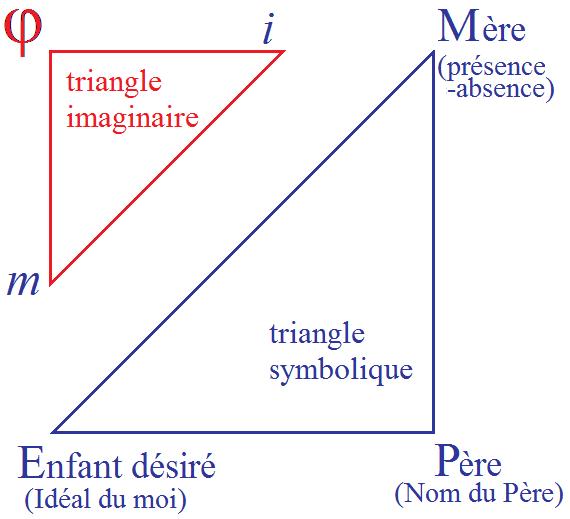
Ici, qu’avons-nous dans ce « triangle à trois pôles » qui constitue la position du sujet ? Le sujet en tant que dans son rapport avec une triade de termes qui sont les fondations signifiantes de tout son progrès ?
在这个构成主体位置的“三极三角形”中,我们有什么?主体同三个词项构成三元关系,而这三个词项是主体全部进程的能指基础。
原文 · s5-14-0058
Nommément la mère en tant qu’elle est le premier objet symbolisé, que son absence ou sa présence vont devenir pour le sujet le signe du désir auquel va s’accrocher son propre désir, autrement dit ce qui va faire ou non de lui, non pas simplement un enfant satisfait ou non, mais un enfant désiré ou non. Ceci ne constitue pas une construction arbitraire. Reconnaissez que je mets là en place quelque chose que notre expérience pas à pas nous a appris à découvrir. Nous avons su par l’expérience ce que comporte de conséquences en cascade, de déstructuration presque infinie, le fait pour un sujet, avant sa naissance, d’avoir été d’ores et déjà un enfant non désiré.
确切说,首先是母亲:她是第一个被象征化的客体;她的缺席或在场将成为主体所依附的那个欲望之符号,主体自身的欲望也将系于此。换言之,这一点将决定他不只是一个得到满足或未得到满足的孩子,而是一个被欲望或未被欲望的孩子。这并不是一种任意建构。请承认,我在这里安置的,是我们的经验一步一步教我们发现的东西。经验让我们知道,一个主体在出生以前就已经是一个未被欲望的孩子,会引发怎样层层相继、几乎无穷无尽的解构后果。
原文 · s5-14-0059
Ce terme est essentiel. Il est plus essentiel que d’avoir été à tel ou tel moment un enfant plus ou moins satisfait.
这个词项是根本性的。它比一个孩子曾在某时或多或少得到满足更加根本。
原文 · s5-14-0060
原文 · s5-14-0061
Le terme enfant désiré est celui qui répond à la constitution de la mère en tant que siège du désir.
被欲望的孩子这一词项所回应的,是母亲作为欲望所在地的构成。
原文 · s5-14-0062
À ceci répond toute cette dialectique du rapport de l’enfant au désir de la mère que j’ai essayé de vous montrer et qui se résume, qui se concentre en ceci, dans le fait primordial du symbole de l’enfant désiré, et ici le terme du père [Nom du père], pour autant qu’il est dans le signifiant, ce signifiant par quoi le signifiant lui-même est posé comme tel.
我曾试图向你们展示孩子同母亲欲望之关系的整套辩证法,它都回应于此,并可以概括、集中在这一点上:被欲望的孩子之象征这一原初事实;以及这里的父亲词项[父之名]——父亲位于能指之中,是那个让能指本身被设立为能指的能指。
原文 · s5-14-0063
Et c’est pour cela que le père est essentiellement créateur, je dirai même créateur absolu, celui qui crée avec rien, c’est pour autant que le signifiant, dans sa dimension originale, en lui-même, peut contenir le signifiant, qu’il se définit comme le surgissement de ce signifiant. C’est par rapport à cela que quelque chose d’essentiellement confus, indéterminé, non détaché de son existence et pourtant fait pour se détacher d’elle : le sujet en tant qu’il doit être signifié, a à se repérer.
正因如此,父亲本质上是创造者;我甚至要说,他是绝对的创造者,是从无中创造的人。因为能指在其原初维度中本身能够包含能指,父亲才被界定为这个能指的涌现。相对于这一点,某种在本质上混乱、未定、尚未同自身实存分离、却注定要同它分离的东西——作为必须被意指的主体——必须找到自己的方位。
原文 · s5-14-0064
Si des identifications sont possibles, c’est dans la mesure toujours où quelque chose pour le sujet se structure dans ce rapport triadique constitué au niveau du signifiant. Et s’il peut arriver à l’intérieur de son vécu à donner tel ou tel sens à ce quelque chose qui lui est donné par sa physiologie humaine particulière, c’est dans ce rapport que ceci se constitue.
认同之所以可能,始终是因为对主体而言,某种东西在能指层面所构成的这种三元关系中得到结构化。主体特殊的人类生理所给予他的东西,若能在他的亲历中获得这种或那种意义,也正是在这项关系中构成的。
原文 · s5-14-0065
Or je n’ai pas à revenir sur le fait de l’homologie des termes, de ce qui constitue au niveau du signifié, du côté où est le sujet par rapport à ces trois termes symboliques. Cette homologie - en partie je l’ai démontrée, je ne fais que cela en fin de compte ici - je vous demande, jusqu’à toujours plus ample informé, plus ample démonstration, de me suivre là-dessus. C’est dans le rapport à sa propre image que le sujet retrouve la duplicité du désir maternel par rapport à lui comme enfant désiré, qui n’est que symbolique. Il l’éprouve, il l’expérimente dans ce rapport à l’image de lui-même à laquelle peuvent venir se superposer tant de choses, ce quelque chose qui par un exemple s’illustre. Je vais le faire tout de suite.
我无须再谈诸词项的同源性,也无须再谈相对于这三个象征词项,在主体一侧的所指层面是如何构成的。这种同源性,我已经部分证明过——归根结底,我在这里做的无非就是证明它。在得到更多信息与更多论证以前,我请你们在这一点上跟随我。主体在同自己的形象的关系中,重新找到母亲对他的双重欲望——把他当作一个被欲望的孩子;而这个孩子本身只是象征性的。主体在同自身形象的关系中体验并经历它,许多东西都可以叠加在这个形象之上。有一个例子能够说明这一点,我马上来谈。
原文 · s5-14-0066
Hier soir j’ai fait allusion au fait d’avoir regardé d’assez près l’histoire de l’enfance de GIDE telle que Jean DELAY3 nous l’expose d’une façon véritablement exhaustive dans la pathographie qu’il nous a livrée de ce cas. Il est tout à fait clair que GIDE, « l’enfant disgracié » - comme l’a dit quelque part l’auteur à la vue photographique devant laquelle le personnage s’est senti frémir - que GIDE, l’enfant disgracié, l’enfant livré dans son érotisme, auto-érotisme primitif, aux images les plus inconstituées puisque, nous dit-il, il trouvait son orgasme dans son identification à des situations en quelque sorte catastrophiques, il trouvait très précisément sa jouissance dans la lecture de quelques termes, à la lecture de Madame de SÉGUR par exemple…
昨晚我提到,我仔细察看了纪德的童年史;让·德莱[注3]在交给我们的这份病例病理传记中,以真正穷尽无遗的方式陈述了这段历史。显然,纪德——“那个不讨喜的孩子”,作者曾在某张使传记人物战栗的照片前这样称他——这个在自身情欲、原初自体情欲中被交付给最未成形形象的孩子,据他告诉我们,会通过认同于某些灾难性场景来获得性高潮。他十分确切地在阅读某些词语时得到享乐,例如阅读塞居尔夫人的作品时……
[注3] 让·德莱:《安德烈·纪德的青年时代》,Gallimard,NRF,1957 年。
原文 · s5-14-0067
dont véritablement les livres sont fondamentaux de toute l’ambiguïté du sadisme primordial,
mais où le sadisme n’est peut-être pas le plus élaboré …où il a pris la forme de l’enfant battu, d’une servante qui laisse tomber quelque chose dans un grand « patatras »
原文 · s5-14-0068
de destruction de ce qu’elle tient entre les mains.
将其摔毁的形式。
原文 · s5-14-0069
D’où l’identification à ce personnage de GRIBOUILLE dans un conte d’ANDERSEN4, qui s’en va au fil de l’eau
他由此认同于安徒生一则故事中的格里布耶[注4]:这个人物顺流漂去,
[注4] 拉康在这里口误。格里布耶是乔治·桑小说《真正的格里布耶的故事》(1851)中的人物,后来也出现在塞居尔伯爵夫人的《格里布耶的妹妹》(1862)中,并非安徒生作品中的人物。
原文 · s5-14-0070
et finit par arriver à un lointain rivage, transformé en un rat mort, c’est-à-dire dans les formes les moins humainement constituées de cette douleur de l’existence.
最后抵达遥远的岸边,变成一只死老鼠——也就是化为这种实存之痛在人性上最未成形的形态。
原文 · s5-14-0071
Assurément, nous ne pouvons rien, là, appréhender d’autre, sinon ce quelque chose d’abyssal qui est constitué dans ce rapport premier avec une mère dont nous savons à la fois qu’elle avait de très hautes et très remarquables qualités, et ce je ne sais quoi de totalement élidé dans sa sexualité, dans sa vie féminine, qui met assurément en sa présence l’enfant, dans ses années de départ, dans une position totalement insituée.
当然,我们在这里无法把握别的,只能把握同母亲的最初关系所构成的某种深渊。我们知道,这位母亲既具有极其高尚而卓越的品质,她的性欲和女性生活中又有某种完全被略去的、说不清的东西;在孩子最初几年里,她的在场无疑把他置于一个完全无从定位的位置。
原文 · s5-14-0072
Le point tournant, le point où la vie du jeune GIDE reprend, si l’on peut dire, sens et constitution humaine, est dans ce moment d’identification crucial… qui nous est donné aussi clairement qu’il est possible de l’être dans son souvenir et qui laisse d’une façon non douteuse sa marque sur toute son existence, puisque aussi bien il en a conservé le point pivot et l’objet à travers toute son existence …dans cette identification à sa jeune cousine dont il ne suffit pas de donner le terme sous cette forme vague.
年轻纪德的生命重新获得——可以这样说——意义和人的构成,其转折点就在那个关键的认同时刻。关于这一时刻,他的回忆给出了尽可能清楚的叙述;它无疑在他的整个实存上留下了印记,因为他终其一生都保存着它的枢轴点和客体。这就是他对年轻表姐的认同;但仅以这种含糊说法给它命名,还远远不够。
原文 · s5-14-0073
Identification, c’est certain, il nous le dit. Quand ? Dans ce moment, dont on ne s’arrête pas assez à son caractère singulier, où il retrouve sa cousine en pleurs au deuxième étage de cette maison où il s’est précipité, non pas tant attiré par elle que par son flair, par son amour du clandestin qui sévit dans cette maison.
确实是认同,他自己这样告诉我们。它发生在什么时候?发生在一个人们没有充分注意其奇特性的时刻:他在那栋房子的二楼发现表姐正在哭泣。他冲进这栋房子,与其说是受她吸引,不如说是凭借自己对秘密之事的嗅觉,以及对这栋房子里横行的隐秘情事的迷恋。
原文 · s5-14-0074
Après avoir traversé le premier étage où la mère de cette cousine - sa tante - il la voit, ou plus exactement l’entrevoit plus ou moins au bras d’un amant, il trouve sa cousine en pleurs. Et là, somme d’ivresse, d’enthousiasme, d’amour, de détresse et de dévotion, il se consacre à « protéger cette enfant », nous dit-il plus tard. N’oublions pas qu’elle était son aînée : à cette époque GIDE [22-11-1869] avait 13 ans, et Madeleine [Madeleine Rondeaux : 07-12-1867] en avait 16.
他穿过一楼时,看见——或更准确说,多少瞥见——表姐的母亲、也就是他的姨母挽着一位情人;到了二楼,他发现表姐在哭。就在这里,陶醉、热忱、爱、痛苦与奉献汇聚到一起,他把自己奉献给“保护这个孩子”,后来他这样告诉我们。不要忘记,她比他年长:当时纪德[1869 年 11 月 22 日生]十三岁,玛德莱娜[玛德莱娜·隆多,1867 年 12 月 7 日生]十六岁。
原文 · s5-14-0075
Il se produit à ce moment ce quelque chose dont nous ne pouvons absolument pas comprendre le sens :
这时发生了某种事情;如果不把它放在如下关系中,我们就完全无法理解其意义:
原文 · s5-14-0076
- si nous ne le posons pas dans cette relation tierce où le jeune André se trouve, non pas seulement avec sa cousine, mais avec celle qui, à l’étage au-dessous, est en train d’évaporer les chaleurs de fièvre,
- 年轻的安德烈不只同表姐相处在这种第三项关系中;楼下还有那个正在消散高烧般欲火的女人;
原文 · s5-14-0077
- et si nous ne nous souvenons pas de cet antécédent qu’André GIDE nous livre dans La porte étroite, à savoir d’une tentative de séduction opérée par la dite mère de sa cousine.
- 我们还必须记得安德烈·纪德在《窄门》中告诉我们的那件前事:表姐的这位母亲曾试图诱惑他。
原文 · s5-14-0078
Ce qui se produit alors, c’est quelque chose qui est quoi ? Il est devenu « l’enfant désiré », André GIDE, au moment de cette séduction, dont il s’est d’ailleurs enfui avec horreur parce qu’en effet rien ne vient y apporter cet élément de médiation, cet élément d’approche qui fait de cela autre chose qu’un trauma, il s’est trouvé pour la première fois pourtant en position d’enfant désiré. Ce moment produit l’issue de cette situation nouvelle qui, d’un certain côté, va être pour lui salvatrice mais qui va néanmoins le fixer dans une position profondément divisée,
那么发生的是什么?在那次诱惑的时刻,安德烈·纪德成了“被欲望的孩子”。他当然惊恐地逃走了,因为那里确实没有任何中介要素、任何接近的要素,能够使这一事件不只是一次创伤;但无论如何,他第一次处在被欲望的孩子的位置上。这个时刻开启了一种新情境的出路;从某个方面说,它将拯救他,却也会把他固定在一个深度分裂的位置上,
原文 · s5-14-0079
eu égard au mode d’activité tardive, et je le répète sans médiation, dans lequel se produit cette rencontre.
这是因为这场相遇以一种迟来的,而且——我再说一次——没有中介的活动方式发生。
原文 · s5-14-0080
Que va-t-il garder dans la constitution de ce terme symbolique qui jusqu’alors lui manquait ? Il ne gardera rien d’autre que la place de l’enfant désiré qu’il va pouvoir enfin occuper par l’intermédiaire de sa cousine. À cette place où il y avait un trou, il y a maintenant une place, mais rien de plus, car à cette place, bien sûr il se refuse : il ne peut accepter le désir dont il est l’objet. Mais par contre son moi incontestablement ne cesse pas :
在构成这个此前始终欠缺的象征词项时,他会保留下什么?他只会保留被欲望的孩子的位置;借助表姐,他终于能够占据这个位置。原来有一个洞的位置现在有了一个位置,但仅此而已;因为他当然拒绝自己处在那里:他无法接受以自己为客体的欲望。可是反过来,他的自我无疑从未停止:
原文 · s5-14-0081
- de s’identifier, et ceci à jamais, sans le savoir, au sujet du désir duquel il est maintenant dépendant, c’est-à-dire lui,
- 在自己并不知情的情况下,永远认同于那个欲望主体——此后他依赖于这个主体,也就是他本人;
原文 · s5-14-0082
- de devenir amoureux à jamais, et jusqu’à la fin de son existence, de devenir amoureux de ce petit garçon qu’il a été un instant entre les bras de sa tante, de cette tante qui lui a caressé le cou, les épaules et la poitrine.
- 永远爱上——直到生命终结——他曾在姨母臂弯中短暂成为的那个小男孩;这位姨母曾抚摸他的脖颈、肩膀和胸膛。
原文 · s5-14-0083
Et nous verrons que toute sa vie est dans ce dont nous pouvons faire état, à savoir de ce qu’il nous a avoué, à savoir que dès son voyage de noces - chacun s’en époustoufle et s’en scandalise - et presque devant sa femme,
我们将看到,他整个一生都在我们有据可查的那种东西之中;也就是他亲口承认的:从蜜月旅行开始——人人都为此惊愕并感到丑闻——甚至几乎就在妻子面前,
原文 · s5-14-0084
il pense au « suppliciant délice », comme il s’exprime, du caressage des bras et des épaules des jeunes garçons qu’il rencontre dans le train.
他都会想到自己所谓抚摸火车上遇到的年轻男孩手臂和肩膀时那种“受刑般的欢悦”。
原文 · s5-14-0085
C’est là une page désormais célèbre qui fait partie de la littérature, dans laquelle GIDE montre ce qui, pour lui, reste le point privilégié de toute fixation de son désir. En d’autres termes, ce qui - au niveau de ce qui devient pour lui son idéal du moi - a été soustrait ici, à savoir le désir dont il est l’objet et qu’il ne peut supporter, il l’assume pour lui-même, il devient à jamais et éternellement amoureux de ce même petit garçon caressé qu’il n’a pas voulu, lui, être.
这是文学中一页如今已经著名的文字;纪德在那里展示了对他来说仍是欲望全部固着之特权点的东西。换言之,在后来成为他自我理想的层面上,这里有某物被抽离了:他作为客体的那种欲望是他无法承受的,于是他替自己承担了它;他从此永远、永久地爱上那个他自己拒绝成为的、受到抚摸的小男孩。
原文 · s5-14-0086
En d’autres termes, nous saisissons là ceci : que ce terme de *l’enfant désiré *où il faut que s’élabore quelque chose, où il faut qu’il rejoigne ce signifiant qui primordialement constitue le sujet dans son être, il faut que ce moi, ce point x où il est, le rejoigne d’une façon quelconque, que se constitue ici cet idéal du moi qui marque tout développement psychologique d’un sujet. Cet idéal du moi est marqué :
换言之,我们在这里把握到:被欲望的孩子这一词项,是某种东西必须得到展开的所在;主体必须在那里重新接上最初在其存在中构成他的那个能指。这个自我、他所处的这个 x 点,必须以某种方式同它接合;标示主体全部心理发展的这个自我理想必须在此形成。这个自我理想由如下东西标记:
原文 · s5-14-0087
- du signe du signifiant,
- 能指的符号;
原文 · s5-14-0088
- de savoir d’où il peut partir, à savoir - par progression à partir du moi - ou au contraire, sans que le moi puisse faire autre chose que de subir par une série d’accidents, livré aux aventures à partir du signifiant lui-même.
- 要知道它能够从何处出发:是从自我开始逐步推进;还是相反,自我只能经由一系列偶发事件承受它,从能指本身出发,任由历险摆布。
原文 · s5-14-0089
Autrement dit, de reconnaître que ce qui se produit à l’insu du sujet par la seule succession d’accidents, que ce qui lui permet de subsister dans sa position signifiante d’enfant plus ou moins désiré, ce quelque chose est là qui nous montre que c’est à la même place - selon que cela se produit par la voie consciente ou par la voie inconsciente - c’est à la même place que se produit ce que nous appelons dans un cas, idéal du moi, et dans l’autre cas, perversion.
换言之,我们必须承认,仅凭一连串主体并不知情的偶发事件而发生的事情,使他能够维持自己作为一个或多或少被欲望的孩子的能指位置;它向我们表明,无论这是经由意识途径还是无意识途径发生,发生的位置都是同一个位置:在一种情形中,我们称之为自我理想;在另一种情形中,我们称之为倒错。
原文 · s5-14-0090
La perversion d’André GIDE ne tient pas tellement dans le fait qu’il ne peut désirer que des petits garçons,
安德烈·纪德的倒错,与其说在于他只能欲望小男孩——
原文 · s5-14-0091
que le petit garçon qu’il avait été, la perversion d’André GIDE consiste en ceci : c’est que là, il ne peut se constituer qu’à perpétuellement se dire, se soumettre - dans cette Correspondance qui pour lui est le cœur de son œuvre - qu’à être celui qui se fait valoir à la place occupée par sa cousine, celui dont toutes les pensées sont tournées vers elle, celui qui lui donne littéralement à chaque instant tout ce qu’il n’a pas, mais rien que cela, qui se constitue comme personnalité dans elle, par elle, et par rapport à elle. Ce qui le met par rapport à elle dans cette sorte de dépendance mortelle qui le fait s’écrier quelque part :
也就是他本人曾是的那个小男孩——不如说在于:他只能不断向自己言说、让自己服从于那部对他而言是作品核心的《通信集》,才能构成自己。他要成为那个让自己在表姐所占据的位置上获得价值的人,那个所有思想都朝向她的人;他一刻不停地在字面上把自己没有的一切给予她,但也仅仅给予这些;他在她之中、通过她、相对于她,把自己构成为人格。这使他同她处于一种致命依赖之中,以至他在某处喊道:
原文 · s5-14-0092
« Vous ne pouvez savoir ce que c’est que l’amour d’un uraniste ! C’est quelque chose comme un amour embaumé. »
“你们无法知道一个乌拉宁主义者的爱是什么!那就像一种经过防腐的爱。”
原文 · s5-14-0093
Cette entière projection de ce qui est sa propre essence dans ce qui est la base, et en effet le cœur et la racine, chez lui de son existence d’homme littéraire, d’homme tout entier dans le signifiant et dans ses rapports et dans ce qu’il communique, c’est par là qu’il est saisifié dans sa relation inter-humaine et que pour lui cette femme non désirée peut être en effet l’objet du suprême amour, qui lui est essentiellement lié, et quand cet objet avec lequel il a rempli ce trou de l’amour sans désir, quand cet objet vient à disparaître, il pousse ce misérable cri dont j’ai indiqué hier soir dans ce que je vous disais, la parenté avec le cri comique par excellence : « Ma cassette ! ma chère cassette ! », la cassette de L’Avare.
他把自己的全部本质投射到那上面;它确实是他作为文学之人、作为一个完全处在能指及其关系与交流中的人的实存之基础、核心和根。正因如此,他在人际关系中被攫住;对他来说,这个未被欲望的女人能够成为至高之爱的客体,并同他根本相系。当这个他用来填补无欲望之爱的洞的客体消失时,他发出那声可怜的呼喊;昨晚我已经指出,它同最典型的滑稽呼喊具有亲缘关系:“我的钱匣!我亲爱的钱匣!”——《悭吝人》中那个钱匣。
原文 · s5-14-0094
Toutes les passions, en tant qu’elles sont aliénation du désir dans un objet, sont sur le même pied. Bien sûr la cassette de L’Avare nous fait plus facilement rire - au moins si nous avons en nous quelque accent d’humanité, ce qui n’est pas le cas universel - que la disparition de la correspondance de GIDE avec sa femme. Évidemment, ce devrait être pour nous tous une chose ayant son prix pour toujours.
一切激情,只要是欲望在某个客体中的异化,就处在同一层面。当然,《悭吝人》的钱匣比纪德同妻子的通信消失更容易让我们发笑——至少当我们心中还有一点人性重音时如此,而这并不是人人都有。显然,那些通信对我们所有人来说,本应是某种永远具有价值的东西。
原文 · s5-14-0095
Il n’en reste pas moins que fondamentalement, c’est la même chose, et que le cri de GIDE lors de la disparition de cette correspondance est le même cri que celui de la comédie, que celui de l’avare HARPAGON. Cette comédie dont il s’agit, qu’est-ce que c’est ? La comédie est quelque chose qui nous atteint par mille propos dispersés.
然而从根本上说,它们仍是同一回事;纪德在那些通信消失时的呼喊,同喜剧中吝啬鬼阿巴贡的呼喊是同一声呼喊。我们所说的喜剧究竟是什么?喜剧是通过散布各处的无数话语触及我们的东西。
原文 · s5-14-0096
La comédie n’est pas le comique. Tout comique doit pouvoir, si nous donnons de la comédie une théorie correcte, si nous croyons qu’au moins pendant un temps la comédie a été la production devant la communauté - la communauté en tant qu’elle représente un groupe d’hommes, c’est-à-dire comme constituant au-dessus d’elle l’existence d’un Homme comme tel - si la comédie a été ce qu’elle semble avoir été à un moment où la représentation du rapport de l’homme à la femme était l’objet de quelque chose qui avait une valeur cérémonielle, de quelque chose qui fait que je ne suis pas le premier à comparer le théâtre à la messe : tous ceux qui se sont approchés de la question du théâtre
喜剧并不等于滑稽。如果我们给出一套正确的喜剧理论,任何滑稽之物都必须能够在其中得到理解。如果我们相信,至少曾有一段时期,喜剧是在共同体面前上演的作品——所谓共同体,是一个人的群体,也就是在自身之上构成一个“人”本身的存在——如果喜剧曾在某个时期成为如下东西:男人与女人关系的表象具有某种仪式价值,以至我并不是第一个把戏剧比作弥撒的人;那么,凡是接近戏剧问题的人,
原文 · s5-14-0097
ont marqué qu’assurément, seul à notre époque, le drame de la messe représente essentiellement ce qui, à un moment de l’histoire, a représenté le développement complet des fonctions du théâtre.
都曾指出:在我们的时代,只有弥撒之戏剧仍从根本上表象着历史上某一时刻戏剧功能的完整展开。
原文 · s5-14-0098
Si d’une part donc, au temps de la grande époque du théâtre grec la tragédie représente ce rapport de l’homme à la parole en tant qu’il le prend dans sa fatalité et dans une fatalité conflictuelle, alors, pour autant que la chaîne symbolique est le lien de l’homme à la loi signifiante, elle n’est pas la même au niveau de la famille et au niveau de la communauté : ceci est l’essence de la tragédie.
因此,如果在希腊戏剧的伟大时代,悲剧表象人同言说的关系——这种关系在命运性而且冲突性的命运中攫住人——那么,只要象征链是人同能指法则的纽带,它在家庭层面与共同体层面就并不相同:这就是悲剧的本质。
原文 · s5-14-0099
La comédie représente ceci, et c’est non sans lien avec la tragédie, puisque vous le savez, une comédie complétait toujours la trilogie tragique. Nous ne pouvons pas la considérer indépendamment, et cette comédie, je vous montrerai que nous en trouvons la trace et l’ombre jusque dans le commentaire marginal du drame chrétien lui-même. Bien sûr, pas à notre époque du christianisme constipé, où on n’oserait pas accompagner les cérémonies de ces robustes farces qui sont constituées par ce qu’on appelait le « Risus pascalis », mais laissons ceci de côté.
喜剧表象如下东西,而且它并非与悲剧无关;你们知道,一部喜剧总是补足悲剧三部曲。我们不能脱离悲剧来考察它。我将向你们表明,甚至在基督教戏剧本身的边缘评注中,我们也能找到这种喜剧的踪迹和影子。当然,不是在我们这个便秘的基督教时代;如今人们不敢再用那些曾被称作“Risus pascalis”、即“复活节之笑”的粗壮闹剧来伴随仪式。不过先把这一点放在一边。
原文 · s5-14-0100
La comédie se présente comme le moment où le sujet et l’homme tentent de prendre ce rapport à la parole comme étant, non plus son engagement, son déguisement dans ces nécessités contraires, mais comme étant après tout non seulement son affaire, mais ce quelque chose dans lequel il a à s’articuler lui-même comme celui qui en profite, qui en jouit, qui le consomme, et qui - pour tout dire - est celui qui, de cette communion, est destiné à absorber la substance et la matière.
喜剧呈现为这样一个时刻:主体与人试图把同言说的关系不再当作自己在相反必然性中的投入与伪装,而终究当作自己的事务;不仅如此,他还必须在其中把自己分节为从中获益、享用它、消费它的人;总而言之,是那个注定要从这种共融中吸收其实质与质料的人。
原文 · s5-14-0101
La comédie, peut-on dire, est quelque chose comme la représentation de la fin du repas communionnaire à partir duquel la tragédie elle-même a été évoquée. C’est l’homme en fin de compte, qui consomme tout ce qui a été là présentifié
可以说,喜剧就像共融宴席终场的表象;悲剧本身正是从这场宴席中被召唤出来。归根结底,是人在消费那里得到呈现的
原文 · s5-14-0102
de sa substance et de sa chair commune, et il s’agit de savoir ce que cela va donner.
属于他的实质和共同肉身;现在要知道,这会产生什么。
原文 · s5-14-0103
Ce que cela va donner, pour le comprendre je crois qu’il n’y a absolument pas d’autre moyen que de vous reporter à l’ancienne comédie, dont toutes les comédies qui ont suivi ne sont qu’une sorte de dégradation où les traits sont toujours reconnaissables, aux comédies d’ARISTOPHANE, à ces comédies comme « L’Assemblée des femmes », comme « Lysistrata », comme les « Thesmophories ».
要理解它会产生什么,我相信绝没有别的办法,只能回到古代喜剧;后来的所有喜剧只是它的某种退化形式,但其中的特征仍然可辨。请回到阿里斯托芬的喜剧,如《公民大会妇女》《吕西斯特拉忒》和《地母节妇女》。
原文 · s5-14-0104
Il faut vous y reporter pour voir où cela nous mène, et bien sûr c’est à celles-là que je me reportais quand
你们必须回到这些作品,才能看到它把我们引向何处;当然,在我开始向你们指出如下方向时,我参照的正是这些作品:
原文 · s5-14-0105
je commençais de vous indiquer dans quel sens la comédie manifeste, par une sorte de nécessité interne, ce rapport du sujet à partir du moment où c’est son propre signifié - à savoir le fruit du résultat de ce rapport de signifiant - qui doit venir effectivement sur la scène de la comédie, pleinement développé.
一旦主体自己的所指——也就是能指关系之结果所结出的果实——必须实际登上喜剧舞台并得到充分展开,喜剧便因某种内在必然性而显现出主体的这种关系。
原文 · s5-14-0106
C’est ce terme qui désigne lui-même, nécessairement en tant qu’il est signifié, c’est-à-dire en tant qu’il recueille, qu’il assume, qu’il jouit de la relation à un fait qui, lui, est fondamentalement dans un certain rapport avec l’ordre signifiant, l’apparition de ce signifié qui s’appelle le phallus.
这个词项本身必然指称那种所指之物:它收取、承担并享用同一个事实的关系,而该事实本身从根本上同能指秩序处在某种关系中;这就是那个名为阳具的所指的出现。
原文 · s5-14-0107
Il se trouve que depuis que je vous ai apporté ce terme, je n’ai eu qu’à ouvrir ce quelque chose, dans les jours qui ont suivi l’esquisse rapide que je vous avais donnée de L’école des femmes de MOLIÈRE, comme représentant ce rapport comique essentiel, quelque chose que je crois pouvoir considérer comme une très singulière résurgence d’un chef-d’œuvre véritablement extraordinaire de la comédie, si ce que je crois lire dans la comédie d’ARISTOPHANE est juste, et qui n’est rien d’autre que « Le balcon » de Jean GENÊT. Qu’est-ce que Le balcon de Jean GENÊT ?
自从我向你们提出这个词项以后,只需翻开某部作品,我便发现了如下东西。此前,我曾很快勾勒莫里哀的《太太学堂》,把它视为这种根本喜剧关系的表象;此后几天里,我读到了一种在我看来极为独特的复现——如果我对阿里斯托芬喜剧的解读正确,它所复现的是一部真正非凡的喜剧杰作。这就是让·热内的《阳台》。让·热内的《阳台》是什么?
原文 · s5-14-0108
Vous savez que d’assez vives oppositions ont été formées à ce qu’il nous soit présenté. Nous n’avons bien entendu pas
你们知道,这部戏的上演曾遭到相当激烈的反对。对此,我们当然不必惊讶;
原文 · s5-14-0109
à nous étonner d’une pareille chose dans un état du théâtre où on peut dire que sa substance et son intérêt consistent principalement en ce que sur la scène les acteurs se fassent valoir à des titres divers, ce qui bien entendu comble d’aise et de chatouillement ceux qui sont là pour s’identifier à cette sorte d’exhibition, il faut bien l’appeler par son nom.
在当前的戏剧状态中,可以说戏剧的实质与趣味主要在于演员以各种名目在舞台上表现自己;这自然会让那些前来认同于这种展示的人感到既惬意又刺激——我们只能直呼其名。
原文 · s5-14-0110
Si le théâtre est autre chose assurément, je crois qu’une pièce comme celle qui nous est articulée par Jean GENÊT est bien faite pour nous le faire sentir, mais il n’est pas certain non plus que le public soit en état de l’entendre. Il me paraît néanmoins difficile de ne pas en voir l’intérêt dramatique, ce que je vais essayer de vous exposer.
如果戏剧确实还是别的东西,我相信让·热内向我们分节出来的这部戏足以使我们感受到;但观众是否有能力听懂它,也并不确定。不过,我觉得我们很难看不到它的戏剧趣味;现在我来试着向你们说明。
原文 · s5-14-0111
Voyez-vous, GENÊT parle de quelque chose qui veut dire à peu près ceci, je ne dis pas qu’il sait ce qu’il fait, cela n’a aucune espèce d’importance qu’il le sache ou qu’il ne le sache pas, CORNEILLE ne savait probablement pas non plus ce qu’il écrivait en tant que CORNEILLE, n’empêche qu’il l’a fait avec une grande rigueur…
你们看,热内所谈的东西大致意味着如下内容。我并不是说他知道自己在做什么;他知道与否毫不重要。高乃依作为高乃依,大概也不知道自己写的是什么,但他仍然以极大的严密性完成了它……
原文 · s5-14-0112
- si les fonctions humaines en tant qu’elles se rapportent au symbolique, à savoir le pouvoir de celui qui, comme on dit, lie et délie - à savoir ce qui a été conféré par le Christ à la postérité de Saint-Pierre et à tous les épiscopes [religere, en latin] - lie et délie l’ordre du péché, de la faute,
- 如果人的功能只要涉及象征界,就包括那位据说能够捆绑和解开之人的权力——也就是基督赋予圣彼得的后继者及全体主教的权力[拉丁文 religere]——把罪与过错的秩序捆绑起来或解开;
原文 · s5-14-0113
- si le pouvoir de celui qui condamne, qui juge et qui châtie, à savoir celui du juge,
- 如果判罪、审判与惩罚之人的权力,也就是法官的权力;
原文 · s5-14-0114
- si le pouvoir de celui qui assume le commandement dans ce grand phénomène qui dépasse infiniment celui de la guerre, et qui donc, est le chef de guerre, plus communément le général,
- 如果在那种远远超越战争的大现象中承担指挥之人的权力,也就是战争首领、通常所谓将军的权力;
原文 · s5-14-0115
- si tous ces personnages représentent donc des fonctions par rapport auxquelles le sujet se trouve en quelque sorte comme aliéné par rapport à cette parole dont il se trouve le support en une fonction qui dépasse de beaucoup sa particularité,
- 如果所有这些人物都表象着一些功能,而主体相对于自己所承载的言说,在这些功能面前以某种方式陷入异化,因为该功能远远超越他的个别性;
原文 · s5-14-0116
- si ces personnages vont être tout d’un coup soumis à la loi de la comédie,
- 如果这些人物突然都要服从喜剧的法则;
原文 · s5-14-0117
…c’est-à-dire si nous nous mettons à nous représenter ce que c’est que de jouir de ces positions, positions d’irrespect sans doute que de poser la question ainsi, mais l’irrespect de la comédie n’est pas quelque chose auquel il faille s’arrêter sans essayer de savoir ce qui en résulte un peu plus loin.
……也就是说,如果我们开始向自己表象:享用这些位置是什么样子。如此提问无疑把它们置于不敬的位置;但我们不能停在喜剧的不敬面前,而不试着了解再往前会产生什么。
原文 · s5-14-0118
Bien sûr, c’est toujours dans quelque période de crise, c’est au suprême moment de la détresse d’Athènes - de par précisément l’aberration d’une série de mauvais choix et d’une soumission à la loi de la cité qui paraît littéralement l’entraîner à sa perte - qu’ARISTOPHANE essaye ce réveil qui consiste à dire qu’après tout, on s’épuise dans cette guerre sans issue, qu’il n’y a rien de tel que de rester chez soi bien au chaud et de retrouver sa femme.
当然,这总发生在某种危机时期。恰恰由于一连串错误选择的偏差,并且服从城邦那似乎在把它真正拖向毁灭的法律,雅典陷入最深的困厄;就在这个最高时刻,阿里斯托芬试图把人唤醒:我们终究正在这场没有出路的战争中耗尽自己,还不如舒舒服服待在家里,重新找到自己的妻子。
原文 · s5-14-0119
Ce n’est pas là quelque chose qui est à proprement parler posé comme une morale, c’est une reprise du rapport essentiel de l’homme à son état qui est suggérée, sans que nous ayons à savoir d’ailleurs si les conséquences en sont plus ou moins salubres.
这里严格说来并不是提出一种道德,而是在建议重新拾回人同自身状态的根本关系;至于其后果是否更为有益,我们无须知道。
原文 · s5-14-0120
Ici nous voyons donc « l’Évêque », « le Juge » et « le Général », devant nous promus à partir de cette question :
于是,我们眼前这位“主教”、“法官”与“将军”,都是从以下问题出发得到提升的:
原文 · s5-14-0121
qu’est-ce que cela peut bien être que de jouir de son état d’« Évêque », de « Juge » ou de « Général » ? Et alors ceci vous explique l’artifice par lequel ce Balcon n’est autre que ce qu’on appelle « une maison d’illusion ».
享用“主教”、“法官”或“将军”的身份,究竟可能是什么样子?由此,你们便能理解《阳台》所采用的机关:这座“阳台”无非就是所谓“幻象之家”。
原文 · s5-14-0122
C’est à savoir que si effectivement ce qui se produit au niveau des différentes formes de l’idéal du moi que j’ai situé ici, est quelque part quelque chose qui effectivement n’est pas comme on le croit, l’effet d’une supplication au sens où ce serait la neutralisation progressive de fonctions enracinées dans l’intérieur, mais bien au contraire quelque chose qui est toujours plus ou moins accompagné d’une érotisation du rapport symbolique.
事实上,在我置于这里的自我理想的不同形式层面发生的事情,并不像人们以为的那样,是一种昇华的结果——仿佛根植于内部的功能被逐步中和;恰恰相反,它总或多或少伴随着象征关系的情欲化。
原文 · s5-14-0123
L’assimilation peut être faite de celui qui, dans sa position et dans sa fonction d’« Évêque », de « Juge » ou de « Général », jouit de son état avec ce quelque chose que tous les tenanciers de maisons d’illusion connaissent, à savoir le petit vieux qui vient se satisfaire d’une position strictement calculée qui le mettra pour un instant dans la plus étrange diversité de position assumée par rapport à une partenaire complice qui voudra bien assurer le rôle d’être en l’occasion sa répondante.
有些人以“主教”、“法官”或“将军”的地位和功能享用自己的身份;他们可以同所有幻象之家的经营者都熟悉的那种人相提并论:一个小老头前来满足于一种经过严格计算的位置,在短短一刻中承担极其怪异而多样的位置;同谋的女伴则愿意在这场合扮演同他相应的角色。
原文 · s5-14-0124
C’est ainsi que nous voyons quelqu’un qui est employé dans quelque établissement de crédit, qui vient là se revêtir des ornements sacerdotaux pour obtenir d’une prostituée complaisante une confession dont bien entendu, elle n’est qu’un simulacre, et dont il lui faut bien que par quelque degré la vérité s’approche, autrement dit que quelque chose dans l’intention de sa complice lui permette d’y voir cette relation à une jouissance coupable à laquelle il lui faut au moins croire qu’elle participe… et ce n’est pas la moindre singularité de l’art, du lyrisme avec lequel le poète Jean GENÊT sait devant nous poursuivre ce dialogue du personnage assurément grotesque au-delà de toute expression, grotesque à des dimensions grandies encore : il le fait monter sur des patins pour que sa position caricaturale en soit encore exhaussée …et dans laquelle nous voyons le sujet pervers assurément se complaire à chercher sa satisfaction dans
于是,我们看到某个信贷机构的雇员来到这里,披上祭司礼服,要一名顺从的妓女向他告解。她的告解当然只是一场仿制,但他需要真理以某种程度靠近它;换言之,他的同谋必须在意图上提供某些东西,让他能够从中看到同一种罪疚享乐的关系——他至少必须相信她也参与其中……诗人让·热内以何等艺术与抒情在我们面前延展这一人物的对话,正是作品的一大独特之处;这人物确实怪诞到了难以言表的地步,而且以放大的尺度变得更加怪诞:热内让他踩上高跷,好让他的讽刺位置被抬得更高……我们在其中看到,倒错主体确实沉湎于寻求自己的满足,
原文 · s5-14-0125
ce quelque chose à quoi il se met en rapport, avec une image, avec une image pourtant en tant qu’elle est le reflet
在他使自己与之发生关系的某种东西中,也就是与一个形象发生关系;但这个形象是
原文 · s5-14-0126
de quelque chose d’essentiellement signifiant.
某种本质上属于能指之物的反映。
原文 · s5-14-0127
Autrement dit, en trois grandes scènes GENÊT nous présentifie, nous incarne sur le plan de la perversion ce qui, à partir de ce moment-là prend son nom, à savoir ce que dans un langage dru nous pouvons aux jours de grand désordre appeler : « tout le bordel dans lequel nous vivons », en tant que c’est - comme toute société - toujours plus ou moins en état de dégradation.
换言之,热内在三个大场景中,把某种东西在倒错层面向我们呈现并赋予肉身;它从此获得了自己的名字。用粗粝的语言说,我们可以在一片大乱的日子里称它为:“我们生活其中的整个妓院/烂摊子”;和一切社会一样,它总处在程度不等的退化状态中。
原文 · s5-14-0128
Car la société ne saurait se définir autrement que par un état plus ou moins avancé de dégradation de la culture : tout le bordel - à savoir toute cette confusion qui s’établit dans les rapports pourtant sacrés et fondamentaux de l’homme et de la parole - tout le bordel est là représenté à sa place, et nous savons de quoi il retourne.
因为社会只能被界定为文化或深或浅的退化状态:整个妓院、也就是人与言说之间那些神圣而根本的关系中建立起来的全部混乱,都在那里、在它恰当的位置得到表象;而我们知道这究竟是怎么回事。
原文 · s5-14-0129
De quoi donc s’agit-il ?
那么,所涉及的究竟是什么?
原文 · s5-14-0130
Il s’agit bien de quelque chose qui nous incarne le rapport du sujet aux fonctions de la loi dans leurs formes diverses et dans leurs formes les plus sacrées comme étant elles-mêmes quelque chose qui se poursuit par une série de dégradations où le saut est pour un instant fait, à savoir que ce n’est pas autre chose que l’« Évêque » lui-même, le « Juge » et le « Général » que nous voyons ici en posture de spécialistes, comme on s’exprime en termes de perversion,
所涉及的,确实是某种把主体同法律功能的关系赋予肉身的东西;这些功能具有多种形式,甚至最神圣的形式,可它们本身又在一连串退化中延续。这里一度发生了一次跳跃:我们眼前处在“专家”姿态中的,无非正是“主教”本人、“法官”与“将军”——倒错术语就是这样说的;
原文 · s5-14-0131
et qui mettent en cause le rapport du sujet avec la fonction de la parole.
他们把主体同言说功能的关系置于问题之中。
原文 · s5-14-0132
Que se passe-t-il ? Il se passe ceci, que ce rapport, si c’est un rapport adultéré, si c’est un rapport où chacun a échoué et où personne ne se retrouve, il n’en reste pas moins que ce rapport continue de se soutenir. Si dégradé qu’il soit là, à être présenté devant nous, il n’en reste pas moins, ce rapport, à savoir subsister purement et simplement, si ce n’est comme dépendance et reconnaissance légitime de ce rapport, tout au moins comme quelque chose qui est lié à ceci, qu’il existe ce qu’on appelle « son ordre ». Or, ce rapport au maintien de l’ordre, à quoi se réduit-il si une société est venue à son plus extrême *désordre *? Il se réduit à quelque chose qui s’appelle la police.
发生了什么?发生的是:如果这种关系已经掺假,如果在这种关系中人人都失败、无人能找到自己,它却仍然继续得到支撑。无论它在我们面前呈现得多么退化,这种关系毕竟仍然存在,仍然纯粹而简单地存续;即使不是作为对这种关系的依赖与合法承认,也至少是作为同如下事实相联系的东西:所谓“它的秩序”仍然存在。然而,如果一个社会已经陷入最极端的失序,同维持秩序的这种关系会缩减为什么?它缩减为所谓警察。
原文 · s5-14-0133
Cette sorte de recours dernier, de dernier droit, de dernier argument de l’ordre qui s’appelle le maintien de l’ordre, qui se crée à l’aide de l’instauration, comme étant le centre en fin de compte de la communauté, de ce qui se présente également à son origine, à savoir les « trois piques croisées » et au centre du campus, cette réduction de tout ce qui est l’ordre, à son maintien, ceci est incarnée dans le personnage pivot, central, du drame de GENÊT, à savoir le Préfet de police.
秩序那种名为维持秩序的最后诉求、最后权利与最后论据,借助如下建立而被创造:作为共同体最终的中心,它也呈现为共同体起源处的东西,即“三支交叉长矛”,位于广场中央。把全部秩序缩减为对秩序的维持,由热内戏剧中的核心枢轴人物——警察总监——赋予肉身。
原文 · s5-14-0134
L’hypothèse est celle-ci, et elle est vraiment très jolie : c’est que le Préfet de police, à savoir celui qui sait essentiellement que sur lui repose ce maintien de l’ordre et qu’il est en quelque sorte le terme dernier, le résidu de tout pouvoir, le Préfet de police, son image ne s’est pas encore élevée à une suffisante noblesse pour qu’aucun des petits vieux qui viennent dans le bordel, demandent à avoir les ornements, les attributs, le rôle et la fonction du Préfet de police.
假设如下,而且非常漂亮:警察总监本质上知道秩序的维持落在自己身上,自己以某种方式是最后的词项、全部权力的残余;但他的形象尚未升到足够高贵的程度,以至前来妓院的小老头中还没有一个要求获得警察总监的服饰、属性、角色与功能。
原文 · s5-14-0135
Il y en a qui savent jouer au « Juge », et qui, devant une petite prostituée, pour qu’elle s’avoue voleuse rentrent d’ailleurs en lui pour obtenir cet aveu, car « Comment serais-je juge si tu n’étais pas voleuse ? », dit le « Juge ». Mais je vous passe ce que dit « le Général » à sa jument. Par contre personne n’a demandé à être le Préfet de police. Ceci, bien entendu, est pure hypothèse : nous n’avons pas assez d’expérience des bordels pour savoir si effectivement depuis longtemps le Préfet de police s’est élevé à la dignité des personnages dans la peau desquels on peut jouir.
有人懂得扮演“法官”;为了让一个小妓女承认自己是小偷,他甚至进入她体内来取得这项供认,因为“如果你不是小偷,我怎么会是法官?”这个“法官”这样说。至于“将军”对他的母马说了些什么,我就略过不谈。相反,从来没有人要求成为警察总监。这当然纯属假设:我们对妓院的经验还不够多,无法知道警察总监是否早已升到这样一种人物的尊严——人们可以钻进他们的皮囊里享乐。
原文 · s5-14-0136
Mais le Préfet de police - car là le Préfet de police est le bon ami de la tenancière de tout le bordel : je ne cherche pas du tout ici à faire de la théorie, pas plus que je n’ai dit qu’il s’agissait de choses concrètes - le Préfet de police vient et interroge anxieusement : « Y en a-t-il un qui a demandé à être le Préfet de police ? ». Et ceci n’arrive jamais.
可是警察总监——因为这里的警察总监是整个妓院女老板的密友;我完全不是在这里做理论,也从未说过这些是具体事实——会前来焦急地询问:“有没有人要求成为警察总监?”而这种事从未发生。
原文 · s5-14-0137
De même qu’il n’y a pas d’uniforme de Préfet de police. Nous avons vu s’étaler l’habit, la toque du « Juge », le képi du « Général » sans compter le pantalon de ce dernier, mais il n’y a personne qui soit entré dans la peau du Préfet de police pour faire l’amour. C’est ceci qui est le pivot du drame.
同样,警察总监也没有制服。我们已经看见“法官”的长袍与法冠、“将军”的军帽招摇展开,更不用说后者的长裤;但没有人为做爱而钻进警察总监的皮囊。戏剧的枢轴就在这里。
原文 · s5-14-0138
Or sachez que tout ce qui se passe à l’intérieur du bordel se passe pendant qu’autour la révolution fait rage. Tout ce qui se passe - et je vous en passe : vous aurez beaucoup de plaisir de découverte à lire cette comédie -
你们要知道,妓院内部发生这一切的时候,外面的革命正在肆虐。里面发生的一切——我略过许多;阅读这部喜剧时,你们将获得大量发现的乐趣——
原文 · s5-14-0139
tout ce qui se passe à l’intérieur - et c’est loin d’être aussi schématique que ce que je vous dis, il y a des cris, il y a des coups, enfin on s’amuse - est accompagné du crépitement des mitraillettes à l’extérieur.
里面发生的一切远没有我说得这样图式化:有叫喊,有枪击,总之大家玩得很开心;外面则始终响着冲锋枪的哒哒声。
原文 · s5-14-0140
La ville est en révolution, et bien entendu toutes ces dames s’attendent à périr en beauté, massacrées par les brunes
全城都在革命;这些女人当然都料想自己会壮烈死去,被那些黑发而
原文 · s5-14-0141
et vertueuses ouvrières qui sont ici censées représenter l’homme entier, l’homme réel, celui qui ne doute pas que son désir peut arriver à l’avènement, à savoir à se faire valoir comme tel et d’une façon harmonieuse. La conscience prolétarienne a toujours cru au succès de la morale, elle a tort ou elle a raison, qu’importe…
贞洁的女工屠杀;女工在这里被认为表象完整的人、真实的人——那种毫不怀疑自己的欲望能够走向实现、能够作为欲望本身以和谐方式确立价值的人。无产阶级意识始终相信道德能够成功;它对也好,错也好,没什么关系……
原文 · s5-14-0142
Ce qui importe c’est que Jean GENÊT nous montre l’issue de l’aventure - je suis forcé d’aller un peu vite - en ceci que le Préfet de police, lui, ne doute pas, parce que c’est sa fonction. Comme c’est sa fonction - c’est à cause de cela que la pièce se déroule comme elle se déroule - le Préfet de police ne doute pas, qu’« après comme avant » la révolution, ce sera toujours le bordel.
重要的是,让·热内向我们展示了这场冒险的结局——我不得不讲快一点。警察总监毫不怀疑,因为这就是他的功能。正由于这是他的功能——也正因此,戏剧才如此展开——警察总监毫不怀疑,革命“前后”都永远还是这个妓院/烂摊子。
原文 · s5-14-0143
Il sait que la révolution en ce sens est un jeu, et en effet, en un tour de main que je vous passe… car il y a encore là une fort belle scène où le diplomate de race vient éclairer l’aimable groupe qui se trouve ici au centre de la maison d’illusion sur ce qui se passe au palais royal, à savoir là, dans son état de plus grande *légitimité *: la reine brode, et ne brode pas - la reine ronfle, elle ronfle et ne ronfle pas - la reine brode un petit mouchoir : il s’agit de savoir ce qu’il y aura au milieu, à savoir un cygne, un cygne dont on ne sait pas encore s’il ira sur la mer, sur un étang ou sur une tasse de thé …je vous passe donc ce qui concerne l’évanouissement dernier du symbole.
他知道,这个意义上的革命是一场游戏;而且事情的确转瞬即变,我略过其中细节……这里还有一个十分精彩的场景:一位老练的外交官来到幻象之家的中心,向这个友善群体说明王宫里发生的事——也就是权力处在最大合法性之处发生的事:王后绣着东西,又不绣;王后打着鼾,又不打鼾;王后绣一方小手帕,现在要决定中间绣什么——一只天鹅;人们还不知道天鹅将落在海上、池塘上,还是一杯茶上……我就略过象征最后消失的这一部分。
原文 · s5-14-0144
Mais ce qui se produit est que celle qui se fait la voix, la parole de la révolution, à savoir une des prostituées qui a été enlevée par un vertueux plombier et qui se trouve à remplir le rôle de la femme en bonnet phrygien sur les barricades avec ceci de plus qu’elle est une sorte de Jeanne d’Arc, à savoir qu’elle saura - elle la connaît dans les coins,
但随后发生的是,有人让自己成为革命的声音、革命的言说。她原是一名妓女,被一个正直的水管工带走,如今在街垒上戴着弗里吉亚帽,扮演女性角色;除此以外,她还是某种圣女贞德。也就是说,她懂得如何同他们说话、如何回答他们——她熟悉男性辩证法的一切角落,
原文 · s5-14-0145
la dialectique masculine parce qu’elle a été là où on l’entend se développer dans toutes ses phases - elle saura leur parler et leur répondre, la dite Chantal, puisqu’on l’appelle ainsi dans cette pièce.
因为她曾待在能够听见这种辩证法各个阶段逐一展开的地方。这位女子叫尚塔尔,戏中就是这样称呼她的。
原文 · s5-14-0146
Et elle est escamotée en un tour de main, c’est-à-dire qu’elle reçoit une balle dans la peau et qu’immédiatement après le pouvoir apparaît incarné par la maîtresse de la maison en question, Irma, la tenancière du bordel, qui assume, et avec quelle supériorité, les fonctions de la reine. N’est-elle pas, elle aussi, quelqu’un qui est passé au pur état de symbole, puisque, comme il l’exprime quelque part : « chez elle rien n’est vrai sinon ses bijoux » ?
转瞬之间,她便被抹去——也就是说,她身中一弹。紧接着,权力由这座房子的女主人伊尔玛、也就是妓院老板娘赋予肉身;她何等高超地承担了王后的功能!她不也是一个进入纯粹象征状态的人吗?正如剧中某处所说:“在她身上,除了珠宝,没有什么是真的。”
原文 · s5-14-0147
Et à partir de ce moment, nous arrivons à ce quelque chose qui est l’enrégimentement des personnages, des pervers que nous avons vu s’exhiber pendant tout le premier acte, au rôle bel et bien authentique, intégral,
从这时起,我们抵达如下东西:那些人物、那些我们在整个第一幕看见其展示自身的倒错者被编入队伍,走向货真价实而完整的角色,
原文 · s5-14-0148
à l’assomption des fonctions réciproques qu’ils incarnaient dans leurs petits ébats diversement amoureux.
并承担他们曾在各式爱情嬉戏中赋予肉身的相应功能。
原文 · s5-14-0149
À ce moment là un dialogue d’une assez grande verdeur politique s’établit entre le personnage du Préfet de police qui a besoin d’eux naturellement pour représenter ce qui doit se substituer à l’ordre précédemment bousculé, et pour leur faire assumer des fonctions, ce qu’ils ne font pas d’ailleurs sans répugnance, car ils comprennent fort bien qu’autre chose est de jouir bien au chaud et à l’abri des murailles d’une de ces maisons dont on ne réfléchit pas assez que c’est l’endroit même où l’ordre est le plus minutieusement préservé, à savoir pour les mettre à la merci des coups de vent, voire des responsabilités que ces fonctions réellement assumées comportent.
这时,警察总监同这些人物之间展开了一场颇为辛辣的政治对话。他当然需要他们来表象某种将取代先前遭到撼动的秩序的东西,并让他们承担这些功能;他们并非毫不抵触,因为他们十分清楚,在一座房屋厚墙的温暖庇护下享乐是一回事——人们没有充分想到,正是在这种房屋中,秩序得到了最细致的保存——而暴露在现实承担这些功能所带来的狂风乃至责任之下,则是另一回事。
原文 · s5-14-0150
Ici nous sommes évidemment dans la franche farce, mais c’est le thème, c’est la conclusion de cette farce de haut goût sur laquelle je voudrais à la fin mettre l’accent. C’est à savoir qu’au milieu de tout ce dialogue, le Préfet de police continue à garder son souci :
这里显然是直截了当的闹剧;但这正是主题,也正是我最后要强调的这出高雅闹剧的结论。也就是说,在整场对话中,警察总监仍在挂念:
原文 · s5-14-0151
- « Y en a-t-il eu un qui est venu pour demander à être le préfet de police ? »
- “有没有人前来要求扮成警察总监?”
原文 · s5-14-0152
- « Y en a-t-il eu un qui a reconnu assez ma grandeur ? »
- “有没有人充分承认我的伟大?”
原文 · s5-14-0153
Il faut reconnaître que là peut-être, un instant au moins, sa place imaginaire dans cette rencontre a une satisfaction difficile à obtenir. Que se passe-t-il ? Il se passe d’abord ceci : c’est que découragé d’attendre indéfiniment l’événement qui doit être pour lui la sanction de son accession à l’ordre des fonctions respectées, puisque profanées, le Préfet de police d’abord consulte… ce qu’il est maintenant parvenu à démontrer : que lui seul est l’ordre et le pivot de tout, à savoir qu’en fin de compte ceci veut dire qu’il n’y a rien d’autre en dernier terme que la poigne, et ici nous trouvons quelque chose qui ne manque pas de signification pour autant que la découverte de l’idéal du moi a été à peu près chez FREUD coïncidante avec l’inauguration de ce type de personnage qui offre à la communauté politique une identification unique et facile, à savoir : le dictateur …le Préfet de police consulte ceux qui l’entourent sur le sujet de l’opportunité d’une sorte d’uniforme et aussi bien de symbole qui serait celui de sa fonction, et non sans timidité, pour le cas.
必须承认,至少在一瞬间,他在这场相遇中的想象位置也许获得了一种难以取得的满足。发生了什么?首先发生的是:他已经因无休止地等待那个事件而气馁;这个事件本该确认他进入一系列受尊重的功能,因为它们已经遭到亵渎。警察总监于是征询周围人的意见……他如今已经成功证明,唯有自己是秩序,是一切的枢轴;归根结底,这意味着最后除了铁腕以外什么也没有。我们在这里发现某种不乏意义的东西:弗洛伊德发现自我理想,大致恰好同这种人物的开场同时发生——他向政治共同体提供一种单一而容易的认同,也就是独裁者……警察总监向周围人征询意见,问是否适宜设计一种制服,以及同样能够表象其功能的象征;说到这里,他还颇为羞怯。
原文 · s5-14-0154
À la vérité, il a un peu choqué les oreilles de ses auditeurs : il propose un phallus. Est-ce que l’Église n’y verrait pas quelque objection ? Et il s’incline vers l’« Évêque » qui en effet un instant hoche du bonnet et marque quelque hésitation, mais suggère qu’après tout, si on faisait la colombe du Saint-Esprit la chose serait plus acceptable. De même le « Général » propose que ledit chiffre soit peint aux couleurs nationales, et quelques autres suggestions de cette espèce laissent à penser que bien entendu on va arriver assez vite à ce qu’on appelle dans l’occasion un Concordat.
说实话,他的提议多少冒犯了听众:他建议用一根阳具。教会会不会对此提出什么异议?他转身询问“主教”;主教的法冠确实一度摇了摇,显出几分犹豫,但他建议,若把它做成圣灵鸽子的模样,也许更容易接受。“将军”则建议把这个图案涂上国旗的颜色;诸如此类的其他建议使人想到,他们当然很快就会达成一份在这种场合所谓的政教协定。
原文 · s5-14-0155
C’est à ce moment là que le coup de théâtre éclate. Une des filles, dont je vous ai passé le rôle dans cette pièce vraiment fourmillante de significations, apparaît sur la scène et la parole encore coupée par l’émotion de ce qui vient de lui arriver, et qui n’est rien de moins que ceci : le personnage qui était l’ami - et cela se trouve bien significatif -
就在这时,戏剧性突变爆发了。一个姑娘登台;在这部真正充满意义的戏里,我略过了她的角色。她刚刚经历某件事,激动得说话仍然断断续续;那件事不折不扣是:有个人原是那位救星的朋友——这件事本身也很有意义——
原文 · s5-14-0156
du sauveur de la prostituée parvenue à l’état de symbole révolutionnaire, le personnage donc du plombier - on le connaît dans la maison - est venu la trouver et lui a demandé tout ce qu’il fallait pour ressembler au personnage du préfet de police.
那位救星救出了后来成为革命象征的妓女。这个朋友就是水管工,房子里的人都认识他;他来找这位姑娘,要求得到一切能让他看起来像警察总监的人物装备。
原文 · s5-14-0157
Émotion générale. Striction de la gorge. Nous sommes au bout de nos peines. Tout y a été, jusques et y compris la perruque du préfet de police qui sursaute : « Comment saviez-vous ? ». On lui dit : « Il n’y a que vous à croire que tout le monde ignorait que vous portiez perruque. »
众人震惊,喉咙发紧。我们的苦等终于到头了。一切都齐全,甚至包括警察总监的假发。总监猛地一惊:“你们怎么知道?”有人回答:“只有你一个人以为大家不知道你戴着假发。”
原文 · s5-14-0158
Et le personnage, une fois revêtu de tous les attributs de celui dont la figure est véritablement la figure héroïque du drame, fait ce geste - que la prostituée fait - de lui jeter à la figure, après l’avoir tranché, ce avec quoi, dit-elle pudiquement, il ne dépucellera jamais personne. À ce moment le Préfet de police, qui était tout près d’arriver au sommet de son contentement, a tout de même ce geste rapide de contrôler qu’il le lui reste encore. Il le lui reste en effet, et son passage à l’état de symbole, sous la forme de l’uniforme phallique proposé, est désormais devenu inutile.
这个人物穿戴好那位真正构成戏剧英雄形象者的一切属性以后,做出了一个动作——确切说,是妓女做的:她把某件东西切下来,朝他脸上扔去,并含蓄地说,靠那件东西,他再也不能夺走任何人的童贞。警察总监眼看就要抵达满足的顶峰,仍立刻做了一个动作,检查自己是否还保留着那件东西。它确实还在;于是,他以人们提议的阳具制服形式进入象征状态,已经变得没有必要。
原文 · s5-14-0159
En effet, à partir de ce moment il est tout à fait clair que celui qui représente le désir simple… le désir pur et simple, ce besoin qu’a l’homme de rejoindre, d’une façon qui puisse être authentiquement et directement assumée, sa propre existence, sa propre pensée, une valeur qui ne soit pas purement distincte de sa chair …il est clair que c’est pour autant que ce sujet qui est là représentant l’homme… celui qui a combattu pour que quelque chose que nous avons appelé jusqu’à présent « le bordel » retrouve
son assiette, sa norme et sa réduction à quelque chose qui puisse être accepté comme pleinement humain …que celui-là ne s’y réintègre, que celui-là ne s’y offre une fois l’épreuve passée, qu’à la condition précisément de se castrer, c’est-à-dire de faire que le phallus soit quelque chose qui soit de nouveau réduit à l’état de signifiant, à ce quelque chose que peut ou non donner ou retirer, conférer ou ne pas conférer, celui qui à ce moment-là se confond - et de la façon la plus explicite, c’est-à-dire que c’est là-dessus que se termine la comédie - se confond et rejoint l’image du Créateur du signifiant, du « Notre Père », du « Notre Père qui êtes aux cieux… ».
的确,从这个时刻起,一切都十分清楚:那个表象朴素欲望的人……也就是纯粹而简单的欲望,人在其中需要以一种能够真正、直接承担的方式,重新接上自己的实存、自己的思想,以及一种不再同他的肉身纯然分离的价值……很清楚,正因为这里的主体表象着人——他曾为让我们迄今所谓的“妓院/烂摊子”重新获得它的平衡、规范,并被还原为某种能够作为完全属人的东西得到接受之物而战斗——所以,只有在他恰恰阉割自己的条件下,他才会在考验过后重新融入其中、把自己献给它。也就是说,他必须让阳具重新被还原为能指状态,还原为某种可以由那个人给予或收回、授予或不授予的东西。此刻,他同那个人相混同——而且以最明确的方式;喜剧就在这里结束——他同能指的创造者、“我们的父”、“我们在天上的父……”的形象相混同并重新接合。
原文 · s5-14-0160
C’est là-dessus que, d’une façon dont assurément nous pouvons à notre gré porter l’accent comme blasphématoire
喜剧就在这里结束;我们当然可以随意把其中的重音
原文 · s5-14-0161
ou comme à proprement parler comique, la comédie se termine. Je reprendrai et je me référerai à ces termes. Vous verrez comment pour nous il pourra nous servir pour la suite de repère dans cette question essentielle du désir et de la jouissance dont aujourd’hui j’ai voulu vous donner le premier gramme.
落在亵渎神圣上,也可以严格说来落在滑稽上。我会重新采用并参照这些词项。你们将看到,它如何能在后面为我们充当路标,帮助我们处理欲望与享乐这个根本问题;今天,我想先为你们写出这个问题的第一个字母。
原文 · s5-14-0162
琼·里维埃:《女性气质作为假面》(1929)[返回 3 月 5 日正文]
原文 · s5-14-0163
Every direction in which psycho–analytic research has pointed seems in its turn to have attracted the interest of Ernest Jones, and now that of recent years investigation has slowly spread to the development of the sexual life of women, we find as a matter of course one by him among the most important contributions to the subject. As always, he throws great light on his material, with his peculiar gift both clarifying the knowledge we had already and also adding to it fresh observations of his own.
精神分析研究所指向的每一个方向,似乎都依次引起了欧内斯特·琼斯的兴趣。近年来,研究逐渐扩展到女性性生活的发展;理所当然,我们会在这一主题最重要的贡献中发现他的一篇文章。一如既往,他凭借自己独特的天赋极大地照亮了材料:既澄清我们已有的知识,又加入他自己的新观察。
原文 · s5-14-0164
In his paper on The Early Development of Female Sexuality1 he sketches out a rough scheme of types of female development, which he first divides into heterosexual and homosexual, subsequently subdividing the latter homosexual group into two types. He acknowledges the roughly schematic nature of his classification and postulates a number of intermediate types. It is with one of these intermediate types that I am to–day concerned. In daily life types of men and women are constantly met with who, while mainly heterosexual in their development, plainly. display strong features of. the other sex. This has been judged to be an expression of the bisexuality inherent ia us all; and analysis has shown that what appears as homosexual or heterosexual character–traits, or sexual manifestations, is the end–result of the interplay of conflicts and hot necessarily evidence of a radical or fundamental tendency. The difference between homosexual and heterosexual development results from differences in the degree of anxiety, with the corresponding effect this has on development. Ferenczi pointed out a similar reaction in behaviour,2 namely, that homosexual men exaggerate their heterosexuality as a ‘ defence’ against their homosexuality. I shall attempt to show that women who wish for masculinity may put on a mask of womanliness to avert anxiety and the retribution feared from men. It is with a particular type of intellectual woman that I have to deal. Not long ago intellectual pursuits for women were associated almost exclusively with an overtly masculine type of woman, who in 1 This Journal, Vol. VIII, 1927. 2 The Nosology of Male Homosexuality, Contributions to Psycho–Analysis (1916).
在《女性性欲的早期发展》1一文中,他粗略勾画了女性发展的类型图式:首先分为异性恋与同性恋两类,随后又把同性恋一类分为两种。他承认这种分类只是粗略图式,并假定还存在若干中间类型。我今天所关心的正是其中一种中间类型。日常生活中,我们不断遇到这样的男人和女人:他们的发展以异性恋为主,却明显表现出异性的强烈特征。这通常被视为我们每个人内在双性性的表现;而分析已经表明,看似同性恋或异性恋的性格特征或性表现,其实是各种冲突相互作用的最终结果,并不必然证明存在一种根本或基础倾向。同性恋与异性恋发展的差别,来自焦虑程度的差别,以及这种差别对发展的相应影响。费伦齐曾指出一种类似的行为反应:2同性恋男性会夸大自己的异性恋特征,以此“防御”自己的同性恋。我将试图说明,渴望男性气质的女人可能戴上女性气质的假面,以避开焦虑和她们所恐惧的男性报复。
我要讨论的是某种特定类型的知识女性。不久以前,女性的智识追求几乎只同一种公开表现男性气质的女性类型相联系;在显著的病例中,她毫不掩饰自己想成为或声称自己是男人的愿望。
1 本刊,第 8 卷,1927 年。
2 《男性同性恋的疾病分类学》,载《精神分析论文集》(1916)。
原文 · s5-14-0165
pronounced cases made no secret of her wish or claim to be a man. This has now changed. Of all the women engaged in professional work to–day, it would be hard to say whether the greater number are more feminine than masculine in their mode of life and character. In University life, in scientific professions and in business, one constantly meets women who seem to fulfil every criterion of complete feminine development. They are excellent wives and mothers, capable housewives ; they maintain social life and assist culture; they have no lack of feminine interests, e.g. in their personal appearance, and when called upon they can still find time to play the part of devoted and disinterested mother–substitutes among a wide circle of relatives and friends. At the same time they fulfil the duties of their profession at least as well as the average man. It is really a puzzle to know how to classify this type psychologically. Some time ago, in the course of an analysis of a woman of this kind, I came upon some interesting discoveries. She conformed in almost every particular to the description just given ; her excellent relations with her husband included a very intimate affectionate attachment between them and full and frequent sexual enjoyment; she prided herself on her proficiency as a housewife. She had followed her profession with marked success all her life. She had a high degree of adaptation to reality, and managed to sustain good and appropriate relations with almost everyone .with whom she came in contact. Certain reactions in her life showed, however,’that her stability was not as flawless as it appeared; one of these will illustrate my theme. She was an American woman engaged in work of a propagandist nature, which consisted principally in speaking and writing. All her life a certain degree of anxiety, sometimes very severe, was experienced after every public performance, such as speaking to an audience. In spite of her unquestionable success and ability, both intellectual and practical, and her capacity for managing an audience and dealing with discussions, etc., she would be excited and apprehensive all night after, with misgivings whether she had done anything inappropriate, and obsessed by a need for reassurance. This need for reassurance led her compulsively on any such occasion to seek some attention or complimentary notice from a man or men at the close of the proceedings in which she had taken part or been the principal figure; and it soon became evident that the men chosen for the purpose were always immistakeable father–figures, although often not persons whose judgement on her performance would in reality carry much weight. There were clearly two types of reassurance sought from these father–figures : first, direct reassurance of the nature of compliments about her performance ; secondly, and more important, indirect reassurance of the nature of sexual attentions from these men. To speak broadly, analysis of her behaviour after her performance showed that she was attempting to obtain sexual advances from the particular type of men by means of flirting and coquetting with them in a more or less veiled manner. The extraordinary incongruity of this attitude with her highly impersonal and objective attitude during her intellectual performance, which it succeeded so rapidly in time, was a problem. Analysis showed that the CEdipus situation of rivalry with the mother was extremely acute and had never been satisfactorily solved. 1 shall come back to this later. But beside the conflict in regard to the mother, the rivalry with the father was also very great. Her intellectual work, which took the form of speaking and writing, was based on an evident identification with her father, who had first been a literary man and later had taken to political life ; her adolescence had been characterized by conscious “revolt against him, with rivalry and contempt of him. Dreams and phantasies of this nature, castrating the husband, were frequently uncovered by analysis. She had quite conscious feelings of rivalry and claims to superiority over many of the ‘ father–figures ‘ whose favour she would then woo after her own performances ! She bitterly resented any assumption that she was not equal to them, and (in private) would reject the idea of being subject to their judgement or criticism. In this she corresponded clearly to one type Ernest Jones has sketched: his first group of homosexual women who, while taking no interest in other women, wish for ‘ recognition ‘ of their masculinity from men and claim to be the equals of men, or in other words, to be men themselves. Her resentment, however, was not openly expressed; publicly she acknowledged her condition of womanhood.
如今情形已经改变。在今天所有从事职业工作的女性中,很难断言究竟多数人的生活方式和性格更偏女性还是更偏男性。在大学、科学职业与商业生活中,我们不断遇见一些似乎符合女性完整发展全部标准的女人。她们是出色的妻子和母亲、能干的主妇;她们维持社会生活、促进文化;她们不缺少女性兴趣,例如注重个人仪表;而且一旦需要,她们还能在广泛的亲友圈中抽出时间,扮演投入而无私的母亲替代者。与此同时,她们至少能像一般男人一样履行职业职责。如何从心理上为这一类型分类,确实令人困惑。
一段时间以前,我在分析一位这种类型的女性时得到了一些有趣的发现。她几乎在每一点上都符合刚才的描述:她同丈夫关系极佳,两人有极亲密而深情的依恋,也有充分而频繁的性享乐;她以自己料理家务的能力为荣。她一生的职业生涯十分成功,对现实具有高度适应力,能够同几乎所有接触的人维持良好而恰当的关系。
然而,她生活中的某些反应表明,她的稳定并不像表面那样毫无裂缝;其中一个反应可以说明我的主题。她是一位美国女性,从事某种宣传工作,主要是演说和写作。她一生中每次公开表现——例如面对听众演讲——以后都会出现某种程度的焦虑,有时非常严重。尽管她的成功、智识与实践能力都无可置疑,而且善于驾驭听众、处理讨论等,她事后整夜仍会兴奋不安,怀疑自己是否做了不恰当的事,并执着地需要得到安慰。每逢这类场合,这种安慰的需要都会强迫她在活动结束时,从某个或某些男人那里寻求注意或赞美;她刚刚在活动中担任主角或发挥了重要作用。很快就清楚了,她为此选择的男人总是毫无疑问的父亲人物,尽管他们对她表现的判断往往并没有多少实际分量。
她从这些父亲人物那里寻求的安慰显然有两类:第一种是直接安慰,即对她表现的赞扬;第二种、更重要的,是来自这些男人的性关注这种间接安慰。概括来说,对她表现之后行为的分析表明,她试图以或多或少隐晦的调情和卖弄风情,从这种特定类型的男人那里引出性接近。这个态度紧接在她进行智识表现时高度非人格化、客观的态度之后,两者格外不协调,构成了一个问题。
分析表明,她同母亲竞争的俄狄浦斯情境极为尖锐,从未得到令人满意的解决;稍后我还会回到这一点。除了同母亲的冲突,她同父亲的竞争也非常强烈。她以演说与写作为形式的智识工作,建立在对父亲明显的认同之上;父亲起初从事文学,后来进入政治生活。她的青春期以有意识地反抗父亲为特征,既同他竞争,又蔑视他。分析经常揭示出这种阉割丈夫的梦与幻想。她十分清楚地感觉自己同许多父亲人物竞争,并声称比他们优越;可她在完成自己的表现后,又会追求他们的好感!任何暗示她不如他们的说法都会引起她强烈怨恨;私下里,她拒绝接受自己应当服从他们判断或批评的观念。在这一点上,她明确对应于欧内斯特·琼斯勾勒的一种类型:第一类同性恋女性对其他女人毫无兴趣,却希望男人“承认”自己的男性气质,声称自己同男人平等;换言之,她们声称自己就是男人。不过,她的怨恨并不公开表达;公开场合,她承认自己的女性身份。
原文 · s5-14-0166
Analysis, then revealed that the explanation of her compulsive ogling and coquetting—which actually she was herself hardly aware of till analysis made it manifest—was as follows : it was an unconscious attempt to ward off the anxiety which would ensue on account of the reprisals she anticipated from the father–figures after her intellectual performance. The exhibition in public of her intellectual proficiency, which was in itself carried through successfully, signified an exhibition of.herself in possession of the father’s penis, having castrated him. The display once over, she was seized by horrible dread of the retribution the father would then exact. Obviously it was a step towards propitiating the avenger to endeavour to offer herself to him sexually. This phantasy, it then appeared, had been very common in her childhood and youth, which had been spent in the Southern States of America; if a negro came to attack her, she planned to defend herself by making him kiss her and make love to her (ultimately so that she could then deliver him over to justice). But there was a further determinant of the obsessive behaviour. In a dream which had a rather similar content to this childhood phantasy, she was in terror alone in the house ; then a negro came in and found her washing clothes, with her sleeves rolled up and arms exposed. She resisted him, with the secret intention of attracting him sexually, and he began to admire her arms and to caress them and her breasts. The meaning was that she had killed father and mother and obtained everything for herself (alone in the house), became terrified of their retribution {expected shots through the window), and defended herself by taking on a menial r61e (washing clothes) and by washing off dirt, and sweat, guilt and blood, everything she had obtained by the deed, and ‘ disguising herself’ as merely a castrated woman. In that guise the man found no stolen property on her which he need attack her to recover and, further, found her attractive as an object of love. Thus the aim of the compulsion was not merely to secure reassurance by evoking friendly feelings towards her in the man ; it was chiefly to make sure of safety by masquerading as guiltless and innocent. It was a compulsive reversal of her intellectual performance; and the two together formed the * double–action * of an obsessive act, just as her life as a whole consisted alternately of masculine and feminine activities. Before this dream she had had dreams of people putting masks on their faces in order to avert disaster. One of these dreams was of a high tower on a hill being pushed over and falling down on the inhabitants of a village below, but the people put on masks and escaped injury ! Womanliness therefore could be assumed and worn as a mask, both, to hide the possession of masculinity and to avert the reprisals expected if she was found to possess it - much as a thief will turn out his pockets and ask to be searched to prove that he has not the stolen goods. The reader may now ask how I define womanliness or where I draw the line between genuine womanliness and the ‘ masquerade ‘. My suggestion is not, however, that there is any such difference ; whether radical or superficial, they are the same thing. The capacity for womanliness was there in this woman - and one might even say it exists in the most completely homosexual woman - but owing to her conflicts it did not represent her main development, and was used far more as a device for avoiding anxiety than as a primary mode of sexual enjoyment. I will give some brief particulars to illustrate this. She had married late’, at twenty–nine; she had had great anxiety about defloration, and had had the hymen stretched or slit before the wedding by a woman doctor. Her attitude to sexual intercourse before marriage was a set deteixoination to obtain and experience the enjoyment and pleasure which she knew some women have in it, and the orgasm. She was afraid of impotence in exactly the same way as a man. This was partly a determination to surpass certain mother–figures who were frigid, but on deeper levels it was a determination not to be beaten by the man.3 In effect, sexual enjoyment was full and frequent, with complete orgasm ; but the fact emerged that the gratification it brought was of the nature of a reassurance and restitution of something lost, and not ultimately pure enjoyment. The man’s love gave.her back her self–esteem. During analysis, while the hostile castrating impulses towards the husband were in process of coming to light, the desire for intercourse very much abated, and she became for periods relatively frigid.. The mask of womanliness was being peeled away, and she was revealed either as castrated, (lifeless, incapable of pleasure), or as wishing to castrate (therefore afraid to receive the penis or welcome it by gratification). Once, while for a period her husband had had a love–affair with another woman, she had detected a very intense identification with him in regard “to the rival woman. It is striking that she had had no homosexual experiences (since before puberty with a younger sister); but it appeared during analysis that this lack was compensated for by frequent homosexual dreams with intense orgasm. In every–day life one may observe the mask of femininity talcing curious forms. One capable housewife of my acquaintance is a woman. of great ability, and can herself attend to typically masculine matters. But when, e.g. any builder or upholsterer, is called in, she has a compulsion to hide all her technical knowledge from him and. show deference to the workman, making her suggestions in an innocent and artless manner, as if they were ‘ lucky guesses ‘. She has confessed to me that even with the butcher and baker, whom, she rules in reality with a 3 I have found this attitude in several women analysands and the self–ordained defloration in nearly all of them (five cases). In the light of Freud’s ‘ Taboo of Virginity ‘, this latter symptomatic act is instructive.
分析随后揭示了她强迫性抛媚眼和卖弄风情的原因——在分析使它显明以前,她本人几乎没有意识到。她无意识地试图防止一种焦虑:完成智识表现后,她预料父亲人物会报复她,由此产生焦虑。她在公开场合成功展示自己的智识能力,意味着她展示自己占有父亲的阴茎,并已经把他阉割。展示一结束,她便被可怕的恐惧攫住,害怕父亲随即施加报复。试图在性方面把自己献给这位复仇者,显然是安抚他的一步。后来发现,这种幻想在她于美国南方度过的童年和青年时期十分常见:如果一个黑人前来袭击她,她打算让他亲吻并爱抚自己来防卫(最终再把他交给司法机关)。但这种强迫行为还有一个进一步的决定因素。她做过一个梦,内容颇似童年的这个幻想:她独自在屋里,十分恐惧;随后一个黑人进来,发现她正在洗衣服,袖子卷起,露出手臂。她抵抗他,心里却秘密打算在性方面吸引他;他开始赞美她的手臂,继而抚摸手臂和乳房。这个梦的含义是:她杀死父亲和母亲,把一切据为己有(独自在屋里);随后害怕他们报复(预期子弹会穿窗射入);于是,她采取卑微角色(洗衣服)来保护自己,并把污垢、汗水、罪疚和鲜血——她通过罪行取得的一切——全都洗掉,把自己“伪装”为一个仅仅遭到阉割的女人。在这种装扮下,男人不会在她身上发现需要通过袭击夺回的赃物;而且还会觉得她作为爱之客体颇具吸引力。因此,这项强迫的目的不只是激起男人对她的友好感情,从而取得安慰;其主要目的,是通过把自己装扮成无罪而天真的人来确保安全。这是对她智识表现的一种强迫性反转;两者共同形成了强迫行为的“双重动作”,正如她的整个生活由男性活动与女性活动交替构成。
在这个梦以前,她曾梦见人们把假面戴在脸上,以避开灾难。其中一个梦里,山上的高塔被推倒,坠向下方村庄的居民;但人们戴上假面,因而没有受伤!
所以,女性气质可以被承担并像假面一样佩戴;它既掩盖对男性气质的占有,也避开一旦这种占有被发现便会发生的报复——这很像小偷翻出口袋,要求别人搜身,以证明自己没有赃物。读者现在或许会问:我如何界定女性气质,或者如何在真正的女性气质与“假面”之间划界?然而,我并不是说二者存在这种差别;无论根本还是表面,它们都是同一回事。这个女人具备女性气质的能力——甚至可以说,最彻底的同性恋女性也具备这种能力——但由于她的冲突,它并不代表她发展的主线;与其说它是性享乐的首要方式,不如说它更多被用作避开焦虑的手段。
我用几个简要细节来说明。她结婚很晚,二十九岁才结婚;她对破处极度焦虑,婚前曾让一位女医生扩张或切开处女膜。婚前,她对性交的态度是一种坚定决心:她一定要获得并体验她知道一些女人会从中获得的享乐、快乐与性高潮。她像男人一样害怕性无能。这部分是因为她决心超越某些性冷淡的母亲人物;但在更深层面,是因为她决心不被男人击败。3事实上,她的性享乐充分而频繁,并伴有完整性高潮;然而事实表明,这种满足的性质是安慰,是恢复某种已经失去的东西,归根结底并非纯粹享乐。男人的爱把自尊还给她。在分析中,随着她对丈夫那种敌对的阉割冲动逐渐显露,她对性交的欲望大幅减退,并一度变得相对性冷淡。女性气质的假面正在被剥去;她或者显现为受到阉割(没有生命、不能快乐),或者显现为想要阉割(因而害怕接受阴茎,或通过满足来欢迎它)。有一段时间,丈夫同另一名女人发生恋情;她发现自己面对这个女情敌时非常强烈地认同丈夫。值得注意的是,她没有同性恋经历(青春期以前曾同妹妹有过);但分析显示,这种缺失由频繁出现并伴随强烈性高潮的同性恋之梦补偿。
在日常生活中,我们可以观察到女性气质假面采取一些奇特形式。我认识一位能干的主妇,她能力很强,自己能够处理典型的男性事务。但每当建筑工或装潢工上门,她便强迫性地向他们隐藏全部技术知识,向工人表示恭顺,并以天真朴素的方式提出建议,仿佛那些建议只是“碰巧猜中”。她向我承认,即使面对实际上受她铁腕支配的肉贩和面包师,她也无法公开采取坚定而直截了当的立场;
3 我在若干女性受分析者身上发现过这种态度;而几乎所有这些人(五例)都有自行安排破处的行为。参照弗洛伊德《处女禁忌》,后面这个症状行为颇具启发性。
原文 · s5-14-0167
rod of iron, she cannot openly take up a firm straightforward stand; she feels herself as it were ‘ acting a part’, she puts on the semblance of a rather uneducated, foolish and bewildered woman, yet in the end always mating her point. In all other relations in life this woman is a gracious, cultured lady, competent and well–informed, and can manage her affairs by sensible rational behaviour without any subterfuges. This woman is now aged fifty, but she tells me that as a young woman she had great anxiety in dealings with men such as porters, waiters, cabmen, tradesmen, or any other potentially hostile father–figures, such as doctors, builders and lawyers; moreover, she often quarrelled with such men and had altercations with them, accusing them of defrauding her and so forth. Another case from every–day observation is that of a clever woman, wife and mother, a University lecturer in an abstruse subject which seldom attracts women. When lecturing, not to students but to colleagues, she chooses particularly feminine clothes; Her behaviour on these occasions is also marked by an inappropriate feature : she becomes flippant’ and joking, so much so that it has caused comment and rebuke. She has to treat the situation of displaying her masculinity to men as a ‘ game ‘, as something not real, as a ‘ joke ‘. She cannot treat herself and her subject seriously, cannot seriously contemplate herself as on equal terms with men ; moreover, the flippant attitude enables some of her sadism to escape, hence the offence it causes. Many other instances could be quoted, and I have met with a similar mechanism in the analysis of manifest homosexual men. In one such man with severe inhibition and anxiety, homosexual activities really took second place, the source of greatest sexual gratification being actually masturbation under special conditions, namely, while looking at himself in a mirror dressed in a particular way. The excitation was produced by the sight of himself with hair parted in the centre, wearing a bow tie. These extraordinary ‘ fetishes’ turned out to represent a disguise of himself as his sister; the hair and bow were taken from her. His conscious attitude was a desire to he a woman, but his manifest relations with men had never been stable. Unconsciously the homosexual relation proved to be entirely sadistic and based on masculine rivalry. Phantasies of sadism and ‘ possession of a penis’ could be indulged only while’ reassurance against anxiety was being obtained from the mirror that he was safely ‘ disguised as a woman’. To return to the case I first described. Underneath her apparently satisfactory heterosexuality it is clear that this woman displayed well–known manifestations of .the castration complex. Horney was the first among others to point out the sources of that complex in the CEdipus situation ; my belief is that the fact that womanliness may be assumed as a mask may contribute further in this direction to the analysis of female development. With that in view I will now sketch the early libido–development in this case. But before this I must give some account of her relations with women. She was conscious of rivalry of almost any woman who had either good looks or intellectual pretensions. She was conscious of l flashes of hatred against almost any woman with, whom she had much to do, but where permanent or close relations with women were concerned she was none the less able to establish a very satisfactory footing. Unconsciously she did this almost entirely by means of feeling herself superior in some way to them {her relations with her inferiors were uniformly excellent}. Her proficiency as a housewife largely had its root in this. By it she surpassed her mother, won her approval and proved her superiority among rival ‘ feminine’ women. Her intellectual attainments undoubtedly had in part the same object. They too proved her superiority to her mother; it seemed probable that since she reached womanhood her rivalry with women had been more acute in regard to intellectual things than in regard to beauty, since she could usually take refuge in her superior brains where beauty was concerned. The analysis showed that the origin of all these reactions, both to men and to women, lay in the reaction to the parents during the oral–biting sadistic, phase. These reactions took the form of the phantasies sketched by Melanie Klein 4 in her Congress paper, 1927. In consequence of disappointment or frustration during sucking or weaning, coupled with experiences during the primal scene which is interpreted in oral terms, extremely intense sadism develops towards both parents.5 The desire to bite off the nipple shifts, and desires to destroy, penetrate and disembowel the mother and devour her and the contents of her body succeed it. These contents include the father’s penis, her faeces and her children—all her possessions and love–objects, imagined as 4 Early Stages of the CEdipus Conflict’, this Journal, Vol. IX, 1928. 5 Ernest Jones, op cit., p. 469, regards an intensification of the oral sadistic stage as the central feature of homosexual development in women.
她仿佛觉得自己在“扮演角色”,装出一个缺乏教养、愚蠢而不知所措的女人的样子,可最终总能达到目的。在生活中的其他一切关系里,这位女人都是优雅而有教养的女士,能力出众、见识丰富,能够通过明智理性的行为处理事务,无须任何迂回手段。她如今五十岁,但她告诉我,年轻时只要同脚夫、侍者、出租车司机、商贩,或任何其他可能怀有敌意的父亲人物——如医生、建筑工和律师——打交道,她就会非常焦虑;而且她常同这类男人争吵,发生口角,指责他们欺诈自己等等。
日常观察中的另一个病例是一位聪明的妻子和母亲;她是大学讲师,讲授一种很少吸引女性的深奥学科。当听众不是学生而是同事时,她会特意选择非常女性化的服装;她在这些场合的行为也有一个不合宜的特征:她变得轻佻、爱开玩笑,严重到引来议论与斥责。她不得不把向男人展示自己男性气质的场合当成一场“游戏”,当成某种不是真的东西,当成一个“笑话”。她不能认真对待自己和自己的学科,不能认真设想自己同男人处在平等地位;此外,这种轻佻态度让她的一部分施虐冲动得以逸出,所以才会冒犯别人。
还可以列举许多其他实例;在对显性同性恋男性的分析中,我也遇到类似机制。其中一个男人有严重抑制和焦虑;他的同性恋活动实际上退居其次,最大的性满足来源是在特殊条件下手淫,也就是穿着某种特别服装照镜子。看见自己头发从中间分开、系着领结,会让他兴奋。后来发现,这些异乎寻常的“恋物”表象着把自己伪装成妹妹;发式和蝴蝶结都取自妹妹。他的意识态度是渴望成为女人,但他同男人的显性关系从不稳定。在无意识中,同性恋关系完全属于施虐性质,并以男性竞争为基础。他只有在从镜中得到消除焦虑的安慰、确认自己已经安全地“伪装成女人”时,才可以沉溺于施虐和“占有阴茎”的幻想。
回到我首先描述的病例。很清楚,在她表面上令人满意的异性恋之下,这个女人表现出了人们熟知的阉割情结。霍妮是最早指出这个情结在俄狄浦斯情境中的来源的人之一;我相信,女性气质可以被当作假面承担这一事实,能够进一步帮助我们沿这个方向分析女性发展。为此,我现在将简要勾勒本例力比多的早期发展。
不过在此以前,我必须说明她同女性的关系。她意识到自己会同几乎所有相貌出众或自诩聪慧的女人竞争;也意识到自己面对几乎每一个经常来往的女人,都会闪过仇恨。但只要涉及同女人建立持久或亲密关系,她仍能建立非常令人满意的基础。在无意识中,她几乎完全通过在某方面觉得自己优于她们来做到这一点(她同地位低于自己者的关系一律很好)。她擅长家务,很大程度上正植根于此;借此,她超越母亲,赢得母亲赞许,并证明自己优于那些作为情敌的“女性化”女人。她的智识成就无疑也有部分相同目的,也证明她优于母亲。看来很可能,从她长成女人以后,她同女人的竞争在智识方面比在美貌方面更尖锐,因为谈到美貌,她通常可以退守到自己更优越的头脑中。
分析表明,她对男性与女性作出这一切反应的起源,都在于她在口腔—咬噬的施虐阶段对父母的反应。这些反应采取了梅兰妮·克莱因在 1927 年大会论文中勾勒的幻想形式。4吮乳或断奶期间的失望或挫折,同原初场景中的经验结合;后者以口腔术语得到解释,结果便产生针对父母双方的极强施虐冲动。5咬掉乳头的欲望发生转移,继而出现摧毁、穿透、剖开母亲肚腹,并吞噬她及其身体内容物的欲望。这些内容物包括父亲的阴茎、母亲的粪便和孩子——她的全部所有物与爱之客体;它们被想象为
4 《俄狄浦斯冲突的早期阶段》,本刊第 9 卷,1928 年。
5 欧内斯特·琼斯,前引文,第 469 页;他把口腔—施虐阶段的强化视为女性同性恋发展的核心特征。
原文 · s5-14-0168
within her body.6 The desire to bite off the nipple is also shifted, as’ we know, on to the desire to castrate the .father by biting off his penis. Both parents are. rivals in this stage, both possess desired objects; the sadism is directed against both and the revenge of both is feared. 1 But, as always with girls, the mother is the more hated, and consequently the more feared. She will execute the punishment that fits the crime–destroy the girl’s body, her beauty, her children, her capacity for having children, mutilate her, devour her, torture her and kill her. In this appalling predicament the girl’s only safety lies in placating the mother and atoning for her crime. She must retire’from . rivalry, with the mother, and if she can, endeavour to restore to her what she has stolen. As we know, she identifies herself with the father; and then she uses the masculinity she thus obtains by putting it at the service of the mother. She becomes the father, and takes his place ; so she can ‘ restore’ him to the mother. This position was very clear in many typical situations in my patient’s life. She delighted in using her great practical ability to aid or assist weaker and more helpless women, and could maintain this attitude successfully so long as rivalry did not emerge too strongly. But this restitution could be made on one condition only; it must procure her a lavish return in the form . of gratitude and ‘ recognition ‘. The recognition desired was supposed by her to be owing for her self–sacrifices; more unconsciously what she claimed was–recognition of her supremacy in having the penis to give back. If her supremacy were not acknowledged, then rivalry became at once acute; if gratitude and recognition were withheld, her sadism broke out in full force and she would be subject (in private) to paroxysms of oral–sadistic fury, exactly like a raging infant.. In regard to’ the father, resentment against him arose in two ways: .(1) during the primal scene he took from the mother the milk, etc., which the child missed; (2) at the same time he gave to the mother the penis or children instead of to her. Therefore all that he had or. took should be taken from him by her; he was castrated and reduced to nothingness, like the mother. Fear of him, though never so acute as of the motherj remained’; partly, too, because his vengeance for the death and–destruction of the mother was expected. So he too must be placated and appeased. This was done by masquerading in a feminine guise for him, thus showing him her’ love ‘ and guiltlessness As it was not essential to my argument, I have omitted all reference to the further development of the relation to children. towards him. It is significant that this woman’s mask, though transparent to other women, was successful with men, and served its purpose very well. Many men were attracted in this way, and gave her reassurance by showing her favour. Closer examination showed that these men were of the type who themselves fear the ultra–womanly woman. They prefer a woman who herself, has male attributes, for to them her claims on them are less. At the primal scene the talisman which both parents possess and which she lacks is the father’s penis; hence her rage, also her dread and helplessness.7 By depriving the father of it and possessing it herself she obtains the talisman—the invincible sword, the ‘ organ of sadism.’; he becomes powerless and helpless (her gentle husband), but she still guards herself from attack by wearing towards him the mask of womanly subservience, and under that screen, performing many of his masculine functions herself—’ for him’—(her practical ability and management). Likewise with the mother: having robbed her of the penis, destroyed her and reduced her to pitiful inferiority, she triumphs overher,.but again secretly.; outwardly she acknowledges and admires the virtues of.’ feminine’ women. But the task of guarding herself against the woman’s retribution is harder than with the man; her efforts to placate and make reparation by restoring and using the penis in the mother’s service were never enough; this device was worked to death, and sometimes it almost worked her to death. It appeared, therefore, that this woman had saved herself from the intolerable anxiety resulting from her sadistic fury against both parents by creating in phantasy a situation in which she became supreme and no harm could be done to her. The essence of the phantasy was her supremacy over the parent–objects; by it her sadism was gratified, she triumphed over them. By this same supremacy she also succeeded in averting their revenges ; the means she adopted for this were reaction–formations and concealment of her hostility. Thus she could gratify her id–impulses, her narcissistic ego and her super–ego at one and the same time. The phantasy was the.main–spring of her whole life and character, and she came within a narrow margin of carrying it through to complete perfection. But its weak point was the megalomanic character, under all the disguises, of the necessity for supremacy. When this supremacy was seriously disturbed during
处在她的身体之内。6我们知道,咬掉乳头的欲望也会转移为咬掉父亲阴茎、从而阉割他的欲望。在这一阶段,父母双方都是情敌,双方都占有所欲望的客体;施虐冲动同时指向两者,也害怕双方的复仇。但就像女孩一贯的情形,母亲更遭憎恨,因而也更令人恐惧。她会施加与罪行相称的惩罚:摧毁女孩的身体、美貌、孩子与生育能力;使她残缺,吞噬、折磨并杀死她。在这种骇人的困境中,女孩只有一条安全之路:安抚母亲,并为自己的罪行赎罪。她必须退出同母亲的竞争;如果可能,还要努力把自己偷走的东西还给母亲。我们知道,她认同于父亲;随后,她把由此获得的男性气质用于为母亲服务。她成为父亲、取代父亲,因而能够把父亲“归还”给母亲。这个位置在我的病人生活中许多典型情境里都十分清楚。她乐于运用自己的强大实践能力,帮助较为弱小无助的女人;只要竞争没有过于强烈地出现,她就能成功维持这一态度。但这种偿还只能在一个条件下进行:她必须得到丰厚回报,也就是感谢与“承认”。她以为,所欲望的承认是别人欠她的,因为她作出了自我牺牲;但在更无意识的层面,她所要求的是承认她占有可以归还的阴茎,因而具有至高地位。如果她的至高地位不获承认,竞争便立即变得尖锐;若感谢和承认被扣下,她的施虐冲动就会全力爆发,私下陷入口腔—施虐的暴怒发作,酷似一个发狂的婴儿。
她对父亲的怨恨以两种方式产生:(1)在原初场景中,父亲从母亲那里取走了孩子缺少的乳汁等物;(2)同时,他把阴茎或孩子给了母亲,而没有给她。所以,父亲所拥有或取走的一切,都应由她从他那里夺走;他像母亲一样遭到阉割并化为虚无。她对父亲的恐惧虽然从未像对母亲那样尖锐,却始终存在;部分原因还在于,她预期他会为母亲遭到杀害和摧毁而复仇。因此,他也必须得到安抚与平息。她为父亲披上女性装束的假面,以此向他显示自己的“爱”与清白。
由于这不是我的论证所必需的,我略去了她同孩子关系的进一步发展。
很有意义的是,虽然这个女人的假面对其他女人是透明的,对男人却十分奏效,很好地达到了目的。许多男人由此被她吸引,并通过表示好感给她安慰。进一步考察发现,这些男人本身都属于害怕过度女性化女人的类型。他们更喜欢自身具有男性属性的女人,因为在他们看来,这种女人对他们提出的要求较少。
在原初场景中,父母双方都占有而她独缺的护身符,就是父亲的阴茎;她的暴怒、恐惧与无助由此而来。7她剥夺父亲的阴茎并据为己有,由此获得那件护身符——不可战胜的宝剑、“施虐的器官”;父亲则变得无力而无助(她温顺的丈夫)。但她仍以女性顺从的假面面对他,防范他的攻击;在这层掩护下,她“为他”履行许多男性功能(她的实践能力与管理)。面对母亲也同样:她抢走母亲的阴茎,摧毁母亲,把她贬到可怜的低下位置;她战胜母亲,但依然秘密地这样做;表面上,她承认并钦佩“女性化”女人的美德。不过,防范女人报复的任务比防范男人更难。她试图以归还阴茎、用它为母亲服务的方式安抚母亲并作出修复,却永远不够;这个手段被她运用到精疲力竭,有时几乎也把她本人耗死。
所以,看来这个女人通过在幻想中创造一种自己占据至高地位、无人能够伤害她的情境,使自己免于因针对父母双方的施虐暴怒而产生的不可忍受的焦虑。幻想的本质是她凌驾于父母客体之上的至高地位;她的施虐冲动由此得到满足,她战胜了父母。又正是凭借同一至高地位,她成功避开了他们的复仇;她采用的手段是反向形成,并掩藏自己的敌意。于是,她能够同时满足本我冲动、自恋自我和超我。这种幻想是她整个生活与性格的主动力;她几乎把它贯彻到了完美无缺的地步。但它的弱点在于,无论经过怎样伪装,对至高地位的这种需要都带有夸大妄想的性质。当这种至高地位在分析中受到严重动摇时,
原文 · s5-14-0169
7 Cf. M. N. Searl, ‘ Danger Situations of the Immature Ego’, Oxford Congress, 1929.
7 参见 M. N. 西尔:《未成熟自我的危险情境》,牛津大会,1929 年。
原文 · s5-14-0170
analysis, she fell into an abyss of anxiety, rage and abject depression ; before the analysis, into illness. I should like to say a word about Ernest Jones’ type of homosexual woman whose aim. is to obtain ‘ recognition ‘ of her masculinity from men. The question arises whether the need for recognition in this type is connected with the mechanism of the same need, operating differently (recognition for services performed), in the case I have described. In my case direct recognition of the possession of the penis was not claimed openly; it was claimed for the reaction–formations, though only the possession of the penis made them possible. Indirectly, therefore, recognition was none the less claimed for the penis. This indirectness was due to apprehension lest her possession of a penis should he ‘ recognized ‘, in other words ‘ found out’. One can see that with less anxiety my patient too would have openly claimed recognition from men for her possession of a penis, and in private she did in fact, like Ernest Jones’ cases, bitterly resent any lack of this direct recognition. It is clear that in his cases the primary sadism obtains more gratification; the father has been castrated, and shall even acknowledge his defeat. But how then is the anxiety averted by these women ? In regard to the mother, this is done of course by denying her existence. To judge from indications in analyses I have carried but, I conclude that, first, as Jones implies, this claim is simply a displacement of the original sadistic claim that the desired object, nipple, milk, penis, should be instantly surrendered; secondarily, the need for recognition is largely a need for absolution. Now the mother has been relegated to limbo ; no relations with her are possible. Her existence appears to be denied, though in truth it is only too much feared. So the guilt of having triumphed over both can only be absolved by the father; if he sanctions her possession of the penis by acknowledging it, she is safe. By giving her recognition, .he gives her the penis and to her instead of to the mother; then she has it, and she may have it, and all is well. ‘ Recognition ‘ is always in part reassurance, sanction, love; further, it renders her supreme again. Little as he may know it, to her the man has admitted his defeat. Thus in its content such a woman’s phantasy–relation to the father is similar to the normal CEdipus one ; the difference, is that it “rests on a basis of sadism. The mother she has indeed killed, but she is thereby excluded from enjoying much that the mother had, and what she dœs obtain from the father * she has still in great measure to extort and extract. These conclusions compel one once more to face the question; what is the essential nature of fully–developed femininity ? What is das ewig Weibliche? The conception of womanliness as a mask, behind which man suspects some hidden danger, throws a little light on the enigma. Fully–developed heterosexual womanhood is founded, as Helene Deutsch and Ernest Jones have stated, on the oral–sucking stage. The sole gratification of a primary order in it is that of receiving the (nipple, milk) penis, semen, child from the father. For the rest it depends upon reaction–formations. The acceptance of ‘ castration ‘, ‘ the humility, the admiration of men, come partly from the over–estimation of the object on the oral–sucking plane ; but chiefly from the renunciation {lesser intensity) of sadistic castration–wishes deriving from the later oral–biting level. ‘ I must not take, I must not even ask; it must be given me ‘. The capacity for self–sacrifice, devotion, self–abnegation expresses efforts to restore and make good, whether to mother or to father figures, what has been taken from them. It is also what Radd has called a ‘ narcissistic insurance * of the highest value. It becomes clear how the attainment of full heterosexuality coincides with that of genitality. And once more we see, as Abraham first stated, that genitality implies attainment of a post–ambivalent state. Both the ‘ normal’ woman and the homosexual desire the father’s penis and rebel against frustration {or castration); but one of the differences between them lies in the difference in the degree of sadism and of the power of dealing both with it and with the anxiety it gives rise to in the two types of women.
她会坠入焦虑、暴怒与卑屈抑郁的深渊;在分析以前,则会陷入疾病。
我想简要谈谈欧内斯特·琼斯所说的那类同性恋女人;她们的目标是让男人“承认”自己的男性气质。问题是:这类人的承认需要,是否同我所描述病例中以不同方式运作的同一需要——让别人承认她所作的服务——联系在一起?在我的病例中,她并不公开要求别人直接承认她占有阴茎;她要求别人承认的是那些反向形成,尽管只有占有阴茎才使它们成为可能。因此,她仍在间接要求承认阴茎。之所以采取这种间接方式,是因为她害怕自己占有阴茎会“被承认”,换言之,会“被识破”。可以看出,如果焦虑少一些,我的病人也会公开要求男人承认她占有阴茎;实际上,她私下也像琼斯的病例一样,对这种直接承认的任何欠缺深感怨恨。显然,在琼斯的病例中,原初施虐冲动获得了更多满足:父亲已经被阉割,甚至还必须承认自己的失败。但这些女人又如何避开焦虑?就母亲而言,当然是通过否认她的实存。根据我所作分析中的种种迹象,我的结论是:首先,如琼斯暗示,这项要求只是原初施虐要求的移置——乳头、乳汁、阴茎等所欲望的客体应当立刻交出来;其次,承认的需要在很大程度上是一种获得赦免的需要。母亲如今已被放逐到灵薄狱,不可能再同她发生关系。母亲的实存看来遭到否认,实际上却正因为太令人恐惧。所以,战胜父母双方的罪疚只能由父亲赦免;如果父亲通过承认她占有阴茎来批准这项占有,她就安全了。父亲把承认给予她,也就是把阴茎给予她,而且是给她而不是给母亲;这样,她就拥有它,也获准拥有它,一切便都安然无事。“承认”总有一部分是安慰、批准与爱;此外,它让她重新占据至高位置。男人也许完全不知道,可对她而言,他已经承认自己败北。所以,这种女人同父亲的幻想关系在内容上类似于正常的俄狄浦斯关系,差别在于它以施虐冲动为基础。她确实杀死了母亲,却也因此无法享用母亲所拥有的许多东西;至于她从父亲那里得到的东西,她仍须在很大程度上强取逼索。
这些结论迫使我们再次面对一个问题:充分发展的女性气质,其本质是什么?什么是 das ewig Weibliche,即“永恒女性”?把女性气质理解为一副假面——男人怀疑它背后隐藏某种危险——稍稍照亮了这个谜。如海伦娜·多伊奇与欧内斯特·琼斯所说,充分发展的异性恋女性状态以口腔—吮吸阶段为基础。其中唯一属于原初层次的满足,是从父亲那里接受(乳头、乳汁)阴茎、精液和孩子;其余一切都依靠反向形成。对“阉割”的接受、谦卑以及对男人的钦佩,部分来自口腔—吮吸层面对客体的过度估价;但主要来自放弃——或减弱——源于较后口腔—咬噬层次的施虐性阉割愿望。“我不能拿,甚至不能开口要;它必须被给予我。”自我牺牲、奉献和自我弃绝的能力,表现了修复与补偿的努力:无论面对母亲人物还是父亲人物,都要归还从他们那里夺走的东西。这也是拉德所谓具有最高价值的“自恋保险”。
由此可见,完整异性恋的获得如何同生殖器性的获得相重合。我们再次看到,正如亚伯拉罕首先指出的,生殖器性意味着抵达一种后矛盾情感状态。“正常”女人和同性恋女人都欲望父亲的阴茎,都反抗挫折(或阉割);两者的差别之一,在于施虐冲动的程度不同,也在于这两类女人处理施虐冲动及其引发的焦虑的能力不同。
原文 · s5-14-0171
原文 · s5-14-0172
If one studies closely the many important contributions made in the past ten years, particularly by women analysts, to the admittedly obscure problems relating to the early development of female sexuality one perceives an unmistakable disharmony among the various writers, and this is beginning to show also in the field of male sexuality. Most of these writers have been laudably concerned to lay stress on the points of agreement with their colleagues, so that the tendency to divergence of opinion has not always come to full expression. It is my purpose here to investigate it unreservedly in the hope of crystallising it. If there is confusion it is desirable to clear it up; if there is a divergence of opinion we should, by defining it, be able to set ourselves interesting questions for further research. For this purpose I will select the theme of the phallic phase. It is fairly circumscribed, but we shall see that it ramifies into most of the deeper and unsolved problems. In a paper read before the Innsbruck Congress in 1927,2 I put forward the suggestion that the phallic phase in the development of female sexuality represented a secondary solution of psychical conflict, of a defensive nature, rather than a simple and direct developmental process; last year Professor Freud3 declared this suggestion to be quite untenable. Already at that time I had in mind similar doubts about the phallic phase in the male also, but did not discuss them since my paper was concerned purely with female sexuality; recently Dr. Horney4 has voiced scepticism about the validity of the concept of the male phallic phase, and I will take this opportunity to comment on the arguments she has advanced. 1 Read in brief before the Twelfth International Psycho–Analytical Congress, Wiesbaden, September 4, 1932, and in full before the British Psycho–Analytical Society, October 19 and November 2, 1932. Published in the International Journal of Psycho–Analysis, vol. xiv., 1933. 2 Chapter xxv. 3 Freud,’ Female Sexuality,’ International Journal of Psycho–Analysis, 1932, vol. xiii., p. 297. 4 Karen Horney, ‘ The Dread of Women,’ International Journal of Psycho–Analysis, 1932, vol. xiii., p. 353.
如果仔细研究过去十年间,特别是女性分析家对女性性欲早期发展这一公认晦暗的问题所作的众多重要贡献,就会察觉不同作者之间存在一种显而易见的不协调;这种不协调也开始显现在男性性欲领域。多数作者都值得赞许地着意强调自己同同事意见一致之处,以致分歧倾向并非总能得到充分表达。我的目的,是毫无保留地考察这种倾向,希望使它凝结成形。如果存在混乱,最好把它澄清;如果存在意见分歧,我们就应当通过界定分歧,为进一步研究提出有趣问题。为此,我将选择阳具期作为主题。它的范围相当明确,但我们会看到,它的分支延伸到大多数更深而未解决的问题。在 1927 年因斯布鲁克大会上宣读的一篇论文中,2我曾提出:女性性欲发展中的阳具期,与其说是简单而直接的发展过程,不如说是对心理冲突的一种具有防御性质的次生解决;去年,弗洛伊德教授3宣布这一说法完全站不住脚。当时,我对男性阳具期也已抱有类似怀疑,但由于论文只讨论女性性欲,便没有谈论它;最近,霍妮博士4对男性阳具期概念的有效性表示怀疑,我将借此机会评论她提出的论据。
1 1932 年 9 月 4 日在威斯巴登举行的第十二届国际精神分析大会上作简要宣读;同年 10 月 19 日与 11 月 2 日在英国精神分析学会作全文宣读。发表于《国际精神分析杂志》第 14 卷,1933 年。
2 第二十五章。
3 弗洛伊德:《女性性欲》,《国际精神分析杂志》第 13 卷,1932 年,第 297 页。
4 卡伦·霍妮:《对女人的恐惧》,《国际精神分析杂志》第 13 卷,1932 年,第 353 页。
原文 · s5-14-0173
I will first remind you that in Freud’s1 description of the phallic phase the essential feature common to both sexes was the belief that only one kind of genital organ exists in the world—a male one. According to Freud, the reason for this belief is simply that the female organ has at this age not yet been discovered by either sex: human beings are thus divided, not into those possessing a male organ and those possessing a female organ, but into those who possess a penis and those who do not: there is the penis–possessing class and the castrated class. A boy begins by believing that everyone belongs to the former class, and only as his fears get aroused dœs he begin to suspect the existence of the latter class. A girl takes the same view, save that here one should use the corresponding phrase, ‘ clitoris–possessing class ‘; and only after comparing her own with the male genital dœs she form a conception of a mutilated class, to which she belongs. Both sexes strive against accepting the belief in the second class, and both for the same reason—namely, from a wish to disbelieve in the supposed reality of castration. This picture as sketched by Freud is familiar to you all, and the readily available facts of observation from which it is drawn have been confirmed over and over again. The interpretation of the facts, however, is of course another matter and is not so easy. I would now call your attention to a consideration which is implied in Freud’s account, but which needs further emphasis for the sake of clarity. It is that there would appear to be two distinct stages in the phallic phase. Freud would, I know, apply the same term, ‘ phallic phase,’ to both, and so has not explicitly subdivided them. The first of the two—let us call it the proto–phallic phase—would be marked by innocence or ignorance—at least in consciousness— where there is no conflict over the matter in question, it being confidently assumed by the child that the rest of the world is built like itself and has a satisfactory male organ—penis or clitoris, as the case may be. In the second or deutero–phallic phase there is a dawning suspicion that the world is divided into two classes: not male and female in the proper sense, but penis–possessing and castrated (though actually the two classifications overlap pretty closely). The deutero–phallic phase would appear to be more neurotic than the proto–phallic—at least in this particular context. For it is associated with anxiety, conflict, striving against accepting what is felt to be
我先提醒你们,在弗洛伊德1对阳具期的描述中,两性共同的根本特征,是相信世界上只存在一种生殖器官——男性器官。按照弗洛伊德的说法,这种信念的原因很简单:在这个年龄,两性都还没有发现女性器官。所以,人类不是被分为拥有男性器官的人和拥有女性器官的人,而是被分为有阴茎者和无阴茎者:一类占有阴茎,一类遭到阉割。男孩起初相信所有人都属于前一类;只有随着恐惧被唤起,他才开始怀疑后一类存在。女孩也持同样看法,只不过这里应使用相应说法——“占有阴蒂的一类”;只有把自己的生殖器同男性生殖器比较以后,她才形成残缺者这一类别的观念,而自己属于这一类。两性都竭力拒绝接受第二类别的信念,而且理由相同:都想拒绝相信阉割这一假定现实。弗洛伊德勾画的这幅图景,你们都很熟悉;它所依据的那些唾手可得的观察事实,也已得到反复确认。不过,对事实的解释当然是另一回事,并没有这么容易。
现在,我想请你们注意弗洛伊德论述中隐含、但为了清晰起见还须进一步强调的一点:阳具期看来存在两个不同阶段。我知道,弗洛伊德会把同一个“阳具期”术语同时用于两者,因此没有明确划分。两者中的第一个——让我们称之为初次阳具期——至少在意识中,以天真或无知为标志;这里不存在围绕问题事项的冲突,因为孩子确信世界其他部分和自己构造相同,都拥有令人满意的男性器官——视情况而定,是阴茎或阴蒂。在第二个阶段,即再次阳具期,孩子开始隐约怀疑世界分成两类:并非严格意义上的男性和女性,而是占有阴茎者与遭到阉割者(尽管这两种分类实际上大体重合)。至少在当前语境中,再次阳具期似乎比初次阳具期更具神经症性质,因为它伴随焦虑、冲突,以及拒绝接受那种被感为
原文 · s5-14-0174
1 Freud, ‘ The Infantile Genital Organisation of the Libido,’ ‘ Collected Papers’ (International Psycho–Analytical Library, 1924), vol. II., p.245
1 弗洛伊德:《力比多的幼儿生殖器组织》,《论文集》(国际精神分析图书馆,1924 年)第二卷,第 245 页。
原文 · s5-14-0175
reality—i.e., castration—and over–compensatory emphasis on the narcissistic value of the penis on the boy’s side with a mingled hope and despair on the girl’s. It is plain that the difference between the two phases is marked by the idea of castration, which according to Freud is bound up in both sexes with actual observation of the anatomical sex differences. As is well known, he is of opinion1 that the fear or thought of being castrated has a weakening effect on the masculine impulses with both sexes. He considers that with the boy it drives him away from the mother and strengthens the phallic and homosexual attitude—i.e., that the boy surrenders some of his incestuous heterosexuality to save his penis; whereas with the girl it has the more fortunate opposite effect of impelling her into a feminine, heterosexual attitude. According to this view, therefore, the castration complex weakens the boy’s CEdipus relationship and strengthens the girl’s; it drives the boy into the deutero–phallic phase, while—after a temporary protest on that level—it drives the girl out of the deutero–phallic phase. As the development of the boy is supposed to be better understood, and is perhaps the simpler of the two, I will begin with it. We are all familiar with the narcissistic quality of the phallic phase here, which Freud says reaches its maximum about the age of four, though it is certainly manifest long before this;2 I am speaking particularly of the deutero–phallic phase. There are two outstanding differences between it and the earlier stages: (i) It is less sadistic, the main relic of this being a tendency to omnipotence phantasies; and (2) it is more self–centred, the chief allo–erotic attribute still remaining being its exhibitionistic aspect. It is thus less aggressive and less related to other people, notably to women. How has this change been brought about ? It would seem to be change in the direction of phantasy and away from the real world of contact with other human beings. If so, this would in itself justify a suspicion that there is a flight element present, and that we have not to do simply with a natural evolution towards greater reality and a more developed adjustment. 1 Freud,’ Some Psychological Consequences of the Anatomical Distinction between the Sexes,’ International Journal of Psycho–Analysis, 1927, vol. viii., pp. 133, 141.
现实——也就是阉割——的努力;男孩一方过度补偿性地强调阴茎的自恋价值,女孩一方则希望与绝望交织。
显然,两个阶段之间的差别由阉割观念标示;依弗洛伊德之见,这个观念在两性那里都同对解剖学性别差异的实际观察相联系。众所周知,他认为1,对遭到阉割的恐惧或想法,会削弱两性的男性冲动。在男孩那里,他认为这会把男孩从母亲身边驱开,并强化阳具态度与同性恋态度;也就是说,男孩为了保住阴茎,会放弃一部分乱伦的异性恋。而在女孩那里,它却幸运地产生相反效果,推动她进入一种女性的异性恋态度。所以,按照这种观点,阉割情结削弱男孩的俄狄浦斯关系,却强化女孩的俄狄浦斯关系;它把男孩驱赶进入再次阳具期,而女孩在该层面短暂抗议以后,则被它驱赶离开再次阳具期。
由于男孩的发展据说得到了更好的理解,也可能是两者中较为简单的一种,我将从这里开始。我们都熟悉男孩阳具期的自恋性质;弗洛伊德说,它在四岁左右达到顶点,不过在此以前显然早已表现出来。2我这里特别指再次阳具期。它同早期阶段存在两个突出差别:(1)施虐性较弱,主要残余是全能幻想的倾向;(2)更加以自我为中心,仍然保留的主要他体情欲属性是其展示癖方面。因此,它攻击性较弱,同其他人——特别是女人——的关系也较少。这项变化如何发生?看来,这是一次朝向幻想、离开同其他人真实接触世界的变化。如果如此,这本身就足以使人怀疑其中存在一种逃避成分;我们面对的并不只是朝向更大现实与更成熟适应的自然演化。
1 弗洛伊德:《两性解剖差异的若干心理后果》,《国际精神分析杂志》第 8 卷,1927 年,第 133、141 页。
原文 · s5-14-0176
When this paper was read before the British Psycho–Analytical Society three child analysts (Melanie Klein, Melitta Schmideberg and Nina Searl) gave it as their experience that traces of the deutero–phallic phase can be detected before the end of the first year. This suspicion is very evidently borne out in one set of circumstances—namely, when the phallic phase persists into adult life. In applying the psycho–analytic microscope to investigate a difficult problem we may make use of the familiar magnification afforded by neurosis and perversion. Elucidation of the operative factors there gives us pointers to direct our attention in examining the so–called normal; as will be remembered, this was the path Freud followed to reach in general the infantile sexuality of the normal. Now with these adult cases it is quite easy to ascertain the presence of secondary factors in the sexual life, factors particularly of fear and guilt. The type I have specially in mind is that of the man, frequently hypochondriacal, who is concerned with the size and quality of his penis (or its symbolic substitutes) and who shows only feeble impulses towards women, with in particular a notably weak, or even nonexistent, impulse towards penetration; narcissism, exhibitionism (or undue modesty), masturbation and a varying degree of homosexuality are common accompanying features. In analysis it is easily seen that all these inhibitions are repressions or defences motivated by deep anxiety; the nature of the anxiety I shall discuss presently.
本文在英国精神分析学会宣读时,三位儿童分析家(梅兰妮·克莱因、梅利塔·施米德贝格和妮娜·西尔)根据自己的经验表示,在第一年结束以前就能检测到再次阳具期的痕迹。
在一种情形中,这项怀疑显然得到有力支持,也就是阳具期持续到成年生活时。用精神分析的显微镜考察一个困难问题时,我们可以利用神经症与倒错提供的那种熟悉放大效果。阐明其中运作的因素,会给我们提供线索,指导我们在考察所谓正常时把注意力投向何处;你们或许记得,弗洛伊德正是循此道路,才总体上抵达正常人的幼儿性欲。现在,在这些成人病例中,我们很容易确认性生活中存在次生因素,尤其是恐惧与罪疚因素。我特别想到的类型,是这样一个常有疑病倾向的男人:他关注自己的阴茎(或其象征替代物)的大小与质量,对女人只有微弱冲动;特别是穿透冲动显著微弱,甚至根本不存在。自恋、展示癖(或过度谦逊)、手淫和程度不一的同性恋,都是常见的伴随特征。分析很容易看出,所有这些抑制都是由深刻焦虑推动的压抑或防御;稍后我会讨论这种焦虑的性质。
原文 · s5-14-0177
Having our eyes sharpened by such experiences to the secondary nature of narcissistic phallicism, we may now turn to similar attitudes in boyhood—I am again referring to the deutero–phallic phase and in pronounced examples—and I maintain that we find there ample evidence to come to a similar conclusion. To begin with, the picture is essentially the same. There is the narcissistic concentration on the penis, with doubts or uncertainties about its size and quality. Under the heading of ‘ Secondary Reinforcement of Penis–Pride,’ Melanie Klein1 has in her recent book discussed at length the value of the penis to the boy in mastering deep anxieties from various sources, and she maintains that the narcissistic exaggeration of phallicism— i.e., the phallic phase, although she dœs not use that term in this connection—is due to the need of coping with specially large amounts of anxiety. It is noteworthy how much of the boy’s sexual curiosity of this period, to which Freud2 called special attention in his original paper on the subject, is taken up, not with interest in females, but with co mparisons between himself and other males. This is in accord with 1 Melanie Klein,’ The Psycho–Analysis of Children ‘ (International Psycho–Analytical Library, 1932), p. 341. 2 Freud,’ The Infantile,’ etc., op. cit., p. 246.
这些经验让我们的目光看清了自恋性阳具主义的次生性质;现在可以转向男孩时期的类似态度——我仍指再次阳具期,而且是显著实例——我主张,我们在那里能够发现充分证据,得出类似结论。首先,图景本质上相同:自恋地集中于阴茎,并对其大小和质量抱有怀疑或不确定。梅兰妮·克莱因1在近作“阴茎自豪的次生强化”一节中,详细讨论了阴茎在帮助男孩掌控源自各方的深刻焦虑时具有的价值。她主张,对阳具主义的自恋性夸大——也就是阳具期,尽管她在这一语境中没有使用这个术语——来自应对特别大量焦虑的需要。
值得注意的是,男孩在这一时期的性好奇——弗洛伊德2在最初讨论这个主题的论文中特别强调它——很大部分不是对女性的兴趣,而是自己同其他男性之间的比较。这同
1 梅兰妮·克莱因:《儿童精神分析》(国际精神分析图书馆,1932 年),第 341 页。
2 弗洛伊德:《幼儿生殖器组织》,前引文,第 246 页。
原文 · s5-14-0178
the striking absence of the impulse towards penetration, an impulse which would logically lead to curiosity and search for its complement. Karen Horney1 has rightly called special attention to this feature of inhibited penetration, and as the impulse to penetrate is without doubt the main characteristic of penis functioning it is surely remarkable that just where the idea of the penis dominates the picture its own most salient characteristic should be absent. I do not for a moment believe that this is because the characteristic in question has not yet been developed, a retardation due perhaps to simple ignorance of a vaginal counterpart. On the contrary, in earlier stages—as child analysts in particular have shown—there is ample evidence of sadistic penetrating tendencies in the phantasies, games and other activities of the male infant. And I quite agree with Karen Horney2 in her conclusion that ‘ the undiscovered vagina is a denied vagina.’ I cannot resist comparing this supposed ignorance of the vagina with the current ethnological myth that savages are ignorant of the connection between coitus and fertilisation. In both cases they know, but do not know that they know. In other words, there is knowledge, but it is unconscious knowledge—revealed in countless symbolic ways. The conscious ignorance is like the ‘ innocence ‘ of young women—which still persists even in these enlightened days; it is merely unsanctioned or dreaded knowledge, and it therefore remains unconscious. Actual analysis in adult life of the memories of the phallic stage yields results that coincide with the state of affairs where the phallic stage has persisted into adult life, as mentioned above, and also with the results obtained from child analysis3 during the phallic stage itself. They are, as Freud first pointed out, that the narcissistic concentration on the penis gœs hand in hand with dread of the female genital. It is also generally agreed that the former is secondary to the latter, or at all events to the fear of castration. It is not hard to see, further, that these two fears—of the female genital and of castration—stand in a specially close relationship to each other, and that no solution of the present group of problems can be satisfactory which dœs not throw light on both. Freud himself dœs not use the word ‘ anxiety ‘ in regard to the female genital, but speaks of ‘ horror ‘ (Abscheu) of it. 1 Karen Horney, ‘ The Dread,’ etc., op. cit., pp. 353, 354. 2 Ibid., p. 358. 3 See in particular Melanie Klein, ‘ The Psycho–Analysis of Children.’
穿透冲动的显著缺席相吻合;按逻辑说,这种冲动本会引向对其互补项的好奇与寻找。卡伦·霍妮1曾正确地特别强调这种受抑制的穿透;穿透冲动毫无疑问是阴茎功能的主要特征,因此格外引人注目的是:恰在阴茎观念主导整个图景之处,阴茎最显著的特征却不在场。我丝毫不相信这是因为相关特征尚未发展,仿佛这种迟滞或许源于对阴道对应物的纯粹无知。恰恰相反,特别是儿童分析家已经表明,在更早阶段,男婴的幻想、游戏和其他活动中存在大量施虐性穿透倾向的证据。我完全赞同卡伦·霍妮2的结论:“未被发现的阴道,就是遭到否认的阴道。”我禁不住把这种所谓的阴道无知,同当时流行的一种民族学神话相比:野蛮人不知道性交与受孕之间的关系。两种情况下,他们都知道,却不知道自己知道。换言之,知识存在,但它是无意识知识,通过无数象征方式揭示出来。意识层面的无知很像年轻女人的“天真”——即使在这个开明时代仍然存在;它只是未获批准或令人恐惧的知识,因此仍停留在无意识中。
在成年生活中对阳具阶段记忆所作的实际分析,其结果同前面提到的阳具阶段持续到成年生活时的情形一致,也同阳具阶段本身所作的儿童分析3结果一致。正如弗洛伊德首先指出的,自恋地集中于阴茎同对女性生殖器的恐惧并行。人们也普遍同意,前者次生于后者,或者至少次生于阉割恐惧。进一步看也不难发现,这两种恐惧——对女性生殖器的恐惧与对阉割的恐惧——彼此关系格外密切;对当前这组问题的任何解决,如果不能同时照亮两者,就不可能令人满意。
弗洛伊德本人谈到女性生殖器时没有使用“焦虑”一词,而是说对它感到“惊骇”[Abscheu]。
1 卡伦·霍妮:《对女人的恐惧》,前引文,第 353—354 页。
2 同上,第 358 页。
3 尤其参见梅兰妮·克莱因《儿童精神分析》。
原文 · s5-14-0179
The word ‘ horror ‘ is descriptive, but it implies an earlier dread of castration, and therefore demands an explanation of this in its turn. Some passages of Freud’s read as if the horror of the female were a simple phobia protecting the boy from the thought of castrated beings, as it would from the sight of a one–legged man, but I feel sure he would admit a more specific relationship than this between the idea of castration and the particular castrated organ of the female; the two ideas must be innately connected. I think he implies that this horror is an associative reminder of what awful things—i.e., castration— happen to people (like women) who have feminine wishes or get treated as women. It is certainly plain, as we have long known, that the boy here equates copulation with castration of one partner; and he evidently fears lest he might be that unfortunate partner. In this connection we may remember that to the neurotic phallic boy the idea of the female being castrated involves not merely a cutting off, but an opening being made into a hole, the well–known ‘ wound theory ‘ of the vulva. Now in our everyday practice we should find it hard to understand such a fear except in terms of a repressed wish to play the feminine part in copulation, evidently with the father. Otherwise castration and copulation would not be equated. A fear of this wish being put into effect would certainly explain the fear of being castrated, for by definition it is identical with this, and also the ‘ horror ‘ of the female genital—i.e., a place where such wishes had been gratified. But that the boy equates copulation with castration seems to imply a previous knowledge of penetration. And it is not easy on this hypothesis to give adequate weight to the well–known connection between the castration fear and rivalry with the father over possession of the mother— i.e., to the Œdipus complex. But we can at least see that the feminine wish must be a nodal point in the whole problem. There would seem to be two views on the significance of the phallic phase, and I shall now attempt to ascertain in what respect they are opposed to each other and how far they may be brought into harmony. We may call them the simple and the complex view respectively. On the one hand, the boy, in a state of sex ignorance, may be supposed to have always assumed that the mother has a natural penis of her own until actual experience of the female genital, together with ideas of his own concerning castration (particularly his equating of copulation with castration), makes him reluctandy suspect that she has been castrated. This would accord with his known wish to believe that the mother has a penis. This simple viewi rather skims over the evidently prior questions of where the boy gets his ideas of copulation and castration from, but it dœs not follow that these could not be answered on this basis; that is a matter to be held in suspension for the moment. On the other hand, the boy may be supposed to have had from very early times an uncon– scious knowledge that the mother has an opening—and not only the mouth and anus—into which he could penetrate. The thought of doing so, however, for reasons we shall discuss in a moment, brings the fear of castration, and it is as a defence against this that he obliterates his impulse to penetrate, together with all idea of a vagina, replacing these respectively by phallic narcissism and ) insistence on his mother’s similar possession of a penis. The second of these views implies a less simple—and avowedly a more remote— explanation of the boy’s insistence on the mother’s having a penis. It is, in effect, that he dreads her having a female organ more than he dœs her having a male one, the reason being that the former brings the thought and danger of penetrating into it. If there were only male organs in the world there would be no jealous conflict and no fear of castration; the idea of the vulva must precede that of castration. If there were no dangerous cavity to penetrate into there would be no fear of castration. This is, of course, on the assumption that the conflict and danger arise from his having the same wishes as his father, to penetrate into the same cavity; and this I believe— in conjunction with Melanie Klein and other child analysts—to be true of the earliest period, and not simply of that after the conscious discovery of the cavity in question. We come now to the vexed question of the source of castration fears. Various authors hold different views on this question. Some of them are perhaps differences in accent only; others point to opposing conceptions. Karen Horney,1 who has recently discussed the matter in relation to the boy’s dread of the female genital, has very definite views on the matter. Speaking of the dread of the vulva she says:’ Freud’s account fails to explain this anxiety. A boy’s castration–anxiety in relation to hisfather is not an adequate reasonfor his dread of a being whom this punishment has already overtaken. Besides the dread of the father there must be a further dread, the object of which is the woman or female genital.’ She even maintains the exceptional opinion that this dread of the vulva is not only 1 Karen Horney, ‘ The Dread of Women,’ op. cit., p. 351.
“惊骇”一词具有描述性,但它意味着此前存在阉割恐惧,所以反过来又要求我们解释这种恐惧。弗洛伊德的一些段落读起来仿佛对女性的惊骇是一种简单恐惧症,用来保护男孩免于想到遭到阉割的人,就像保护他避开看到独腿者一样;但我确信,他会承认阉割观念同女性这个特殊的“遭阉割”器官之间存在更具体的关系;两种观念必定内在相连。我认为,他暗示的是:这种惊骇以联想方式提醒男孩,那些拥有女性愿望或被当作女人对待的人(如女人)会遭遇可怕的事情——也就是阉割。我们早就知道,男孩在这里确实把交媾等同于其中一个伴侣遭到阉割;他显然害怕自己可能成为那个不幸的伴侣。就此而言,我们可以记得:对神经症性阳具男孩来说,女性遭到阉割的观念不只意味着某物被切掉,还意味着切开一道孔洞;这就是人们熟知的把外阴视为“伤口”的理论。在日常实践中,若不把这种恐惧理解为一种受到压抑的愿望——在交媾中扮演女性一方,而且显然是面对父亲——我们就很难理解它。否则,阉割与交媾不会被等同。害怕这个愿望得到实现,当然能解释对遭到阉割的恐惧,因为按照定义,它们是同一回事;这也能解释对女性生殖器的“惊骇”——也就是那些愿望已经得到满足的场所。不过,男孩把交媾等同于阉割,似乎意味着他此前已具备有关穿透的知识。而且按照这个假设,人们不容易给予阉割恐惧同围绕占有母亲而同父亲竞争——也就是俄狄浦斯情结——之间那种众所周知的关系以充分分量。但我们至少能看到,女性愿望必然是整个问题的枢纽点。
关于阳具期的意义,看来存在两种观点;现在我将试着确定两者在哪些方面对立,又能在多大程度上协调。我们可以分别称之为简单观点与复杂观点。一方面,可以假定男孩处在性无知中,一直认为母亲自然拥有自己的阴茎,直到实际看见女性生殖器,并结合他自己关于阉割的观念(尤其是他把交媾等同于阉割),才不情愿地怀疑母亲已经遭到阉割。这符合我们所知的他希望相信母亲有阴茎的愿望。这种简单观点相当轻率地掠过了两个显然更早的问题:男孩从哪里得到交媾与阉割的观念;但这并不意味着它无法在这个基础上回答这些问题,我们暂且把它搁置。另一方面,可以假定男孩从很早起就在无意识中知道,母亲不只具有嘴和肛门,还有一个他可以穿透的开口。然而,由于我们片刻后要讨论的理由,穿透的想法会带来阉割恐惧;为了防御这种恐惧,他抹去自己的穿透冲动与关于阴道的一切观念,分别以阳具自恋和坚持母亲同样拥有阴茎来取代它们。第二种观点对男孩坚持母亲有阴茎给出了一种不那么简单——而且公认更加迂远——的解释:事实上,他害怕母亲有女性器官,超过害怕她有男性器官,因为前者会带来穿透其中的想法与危险。如果世界上只有男性器官,就不会有嫉妒性冲突,也不会有阉割恐惧;外阴观念必定先于阉割观念。如果没有一个需要穿透的危险腔穴,就不会有阉割恐惧。当然,这一说法假定冲突与危险来自他同父亲抱有相同愿望,都要穿透同一个腔穴;我同梅兰妮·克莱因及其他儿童分析家一样,相信最早期就已经如此,并不只是在意识发现这个腔穴以后。
现在,我们来到阉割恐惧来源这个棘手问题。不同作者对它持不同观点;其中一些或许只是重音差异,另一些则指向对立的构想。卡伦·霍妮1最近结合男孩对女性生殖器的恐惧讨论了这个问题,态度十分明确。谈到对外阴的恐惧,她说:“弗洛伊德的论述未能解释这种焦虑。男孩面对父亲产生的阉割焦虑,不足以说明他为何害怕一个已经遭受这种惩罚的存在。除了对父亲的恐惧,还必定存在进一步的恐惧,其客体是女人或女性生殖器。”她甚至提出一种罕见看法:对外阴的这种恐惧不仅
1 卡伦·霍妮:《对女人的恐惧》,前引文,第 351 页。
原文 · s5-14-0180
earlier than that of the father’s penis—whether external or concealed in the vagina—but deeper and more important than it; in fact much of the dread of the father’s penis is artificially put forward to hide the intense dread of the vulva.1 This is certainly a very debatable conclusion, although we must admit the technical difficulty of quantitatively estimating the amount of anxiety derived from various sources. We listen with curiosity to her explanation of this intense anxiety in regard to the mother. She mentions Melanie Klein’s view of the boy’s talion dread born in relation to his sadistic impulses toward’s the mother’s body, but the most important source of his dread of the vulva she would derive from the boy’s fear of his self–esteem being wounded by knowing that his penis is not large enough to satisfy the mother, the mother’s denial of his wishes being interpreted in this sense; the talion dread of castration by the mother is later and less important that the fear of ridicule.2 One often gets, it is true, a vivid clinical picture of how strong this motive can be, but I doubt whether Dr. Horney has carried the analysis of it far enough. In my experience the deep shame in question, which can certainly express itself as impotence, is not simply due to the fear of ridicule as an ultimate fact; both the shame and the fear of ridicule proceed from a deeper complex—the adoption of a feminine attitude towards the father’s penis that is incorporated in the mother’s body. Karen Horney also calls attention to this feminine attitude, and even ascribes to it the main source of castration fear, but for her it is a secondary consequence of the dread of ridicule. We are here again brought back to the question of femininity and perceive that to answer it satisfactorily is probably to resolve the whole problem. I will now try to reconstruct and comment on Karen Horney’s argument about the connection between the dread of the vulva and the fear of castration. At the start the boy’s masculinity and femininity are relatively free. Karen Horney quotes Freud’s well–known views on primal bisexuality in support of her belief that the feminine wishes are primary. There perhaps are such primary feminine wishes, but I am convinced that conflict arises only when they are developed or exploited as a means of dealing with a dreaded father’s penis. However, Karen Horney thinks that before this happens the boy has reacted to his mother’s denial of his wishes and, as described above, feels shame and a deep sense of inadequacy in consequence.
早于对父亲阴茎的恐惧——无论阴茎在外部,还是藏在阴道中——而且比后者更深、更重要;事实上,许多对父亲阴茎的恐惧只是人为地被推到前台,用来遮掩对外阴的强烈恐惧。1这当然是一个很有争议的结论,尽管我们必须承认,要从数量上估量来自不同来源的焦虑,确有技术困难。我们怀着好奇倾听她如何解释面对母亲的这种强烈焦虑。她提到梅兰妮·克莱因的观点:男孩面对自己针对母亲身体的施虐冲动,会产生以牙还牙式的恐惧;不过,她认为男孩恐惧外阴的最重要来源,是害怕知道自己的阴茎不够大,无法满足母亲,从而伤害自尊——母亲拒绝他的愿望,被他解释为这一含义;母亲会以阉割进行报复的恐惧出现得更晚,也不如受嘲笑的恐惧重要。2诚然,临床上经常能够鲜明看到这种动机有多强;但我怀疑霍妮博士是否已把它分析得足够深入。根据我的经验,这里所涉及的深刻羞耻——它当然可以表现为性无能——并不只是来自把嘲笑恐惧当作最终事实;羞耻与嘲笑恐惧都来自一个更深的情结:面对并入母亲身体的父亲阴茎,男孩采取一种女性态度。卡伦·霍妮也注意到这种女性态度,甚至把阉割恐惧的主要来源归于它;但对她来说,这是害怕嘲笑的次生后果。我们在这里再次被带回女性气质问题;很可能,令人满意地回答它,也就解决了整个问题。
现在,我将试着重构并评论卡伦·霍妮关于外阴恐惧与阉割恐惧之联系的论证。起初,男孩的男性气质与女性气质相对自由。卡伦·霍妮引用弗洛伊德关于原初双性性的著名观点,支持她相信女性愿望是原初的。也许确有这种原初女性愿望;但我确信,只有当它们被发展或利用为处理令人恐惧的父亲阴茎之手段时,冲突才会产生。然而,霍妮认为,在此以前,男孩已经对母亲拒绝其愿望作出反应,并因此感到上述羞耻和深刻无能感。
原文 · s5-14-0181
1 Ibid., pp. 3J2, 356. 2 Ibid., p. 357.
1 同上,第 352、356 页。
2 同上,第 357 页。
原文 · s5-14-0182
As a result of this he can, according to her, no longer express his feminine wishes freely. There is a gap in the argument here. In the first place we are to assume that the boy at once equates his phallic inadequacy with femaleness, but it is not explained how the equation is brought about. At all events, he is now ashamed of his earlier feminine wishes, and dreads these being gratified because it would signify castration at the hands of the father—in fact, this is the essential cause of these castration fears. Surely there is another big gap in the argument here. How dœs the father suddenly appear on the scene ? The essential point in the argument, and one on which I would join issue with Dr. Horney, would appear to be that the boy’s sense of failure due to his mother’s refusal leads him to fall back from his masculine wishes to feminine ones, which he then applies to the father but dreads to have gratified because of the admission they imply of his masculine inferiority (as well as the equivalence of castration). This is rather reminiscent of Adler’s early views on the masculine protest. My experience leads me, on the contrary, to see the crucial turning–point in the CEdipus complex itself, in the dreaded rivalry with the father. It is to cope with this situation that the boy falls back on a feminine attitude with its risk of castration. Whereas Dr. Horney regards the feminine attitude as a primary one which the boy comes to repress because of the fear of ridicule of his masculine inferiority, this fear being the active dynamic agent, I should consider that the sense of inferiority itself, and the accompanying shame, are both secondary to the feminine attitude and to the motive for this. This whole group of ideas is strongest in men with a ‘ small penis ‘ complex, often accompanied by impotence, and it is with them that one gets the clearest insight into the genesis. What such a man is really ashamed of is not that his penis is ‘ small,’ but the reason why it is ‘ small.’ On the other hand I fully agree with Karen Horney and other workers, notably Melanie Klein,1 in the view that the boy’s reaction to the crucial situation of the CEdipus complex is greatly influenced by his earlier relationship with his mother. But this is a much more complicated matter than wounded vanity; far grimmer factors are at work. Melanie Klein lays stress on the fear of the mother’s retaliation for the boy’s sadistic impulses against her body; and this independendy of any thought of the father or his penis, though she 1 Melanie Klein, ‘ Early Stages of the Œdipus Conflict,’ International Journal of Psycho–Analysis, vol. ix., 1928, p. 167.
按照她的说法,其结果是,他再也不能自由表达自己的女性愿望。论证在这里出现一个缺口。首先,我们应当假定男孩立刻把自己的阳具不足等同于女性状态,但这种等同如何发生,并未得到解释。无论如何,他现在为此前的女性愿望感到羞耻,并害怕它们得到满足,因为那意味着父亲会阉割他——事实上,这正是阉割恐惧的根本原因。这里的论证显然又有一个大缺口:父亲如何突然登场?论证的关键——我同霍妮博士意见相左之处——看来如下:母亲的拒绝让男孩感到失败,使他从男性愿望退回女性愿望;继而,他把这些女性愿望施于父亲,却害怕它们得到满足,因为那将承认自己在男性方面低人一等(而且也等同于阉割)。这颇令人想起阿德勒早年关于男性抗议的观点。我的经验恰恰相反:我在俄狄浦斯情结本身、在同父亲进行令人恐惧的竞争中,看见关键转折点。男孩正是为了应对这个情境,才退回一种伴随阉割风险的女性态度。霍妮博士把女性态度看作原初态度;男孩因为害怕自己的男性不足遭到嘲笑,转而压抑它,嘲笑恐惧是主动的动力因素。我的看法则是:无能感本身以及伴随的羞耻,都次生于女性态度,也次生于采取这种态度的动机。这一整组观念在具有“小阴茎”情结、并常伴有性无能的男人身上最强;我们也正是在他们身上最清楚地看见其发生。这样的男人真正感到羞耻的,并不是他的阴茎“小”,而是它为什么“小”。
另一方面,我完全赞同卡伦·霍妮及其他研究者——尤其梅兰妮·克莱因1——的观点:男孩对俄狄浦斯情结关键情境的反应,极大地受到他此前同母亲关系的影响。但这件事比自尊受伤复杂得多;远为严酷的因素正在运作。梅兰妮·克莱因强调,男孩针对母亲身体怀有施虐冲动,会害怕母亲的报复;这种恐惧可以独立于对父亲或父亲阴茎的任何想法,尽管她
1 梅兰妮·克莱因:《俄狄浦斯冲突的早期阶段》,《国际精神分析杂志》第 9 卷,1928 年,第 167 页。
原文 · s5-14-0183
would agree that the latter heightens the boy’s sadism and thus complicates the picture. As she has pointed out in detail,1 however, these sadistic impulses have themselves an elaborate history. We have to begin with the alimentary level to appreciate the nature of the forces at work. Privations on this level—especially perhaps oral privations—are undoubtedly of the greatest importance in rendering harder the task of coping with the parents on the genital level, but we want to know exactly why this should be so. I could relate cases of a number of male patients whose failure to achieve manhood—in relation to either men or women—was stricdy to be correlated with their attitude of needing first to acquire something from women, something which of course they never actually could acquire. Why should imperfect access to the nipple give a boy the sense of imperfect possession of his own penis ? I am quite convinced that the two things are intimately related, although the logical connection between them is certainly not obvious. I do not know to what extent a boy in the first year of life feels sure his mother has a genital organ like his own, on grounds of natural identification, but my impression is that any such idea has no serious interest for him until it gets involved in other associations. The first of these would appear to be the symbolic equivalency of nipple and penis. Here the mother’s penis is mainly a more satisfying and nourishing nipple, its size alone being an evident advantage in this respect. Now how precisely dœs a bilateral organ, the breast, get changed into a medial one, the penis ? When this happens dœs it mean that the boy, perhaps from his experiences or phantasies of the primal scene, has already come across the idea of the father’s penis, or is it possible that even before this his early masturbatory experiences—so often associated with oral ones— together with the commonly expressed oral attitude towards his own penis, alone suffice for the identification ? I am inclined to the latter opinion, but it is hard to get unequivocal data on the matter. Whichever of these alternatives is true, however, the attitude towards the mythical maternal penis must from the very first be ambivalent. On the one side there is the conception of a visible, and therefore accessible, friendly and nourishing organ which can be received and sucked. But on the other side the sadism stimulated by oral frustration—the very factor that first created the conception—must by projection create the idea of a sinister, hostile and dangerous organ 1 Numerous publications in the International Journal of Psycho–Analysis.
也会同意,后者强化了男孩的施虐冲动,从而使图景更加复杂。不过,正如她曾详细指出,1这些施虐冲动本身有一段复杂历史。要理解其中起作用的力量的性质,我们必须从摄食层面开始。这一层面的匮乏——也许特别是口腔匮乏——无疑极其重要,会使在生殖器层面应对父母的任务更加困难;但我们想确切知道为什么如此。我可以讲述若干男性病人的病例:他们之所以无法在同男人或女人的关系中达到成年男性状态,严格说来都同一种态度相关——他们需要先从女人那里取得某种东西,而那当然是他们实际永远无法取得的东西。为什么不能充分接近乳头,会让男孩觉得自己没有充分占有自己的阴茎?我完全确信二者密切相关,尽管其逻辑联系显然并不直观。
我不知道,生命第一年的男孩会在多大程度上基于自然认同,确信母亲有一个同自己一样的生殖器官;但我的印象是,在这个观念卷入其他联想以前,他不会认真关注它。第一项联想看来是乳头与阴茎的象征等价。在这里,母亲的阴茎主要是一个更令人满足、更富营养的乳头;单就体积而言,它在这方面就明显占优。那么,一对分列两侧的器官——乳房——究竟如何变成一个位于中线的器官——阴茎?这件事发生时,是否意味着男孩也许通过原初场景的经验或幻想,已经遭遇父亲阴茎的观念?还是说,甚至在这以前,他早期的手淫经验——它经常同口腔经验相联系——再加上他对自己阴茎普遍表现出的口腔态度,就足以造成这种认同?我倾向于后一个意见,但很难取得毫不含糊的资料。不过,无论哪一种解释正确,对神话性母亲阴茎的态度从一开始就必然是矛盾情感的。一方面,人们构想一个可见、因而可接近、友善且富有营养的器官,可以接受并吮吸它。另一方面,由口腔挫折所激起的施虐冲动——正是最初创造这个构想的因素——必定通过投射,创造出一种阴险、敌对而危险的器官观念;
1 见《国际精神分析杂志》中的多篇论文。
原文 · s5-14-0184
which has to be destroyed by swallowing before the boy can feel safe. This ambivalence, beginning in regard to the mother’s nipple (and nipple–penis), is greatly intensified when the father’s penis becomes involved in the association. And it dœs so, I feel convinced, very early in life—certainly by the second year. This may be quite irrespective of actual experiences, even of the father’s very existence, and is generated mainly by the boy’s own libidinal sensations in his penis with their inevitable accompaniment of penetrative impulses. The ambivalent attitude is intensified on both sides. On the one hand the tendency to imitate the father gets related to the idea of acquiring strength from him, first of all orally, and on the other hand we get the well–known Œdipus rivalry and hostility, which also is first dealt with in terms of oral annihilation. These considerations relating to the oral level begin to throw light on the riddle I propounded earlier—namely, why so many men feel unable to put something into a woman unless they have first got something out of her; why they cannot penetrate; or—put more broadly—why they need to pass through a satisfactory ‘ feminine ‘ stage before they can feel at home in a masculine one. I pointed out earlier on that in the feminine wishes of the boy must lie the secret of the whole problem. The first clue is that this feminine stage is an alimentary one, primarily oral. Satisfaction of wishes in this stage has to precede masculine development; failure in this respect results in fixation on the woman at an oral or anal level, a fxation which, although originating in anxiety, may become intensely eroticised in perverse forms.
男孩必须通过吞下并摧毁它,才会感到安全。这种矛盾情感始于对母亲乳头(以及乳头—阴茎)的态度;当父亲阴茎卷入联想时,它会大为增强。我确信,这在生命很早期——肯定在第二年以前——就已经发生。它完全可以同实际经验乃至父亲是否真实存在无关,主要由男孩自己阴茎中的力比多感觉及其不可避免地伴随的穿透冲动产生。矛盾态度的两面都被强化。一方面,模仿父亲的倾向同从他那里获得力量的观念发生关系——首先是以口腔方式;另一方面,则产生众所周知的俄狄浦斯竞争与敌意,而它最初也借助口腔消灭来处理。
关于口腔层面的这些考量,开始照亮我早先提出的谜:为什么许多男人觉得,若不先从女人那里取出某种东西,就无法把某种东西放进她体内?为什么他们无法穿透?或者更广泛地说,为什么他们必须先经过一个令人满意的“女性”阶段,随后才能在男性阶段感到自在?我早已指出,整个问题的秘密必定藏在男孩的女性愿望中。第一条线索是,这个女性阶段属于摄食层面,首先是口腔层面。这一阶段的愿望得到满足,必须先于男性发展;如果在这方面失败,主体便会固着于口腔或肛门层面的女人。这种固着虽然源于焦虑,却可能在倒错形式中遭到强烈情欲化。
原文 · s5-14-0185
I shall now try to proceed further in the answering of our riddle, and for the sake of simplicity shall consider separately the boy’s difficulties with the mother and father respectively. But I must preface this by laying stress on its artificiality. When we consider the parents as two distinct beings, to be viewed separately one from the other, we are doing something that the infant is not yet capable of and something that dœs not greatly concern the infant in his (or her) most secret phantasies. We are artificially dissecting the elements of a concept (the ‘ combined parent concept,’ as Melanie Klein well terms it) which to the infant are still closely interwoven. The findings of child analysis lead us to ascribe ever–increasing importance to the phantasies and emotions attaching to this concept, and I am very inclined to think that the expression ‘ pre– Œdipal phase ‘ used recently by Freud and other writers must correspond extensively with the phase of life dominated by the ‘ combined parent’ concept. At all events, let us consider first the relation to the mother alone. Leaving the father’s penis quite out of account, we are concerned with the riddle of how the boy’s acquiring something from the mother is related to his secure possession of the use of his own penis. I believe this connection between the oral and the phallic lies in the sadism common to both. The oral frustration evokes sadism, and the penetrating penis is used in phantasy as a sadistic weapon to reach the oral aims desired, to open a way to the milk, faxes, nipple, babies and so on, all of which the infant wants to swallow. The patients I alluded to earlier as having a perverse oral fixation on women were all highly sadistic. The equation tooth=penis is familiar enough, and it must begin in this sadistic pregenital stage of development. The sadistic penis has also important anal connections—e.g., the common phantasy of fetching a baby out of the bowel by the penis. The penis itself thus comes to be associated with the acquiring attitude, and thwarting of the latter to be identified with thwarting of the former—i.e., not being able to get milk, etc., is equivalent to not being able to use the penis. The thwarting leads further to retaliation fears of the mother damaging the weapons themselves. This I have even found on occasion equated with the earliest frustration. The mother’s withholding of the nipple gave her the character of a nipple or penis hoarder, who would surely keep permanently any penis brought near her, and the boy’s sadism can in such cases manifest itself—as a sort of double bluff—by a sadistic policy of withholding from the woman whatever she may desire—e.g., by being impotent. Though this conflict with the mother no doubt lays the basis for later difficulties, my experience seems to teach me that greater importance is to be attached in the genesis of castration fear to the conflict with the father. But I have at once to add a very important proviso. In the boy’s imagination the mother’s genital is for so long inseparable from the idea of the father’s penis dwelling there that one would get a very false perspective if one confined one’s attention to his relationship to his actual’ external’ father; this is perhaps the real difference between Freud’s pre–CEdipal stage and the Œdipus complex proper. It is the hidden indwelling penis that accounts for a very great part of the trouble, the penis that has entered the mother’s body or been swallowed by her—the dragon or dragons that haunt cloacal regions. Some boys attempt to deal with it on directly phallic lines, to use their penis in their phantasy for penetrating the vagina and crushing the father’s penis there, or even—as I have many times found—by pursuing this phantasy to the length of penetrating into the father’s body itself–i.e., sodomy. One sees again, by the way, how this illustrates the close interchangeability of the father and mother imagines; the boy can suck either or penetrate into either. What we are more concerned with here, however, is the important tendency to deal with the father’s penis on feminine lines. It would be better to say ‘ on apparently feminine lines,’ for true feminine lines would be far more positive. Essentially I mean ‘ on oral– and anal–sadistic lines,’ and I believe it is the annihilation attitude derived from this level that affords the clue to the various apparently feminine attitudes: the annihilation is performed by the mouth and anus, by teeth, fasces and—on the phallic level—urine. Over and again I have found this hostile and destructive tendency to lie behind not merely the obviously ambivalent attitude on all femininity in men, but behind the affectionate desire to please. After all, apparently complacent yielding is the best imaginable mask for hostile intentions. The ultimate aim of most of this femininity is to get possession of, and destroy, the dreaded object. Until this is done the boy is not safe; he cannot really attend to women, let alone penetrate into them. He also projects his oral and anal destructive attitude, which relates to his father’s penis, on to the cavity that is supposed to contain it. This projection is facilitated by association with the earlier sadistic impulses, oral and phallic, against the mother’s body, with their talion consequences. Destruction of the father’s penis further means robbing the penis–loving mother of her possession. To penetrate into this cavity would therefore be as destructive to his own penis as he knows penetration of his father’s penis into his mouth would be to it. We thus obtain a simple formula for the Œdipus complex: my (so–called feminine—i.e., oral destructive) wishes against my father’s penis are so strong that if I penetrate into the mother’s vagina with them still in my heart the same fate will happen to me—i.e., if I have intercourse with my mother my father will castrate me. Penetration is equated with destruction, or—to recur to the more familiar phrase used earlier— copulation is equated with castration. But—and this is the vital point—what is at stake is not castration of the mother, but of the boy or else his father.
现在,我将试着进一步回答这个谜;为了简化,我将分别考察男孩面对母亲和父亲的困难。不过,我必须先强调这种分开的人为性。当我们把父母视为两个不同存在,分别加以观察时,我们正在做一件婴儿还无法做到、而且在婴儿最隐秘的幻想中并不怎么关心的事。我们人为剖开一个概念的诸要素;对婴儿来说,这些要素仍然紧密交织——梅兰妮·克莱因恰当地把它称作“合体父母概念”。
儿童分析的发现,使我们越来越重视依附于这个概念的幻想与情感。我很倾向于认为,弗洛伊德及其他作者最近使用的“前俄狄浦斯阶段”一词,在很大范围内必定对应于由“合体父母”概念支配的生命阶段。
无论如何,让我们先只考察同母亲的关系。完全撇开父亲的阴茎,我们面对的谜是:男孩从母亲那里取得某物,同他稳妥占有自己阴茎的使用权有何关系?我相信,口腔与阳具之间的这项联系,在于二者共有的施虐冲动。口腔挫折唤起施虐冲动;在幻想中,穿透性阴茎被用作施虐武器,以达到所欲望的口腔目标:为乳汁、粪便、乳头、婴儿等等打开一条通道,而婴儿想把这一切都吞下去。我前面提到的、对女人具有倒错性口腔固着的病人,全都具有高度施虐性。“牙齿=阴茎”的等式相当为人熟知,它必定始于发展的这个施虐性前生殖器阶段。施虐性阴茎也具有重要肛门联系——例如常见的幻想:用阴茎从肠道里取出婴儿。于是,阴茎本身同取得的态度相联系;后者遭到阻挠,又等同于前者遭到阻挠——也就是说,无法取得乳汁等物,等同于无法使用阴茎。阻挠进一步导致害怕母亲报复并损伤武器本身。我甚至偶尔发现,这等同于最早的挫折。母亲扣留乳头,使她呈现为囤积乳头或阴茎的人;她必定会永远保留任何靠近自己的阴茎。在这种病例中,男孩的施虐冲动可以采取某种双重虚张声势:以施虐策略扣下女人可能欲望的一切——例如通过性无能。
同母亲的这项冲突无疑为后来的困难奠定基础;但我的经验似乎告诉我,在阉割恐惧的发生中,同父亲的冲突应当得到更大重视。不过,我必须立刻补上一个十分重要的限制。在男孩的想象中,母亲的生殖器长期同居住其中的父亲阴茎观念不可分离;所以,如果只关注他同现实“外部”父亲的关系,就会得到一种非常错误的视角。这或许正是弗洛伊德所谓前俄狄浦斯阶段同严格意义上的俄狄浦斯情结之间的真正差别。造成极大部分麻烦的,是那根隐藏并栖居其中的阴茎——进入母亲身体或被她吞下的阴茎,是出没于泄殖腔区域的巨龙。某些男孩试图以直接的阳具方式处理它:在幻想中使用自己的阴茎,穿透阴道并碾碎其中父亲的阴茎;甚至——我多次发现——把这种幻想推进到穿透父亲身体本身的程度,也就是鸡奸。顺带说一句,我们再次看到,这如何说明父亲与母亲意象具有紧密可互换性:男孩可以吮吸其中任一方,也可以穿透其中任一方。不过,我们在这里更关心的,是以女性方式处理父亲阴茎的重要倾向。最好说“以表面上的女性方式”,因为真正的女性方式要积极得多。我的根本意思是“以口腔—施虐和肛门—施虐方式”;我相信,源于这个层面的消灭态度,为各种表面上的女性态度提供了钥匙:消灭由嘴和肛门、牙齿、粪便,以及在阳具层面由尿液来完成。我一再发现,这种敌对而破坏性的倾向,不只藏在男人对一切女性气质显然充满矛盾情感的态度背后,也藏在讨好别人的深情愿望背后。毕竟,表面顺从的退让,是敌对意图所能想象到的最佳假面。这种女性气质大多以占有并摧毁令人恐惧的客体为最终目标。在完成这件事以前,男孩并不安全;他无法真正关注女人,更不用说穿透她们。他还会把同父亲阴茎相关的口腔与肛门破坏态度,投射到假定容纳它的腔穴上。较早针对母亲身体的口腔与阳具施虐冲动,以及它们以牙还牙的后果,促进了这种投射。摧毁父亲的阴茎,还意味着抢走爱阴茎的母亲所占有的东西。所以,穿透这个腔穴会像他所知道的父亲阴茎穿进自己的嘴一样,对他自己的阴茎具有破坏性。由此,我们得到俄狄浦斯情结的一个简单公式:我针对父亲阴茎的那些所谓女性的——也就是口腔破坏性的——愿望如此强烈;如果我心中仍怀有这些愿望而穿进母亲的阴道,同样的命运就会降临于我。也就是说,如果我同母亲性交,父亲就会阉割我。穿透等同于摧毁;或者回到前面使用的更熟悉说法:交媾等同于阉割。但关键点在于,遭阉割的并不是母亲,而是男孩本人或他的父亲。
原文 · s5-14-0186
After having considered the various sources of castration anxiety, and the problem of femininity in the male, I now return to the original question of why the boy in the phallic phase needs to imagine that his mother really has a penis, and I will couple with it the further question—not often raised—of whose penis it really is. The answer is given in the preceding considerations, and to avoid repetition I will simply express it as a statement. The presence of a visible penis in the mother would signify at once a reassurance in respect of the early oral needs, with a denial of any need for dangerous sadism to deal with privation, and above all a reassurance that no castration has taken place, that neither his father nor himself is in danger of it. This conclusion also answers the question of whose penis it is the mother must have.1 It is her own only in very small part, the part derived from the boy’s earliest oral needs. To a much greater extent it is the father’s penis; though it may also in a sense be said to be the boy’s own, inasmuch as his fate is bound up with it through the mutual castration danger to both his father and himself. The reason why actual sight of the female genital organ signalises the passage from the proto– to the deutero–phallic phase has also to be given. Like the experiences of puberty, it makes manifest what had previously belonged solely to the life of phantasy. It gives an actuality to the fear of castration. It dœs this, however, not by conveying the idea that the father has castrated the mother—this is only a mask of rationalisation in consciousness—but by arousing the possibility that a dangerous repressed wish may be gratified in reality—namely, the wish to have intercourse with the mother and to destroy the father’s penis. In spite of various suggestions to the contrary, the CEdipus complex provides the key to the problem of the phallic phase, as it has done to so many others. We have travelled far from the conception that the boy, previously ignorant of the sex difference, is horrified to find that a man has violently created one by castrating his mate and turning her into a woman, a castrated creature. Even apart from actual analysis of the early childhood years, the proposition that the boy has no intuition of the sex difference is on logical grounds alone hard to hold. We have seen that the (deutero–) phallic phase depends on the fear of castration, and that this in its turn implies the danger of
考察阉割焦虑的不同来源,以及男性中的女性气质问题以后,我现在回到最初问题:为什么处于阳具期的男孩需要想象母亲确实有一根阴茎?我还要把它同另一个不常被提出的问题结合起来:那究竟是谁的阴茎?前面的考量已经给出答案;为免重复,我只把它表述为一个命题:*母亲身上若有一根可见阴茎,就会立即让早期口腔需要得到安慰,否认有必要诉诸危险的施虐冲动来处理匮乏;最重要的是,它让人确信阉割从未发生,父亲和男孩本人都没有遭到阉割的危险。*这个结论也回答了母亲必须拥有谁的阴茎这一问题。1那只有很小一部分是她自己的,来自男孩最早的口腔需要;在大得多的程度上,它是父亲的阴茎。不过,从某种意义上也可以说它是男孩自己的,因为他的命运通过父亲和本人共同面临的阉割危险,同它相连。
为什么实际看见女性生殖器会标志着从初次阳具期过渡到再次阳具期,也须得到解释。它像青春期经验一样,使此前只属于幻想生活的东西显现出来,使阉割恐惧获得现实性。然而,它并不是通过传达父亲阉割了母亲这一观念做到的——那只是在意识中的合理化假面——而是通过唤起一种可能:某个受到压抑的危险愿望可能在现实中得到满足,也就是同母亲性交并摧毁父亲阴茎的愿望。尽管有人提出各种相反说法,俄狄浦斯情结仍为阳具期问题提供了钥匙,就像它曾为许多其他问题提供钥匙一样。
我们已经远离如下构想:男孩此前不知道性别差异;当他发现一个男人以暴力创造出这种差异——阉割伴侣,把她变成女人、变成一种遭阉割的造物——便感到惊骇。即便撇开对童年早期的实际分析,认为男孩对性别差异没有直觉,仅从逻辑上看也很难成立。我们已经看到,(再次)阳具期依赖阉割恐惧,而阉割恐惧反过来意味着
原文 · s5-14-0187
1 Melanie Klein, ‘ The Psycho–Analysis of Children ‘ (pp. cit., p. 333), answers this question categorically: ‘ “ The woman with a penis “ always means, I should say, the woman with the father’s penis,’
1 梅兰妮·克莱因在《儿童精神分析》(前引文,第 333 页)中明确回答这个问题:“我想,‘有阴茎的女人’永远意味着拥有父亲阴茎的女人。”
原文 · s5-14-0188
penetration; it would appear to follow from this alone that intuition of a penetrable cavity is an early underlying assumption in the whole complex reaction. When Freud says that the boy renounces his incest wishes towards his mother in order to save his penis, this implies that the penis was the offending carrier of those wishes (in the proto–phallic phase). Now what could these penis wishes that endanger its existence have been if not to perform the natural function of the penis—penetration ? And this inference is amply substantiated by actual research.
穿透的危险;仅凭这一点便可推出,对一个可被穿透之腔穴的直觉,是整个复杂反应的早期基础假定。弗洛伊德说,男孩为了保住阴茎而放弃自己对母亲的乱伦愿望;这就意味着,阴茎是那些愿望(在初次阳具期)的冒犯性载体。那么,这些危及阴茎存在的阴茎愿望,如果不是履行阴茎的自然功能——穿透——还能是什么?实际研究充分证实了这一推论。
原文 · s5-14-0189
I may now summarise the conclusions reached. The main one is that the typical phallic stage in the boy is a neurotic compromise rather than a natural evolution in sexual development. It varies, of course, in intensity, probably with the intensity of the castration fears, but it can be called inevitable only in so far as castration fears—i.e., infantile neuroses— are inevitable; and how far these are inevitable we shall know only when we have further experience of child analysis. At all events the mere need to renounce incest wishes dœs not make it inevitable; it is not the external situation that engenders the phallic phase, but —perhaps avoidable—complications in the boy’s inner development. To avoid the imagined and self–created dangers of the CEdipus situation the boy in the phallic phase abandons the masculine attitude of penetration, with all interest in the inside of the mother’s body, and comes to insist on the assured existence of his own and his ‘mother’s’ external penis. This is tantamount to Freud’s ‘ passing of the CEdipus complex,’ the renunciation of the mother to save the penis, but it is not a direct stage in evolution; on the contrary, the boy has later to retrace his steps in order to evolve, he has to claim again what he had renounced—his masculine impulses to reach the vagina; he has to revert from the temporary neurotic deutero–phallic phase to the original and normal proto–phallic phase. Thus the typical phallic phase—i.e, the deutero–phallic phase—in my opinion, represents a neurotic obstacle to development rather than a natural stage in the course of it.1 1 It may be of interest to note the respects in which the conclusions here put forward agree with or differ from those of the two authors, Freud and Karen Horney, with whose views there has been most occasion to debate. In agreement with Freud is the fundamental view that the passage from the proto– to the deutero–phallic phase is due to fear of castration at the hands of the father, and that this essentially arises in the CEdipus situation. Freud would, I think, also hold that the feminine wishes behind so much of the castration fear are generated as a means of dealing with the loved and dreaded father: he would possibly lay more stress on the idea of libidinally placating him, whereas I have directed more attention to the hostile and destructive impulses behind the feminine attitude. On the other hand I cannot subscribe to the view of sex ignorance on which Freud repeatedly insists—though in one passage on primal scenes and primal phantasies (Ges. Sch., Bd. xi., S. n) he appears to keep the question open— and I regard the idea of the castrated mother as essentially a mother whose man has been castrated. Nor do I consider the deutero–phallic phase as a natural stage in development. With Karen Horney there is agreement in her scepticism about sex ignorance, in her doubts about the normality of the (deutero–) phallic phase, and in her opinion that the boy’s reaction to the CEdipus situation is greatly influenced by his previous relation to his mother. But I think she is mistaken in her account of the connection between these two last matters, and consider that the boy’s fear of his feminine wishes—which we all appear to hold lie behind the castration fear—arise not in shame at his literal masculine inferiority in his relation to his mother, but in the dangers of his alimentary sadism when this operates in the Œdipus situation.
现在,我可以概括所得结论。主要结论是:*男孩的典型阳具阶段与其说是性发展中的自然演化,不如说是一种神经症妥协。*当然,它的强度有所不同,大概随阉割恐惧的强度而变;但只有阉割恐惧——也就是幼儿神经症——不可避免到何种程度,它才能被称为不可避免。它们在多大程度上不可避免,只有当我们积累更多儿童分析经验以后才能知道。无论如何,单是放弃乱伦愿望的需要,并不会使它不可避免;产生阳具期的不是外部情境,而是男孩内部发展中或许可以避免的复杂化。为了避开俄狄浦斯情境中那些想象出来并由自身创造的危险,阳具期男孩放弃男性穿透态度,同时放弃对母亲身体内部的一切兴趣,转而坚持自己与“母亲”的外部阴茎确实存在。这相当于弗洛伊德所谓“俄狄浦斯情结的消逝”——为了保住阴茎而放弃母亲——但它并不是演化中的直接阶段;恰恰相反,男孩后来必须折返自己的脚步才能继续演化,重新要求自己曾放弃的东西——抵达阴道的男性冲动;他必须从暂时的神经症性再次阳具期,返回原初而正常的初次阳具期。因此,在我看来,典型阳具期——也就是再次阳具期——与其说是发展过程中的自然阶段,不如说是发展的神经症障碍。1
1 这里提出的结论同我最常辩论的两位作者——弗洛伊德与卡伦·霍妮——的观点在哪些方面相同或不同,或许值得一提。与弗洛伊德一致的根本观点是:从初次阳具期过渡到再次阳具期,源于害怕父亲施行阉割,而且这种恐惧从根本上产生于俄狄浦斯情境。我想,弗洛伊德也会认为,许多阉割恐惧背后的女性愿望,是作为应对既受爱又令人恐惧的父亲之手段而产生;他可能更强调以力比多方式安抚父亲的观念,而我则更多关注女性态度背后的敌对与破坏冲动。另一方面,我不能赞同弗洛伊德一再坚持的性无知观点——尽管在一段关于原初场景与原初幻想的论述中(《文集》第 11 卷,第 11 页),他似乎保持问题开放——而且我认为,所谓遭阉割的母亲,从本质上说是其男人遭到阉割的母亲。我也不认为再次阳具期是发展的自然阶段。我同卡伦·霍妮一致之处,是她对性无知的怀疑、对(再次)阳具期正常性的质疑,以及她认为男孩对俄狄浦斯情境的反应极大受到此前母子关系影响。但我认为,她对后两者之间联系的说明是错误的;在我们看来,阉割恐惧背后都有男孩对自身女性愿望的恐惧,而这种恐惧并不产生于他在同母亲关系中为字面意义上的男性不足感到羞耻,而产生于他的摄食性施虐冲动在俄狄浦斯情境中运作时所带来的危险。
原文 · s5-14-0190
Turning now to the corresponding problem in girls, we may begin by noting that the distinction mentioned earlier between the proto– and the deutero–phallic phase is if anything more prominent with girls than with boys. So much so that when I made the suggestion that the phallic phase in girls represents a secondary solution of conflict I was under the impression that by the phallic phase was meant what I now see to be only the second half of it, a misapprehension Professor Freud corrected in recent correspondence; incidentally, his condemnation of my suggestion1 was partly based on the same misunderstanding, since on his part he naturally thought I was referring to the whole phase. In extenuation I may remark that in his original paper Freud gave no account of the phallic phase in girls, on the score of its extreme obscurity, and that his definition— a phase in which it is believed that the sex difference is between penis–possessing and castrated beings—strictly applies only to the deutero–phallic phase, the penis being supposed to be unknown in the first one. The difference between the two halves of the phase in Freud’s conception is similar to that pointed out earlier with boys. According to him, a clitoris supremacy sets in at a certain age when the girl is ignorant of the difference between the clitoris and the penis and so is in a state of contented bliss in the matter; this I am calling for the moment the proto–phallic phase of girls, which corresponds with that of boys when they are similarly supposed to be ignorant of the sex difference. In the deutero–phallic phase, the one I had suggested was a secondary defensive reaction, the girl is aware of the difference and, like the boy, either admits it reluctantly—and in this case resent–
现在转向女孩身上的相应问题。我们首先可以指出,前面区分的初次阳具期与再次阳具期,在女孩那里甚至比在男孩那里更加突出。以至于当我提出女孩的阳具期表象着冲突的次生解决时,我以为阳具期所指的,就是如今在我看来只占其后一半的东西;弗洛伊德教授最近在通信中纠正了这个误解。顺带说一句,他对我的说法的谴责1也部分基于同一误会,因为他那一方自然以为我在指整个阶段。作为开脱,我可以指出:弗洛伊德在最初论文中以其极端晦暗为由,没有说明女孩的阳具期;而他给出的定义——在这个阶段,人们相信性别差异存在于占有阴茎者与遭阉割者之间——严格说来只适用于再次阳具期,因为第一个阶段假定还不知道阴茎。
在弗洛伊德的构想中,这一阶段前后两半的差别,同前面指出的男孩情形相似。按照他的看法,阴蒂至上在某个年龄开始;女孩当时不知道阴蒂与阴茎的差别,因此在这件事上处于满足而幸福的状态。我暂且称之为女孩的初次阳具期;它对应于男孩同样被假定不知道性别差异的阶段。在再次阳具期——我曾提出这是一种次生防御反应——女孩意识到差异,并像男孩一样,或者不情愿地承认它;在这种情况下,怨恨
原文 · s5-14-0191
1 Freud,’ Female Sexuality,’ op. cit., p. 297.
1 弗洛伊德:《女性性欲》,前引文,第 297 页。
原文 · s5-14-0192
fully—or tries to deny it. In the denial, however, unlike the state of affairs alleged to exist with boys, there is implied some real knowledge of the difference, for the girl dœs not maintain the previous belief—that both sexes have a satisfactory clitoris—but wishes that she now had a different organ from before—viz., a real penis. With homosexual women, who reveal implicitly in their behaviour and explicitly in their dreams the belief that they really have a penis, this wish gœs on to imaginary fulfilment, but even with the more normal girl during her deutero–phallic phase the same belief that she has a penis alternates with the wish to have one. As with boys, the two halves of the phase are divided by the castration idea, by the idea that women are nothing but castrated beings—there being no such thing as a true female organ. The boy’s wish in the deutero–phallic stage is to restore the security of the proto–phallic one which has been disturbed by the supposed discovery of castration: to revert to the original identity of the sexes. The girl’s wish in the deutero–phallic stage is similarly to restore the undisturbed proto–phallic one, and even to intensify its phallic character; thus to revert to the original identity of the sexes. This I take to be a more explicit statement of Freud’s conception. Two distinct views appear to be held in respect of female sexual development, and to bring out the contrast between them I will exaggerate them in the following over–simple statement. According to one, the girl’s sexuality is essentially male to start with (at least as soon as she is weaned), and she is driven into femaleness by failure of the male attitude (disappointment in the clitoris). According to the other, it is essentially female to start with, and she is—more or less temporarily—driven into a phallic maleness by failure of the female attitude. This is avowedly an imperfect statement, which dœs not do justice to either view, but it may serve to point a discussion. I will call the two A and B respectively and add a few obvious modifications which will make them more exact and also diminish the grossness of the difference between them. The supporters of A would, of course, admit an early bisexuality, though they maintain that the male (clitoris) attitude predominates; they would also agree to the so–called regressive (anxiety) factors in the deutero–phallic phase, though they hold these to be less important than the libidinal impulse to maintain the original maleness. On the other side the supporters of B would also admit an early bisexuality, an early clitoris maleness in addition to the more pronounced femaleness: or—to put it more cautiously without begging any question—the co–existence of active and passive aims which tend to get associated with particular genital areas. They would also admit that there is often litde apparent love for the father, who is regarded mainly as a rival, in the early stage of mother fixation; and in die deutero–phallic phase they would agree that direct auto–erotic, and therefore libidinal, penis envy plays an important part together with the anxiety factors in driving the girl from femaleness into the phallic maleness. Again, there is general agreement that the experience of seeing a penis powerfully influences the transition from the proto– to the deutero–phallic phase, though not about the reasons why it dœs so. Further, both views agree that in the deutero–phallic phase the girl desires a penis,1 and blames the mother for her lack of it, though whose penis she desires and why she desires it are questions not so readily answered.
便随之而来;或者她试图否认它。不过,同据称存在于男孩那里的情形不同,这种否认意味着女孩对差异已有某种真实知识;因为她并不是坚持此前的信念——两性都有一个令人满意的阴蒂——而是希望自己如今拥有一种不同于以往的器官,即一根真正的阴茎。同性恋女人的行为含蓄地、梦则明确地揭示她们相信自己确实有阴茎;在她们那里,这种愿望一直延伸到想象性实现。不过,即使较为正常的女孩处于再次阳具期时,相信自己有阴茎的信念也同希望拥有阴茎的愿望交替出现。
同男孩一样,这个阶段的前后两半由阉割观念划分,也就是认为女人无非都是遭到阉割的人,并不存在真正的女性器官。再次阳具阶段的男孩希望恢复初次阳具阶段的安全,因为假定发现阉割已经扰乱了这种安全:他要回到两性最初的同一。再次阳具阶段的女孩同样希望恢复未受扰乱的初次阳具阶段,甚至强化其阳具性质;也就是说,回到两性最初的同一。我认为,这是对弗洛伊德构想更明确的表述。
关于女性的性发展,看来存在两种不同观点;为了凸显二者对照,我会在下面这个过度简化的说法中把它们夸大。按照一种观点,女孩的性欲起初在本质上是男性的(至少断奶以后如此);男性态度失败(对阴蒂失望),把她驱赶进女性状态。按照另一种观点,女孩的性欲起初在本质上是女性的;女性态度失败,则把她——或多或少暂时地——驱赶进阳具性的男性状态。
这显然是一种不完善的表述,对任何一种观点都不够公允,但它可以为讨论指出一个方向。我分别称两种观点为 A 与 B,并加入一些显而易见的修正,使其更准确,也缩小它们之间的粗略差异。A 的支持者当然会承认早期双性性,但坚持男性(阴蒂)态度占主导;他们也会同意,再次阳具期存在所谓退行(焦虑)因素,不过认为它们不如维持原初男性状态的力比多冲动重要。另一边,B 的支持者也会承认早期双性性:除更为突出的女性状态以外,还有早期阴蒂性的男性状态;或者更谨慎地说,不预先裁决任何问题:主动目标与被动目标并存,并倾向于同特定生殖器区域发生联系。他们还会承认,在固着于母亲的早期阶段,表面上往往很少爱父亲;父亲主要被视为竞争者。在再次阳具期,他们也会同意,直接的自体情欲、因而属于力比多的阴茎妒羡,同焦虑因素一起,在把女孩从女性状态驱赶进阳具性男性状态时发挥重要作用。此外,人们普遍同意,看见阴茎的经验对从初次阳具期过渡到再次阳具期产生强烈影响,但并不同意它为何会产生这种影响。进一步说,两种观点都同意,在再次阳具期,女孩欲望一根阴茎,1并因自己缺少阴茎而责怪母亲;但她欲望谁的阴茎,以及为何欲望它,并不是那么容易回答的问题。
原文 · s5-14-0193
Nevertheless, in spite of these modifications, there remain differences of opinion in regard to both halves of the phase, and by no means in respect of accent only. In investigating the corresponding obscurity of male sexual development it proved useful to lay stress on the correlation between the problems of castration fear and dread of the vulva. Here I would similarly bring into prominence a correlation between the problem of the girl’s desire to own a penis and her hate of her mother, since I feel sure that to explain either of these is to explain the other. And I will anticipate my conclusions to the extent of remarking that it may prove possible to combine in a single formula the male equation of problems with the female one.
然而,即使经过这些修正,围绕这一阶段的前后两半仍存在意见分歧,而且绝不只是重音的差异。在考察男性性发展中的相应晦暗时,强调阉割恐惧问题同外阴恐惧问题之间的关联,证明十分有用。这里,我同样要突出女孩希望拥有阴茎的问题同她憎恨母亲的问题之间的关联;因为我确信,解释其中一个,也就是解释另一个。我还要提前透露结论:或许可能用一个公式,把男性的这组问题等式同女性的等式结合起来。
原文 · s5-14-0194
In attempting to elucidate the contrasting views described above I will avail myself of two clues, both provided by Freud. The first of them is contained in his remark2 that the girl’s earliest attachment to her mother’ has in analysis seemed to me so elusive, lost in a past so dim and shadowy, so hard to resuscitate that it seemed as if it had undergone some specially inexorable repression.’ We must all agree 1 Incidentally, I may comment here on the unfortunate ambiguity of such phrases as ‘ to desire a penis,’ ‘ the wish for a penis.’ In fact three meanings of such phrases are to be discerned in connection with infantile female sexuality: (i) The wish to acquire a penis, usually by swallowing, and to retain it within the body, often converting it there into a baby; (2) the wish to possess a penis in the clitoritic region: for this purpose it may be acquired in more than one way; (3) the adult wish to enjoy a penis in coitus. I shall try to make it clear in each case which meaning is intended. 2 Freud,’ Female Sexuality,’ op. cit., p. 282.
为了阐明上述两种对立观点,我将利用弗洛伊德提供的两条线索。第一条包含在他下面的评论中:2女孩最早对母亲的依恋,“在分析中,在我看来如此难以捉摸;它消失在如此昏暗、朦胧的过去中,又如此难以复苏,仿佛曾遭受某种格外无情的压抑。”我们必定都同意
1 顺带在这里评论一下,“欲望一根阴茎”“对阴茎的愿望”等说法带有令人遗憾的含混性。关于女性幼儿性欲,这类说法实际可以区分出三种含义:(1)希望获得一根阴茎,通常通过吞咽,并把它保留在体内,且经常在那里把它转化成婴儿;(2)希望在阴蒂区域占有一根阴茎;为此可以用不止一种方式获得它;(3)成年后希望在性交中享用一根阴茎。我会尽量在每种情形中说明所指的是哪种含义。
2 弗洛伊德:《女性性欲》,前引文,第 282 页。
原文 · s5-14-0195
when he points out that the ultimate solution of all these problems lies in a finer analysis of the girl’s very earliest period of attachment to the mother, and it is highly probable that the differences of opinion in respect of the later stage of development are mainly, and perhaps altogether, due to different assumptions concerning the earlier stage. To give an example of this: Freud,1 in criticising Karen Horney, describes her view as being that the girl, from fear of advancing to femininity, regresses in the deutero–phallic stage. So sure is he that the earlier (clitoris) stage can only be a phallic one. But this is just one of the questions at issue; to anyone taking the opposite view the process just mentioned would not be a regression, but a neurotic new–formation. And it is a question to be discussed. We should not take it too much for granted that the use of the clitoris is altogether the same thing psychologically as the use of the penis simply because they are physio–genetically homologous. Sheer accessibility may also play its part. The clitoris is after all a part of the female genitals. Clinically the correspondence between clitoris masturbation and a male attitude is very far indeed from being invariable. I have known, on the one hand, a case where the clitoris could not function because of a congenital malformation, but where the vulval masturbation was distinctly male in type (prone posture, etc.). On the other hand, cases where clitoris masturbation in the adult accompanies the most pronouncedly feminine heterosexual phantasies are an everyday experience, and Melanie Klein2 states that this combination is characteristic of the earliest infancy. In my Innsbruck paper I expressed the opinion that vaginal excitation played a more important part in the earliest childhood than was recognised—in contra–distinction from Freud’s3 opinion that it begins only at puberty—a view that had been previously expressed by several women analysts, Melanie Klein4 (1924), Josine Miiller5 (1925), and Karen Horney6 (1926). This opinion I had reached first from the 1 Freud,’ Female Sexuality,’ op. cit., p. 296. 1 Melanie Klein, ‘ The Psycho–Analysis of Children,’ op. cit., p. 288. 3 Freud, ‘ Female Sexuality,’ op. cit., p. 283. 4 Melanie Klein, ‘ From the Analysis of an Obsessional Neurosis in a Six–year–old Child,’ First German Psycho–Analytical Assembly, Wiirzburg, October 11, 1924. 5 Josine Miiller, ‘ A Contribution to the Problem of Libidinal Development of the Genital Phase in Girls,’ International Journal of Psycho–Analysis, 1932, vol. xiii., p. 361.
他所指出的:所有这些问题的最终解决,都有赖于更细致地分析女孩最早期依恋母亲的阶段;关于较晚发展阶段的意见分歧,很可能主要——也许完全——来自对早期阶段所作的不同假定。
举一个例子:弗洛伊德1批评卡伦·霍妮时,把她的观点描述为:女孩因为害怕向女性气质推进,在再次阳具期发生退行。他如此确信,早先的(阴蒂)阶段只能是阳具阶段。但争议的恰恰就是这个问题;对持相反观点者而言,刚才提到的过程不是退行,而是神经症性新形成。这个问题应当讨论。我们不应过于理所当然地认为,阴蒂的使用在心理上完全等同于阴茎的使用,只因为两者在生理发生上同源。单纯的可接近性也可能发挥作用;毕竟,阴蒂是女性生殖器的一部分。临床上,阴蒂手淫与男性态度之间的对应远非固定不变。一方面,我知道有一个病例:由于先天畸形,阴蒂无法发挥功能,但外阴手淫的类型却明显属于男性型(俯卧姿势等)。另一方面,成年人的阴蒂手淫伴随着最突出的女性异性恋幻想,是日常经验;梅兰妮·克莱因2还指出,这种结合是最早婴儿期的特征。在因斯布鲁克论文中,我曾提出,阴道兴奋在最早童年期所起的作用,比人们承认的更重要——这同弗洛伊德3认为它到青春期才开始的意见相反。若干女性分析家此前已经表达这种观点:梅兰妮·克莱因4(1924)、约西娜·米勒5(1925)与卡伦·霍妮6(1926)。我最初得出这个意见,是根据
1 弗洛伊德:《女性性欲》,前引文,第 296 页。
2 梅兰妮·克莱因:《儿童精神分析》,前引文,第 288 页。
3 弗洛伊德:《女性性欲》,前引文,第 283 页。
4 梅兰妮·克莱因:《对一名六岁儿童强迫性神经症的分析》,第一届德国精神分析大会,维尔茨堡,1924 年 10 月 11 日。
5 约西娜·米勒:《女孩生殖器阶段力比多发展问题的一项贡献》,《国际精神分析杂志》第 13 卷,1932 年,第 361 页。
原文 · s5-14-0196
6 Karen Horney, ‘ The Flight from Womanhood,’ International Journal of Psycho–Analysis, 1926, vol. vii., p. 334. She has comprehensively sustained this opinion in a paper published in the International Journal of Psycho–Analysis, vol. xiv., p. 57.
6 卡伦·霍妮:《逃离女性状态》,《国际精神分析杂志》第 7 卷,1926 年,第 334 页。她在发表于《国际精神分析杂志》第 14 卷第 57 页的一篇论文中,全面支持了这一意见。
原文 · s5-14-0197
same class of material as Josine Miiller quotes—namely, women who show strong masculine propensities in conjunction with vaginal anaesthesia. What is important about this early vaginal functioning, so deeply repressed, is the extraordinary amount of anxiety that gœs with it (far more than with clitoritic functioning), a matter to which we shall have to recur. Actual vaginal masturbation is often considered by physicians to be commoner than clitoris masturbation in the first four or five years of life, whereas it certainly is not so during the latency period—a fact in itself suggesting a change from feminine to more masculine attitudes. Apart, however, from actual vaginal functioning there is extensive evidence of feminine phantasies and wishes in early childhood to be obtained from both adult and early analyses: phantasies relating to the mouth, vulva, womb, anus and the receptive attitude of the body in general. For all these reasons I feel that the question of the alleged clitoritic and therefore masculine primacy of the female infant may well be kept in suspense until we know more about the sexuality of this very early stage. A cognate example of misunderstanding due to differing primary assumptions arises in connection with the problem of the intensity and of the direction (aim) characteristic of the deutero–phallic phase. Freud, who holds that both intensity and direction are to be explained in terms of the proto–phallic masculine phase, and that the trauma of seeing the penis only reinforces this, criticises Karen Horney for believing that the direction alone is given by the proto–phallic phase, the intensity being derived from later (anxiety) factors.1 In so far, however, as Karen Horney is a supporter of view B—and I cannot of course say just how far this is so—she would maintain the exact converse of the view Freud ascribes to her; she would agree with him that the intensity of the deutero–phallic phase is derived from the earlier one (though with displacement) and differ from him only in holding that its direction is not so derived, being in the main determined by secondary factors. All this again depends on whether the earlier phase is regarded as predominantly masculine and auto–erotic or pedominantly feminine and allo–erotic. Freud2 would appear to hold that the question is settled by the very fact that many young girls have a long and exclusive mother attachment. He calls this a pre–Œdipal stage of development, one where the father plays very little part and that a negative one (rivalry).
同约西娜·米勒引用的材料属于同一类的材料,也就是强烈男性倾向与阴道麻木并存的女人。这个遭到深刻压抑的早期阴道功能,最重要的特点是伴随异乎寻常的大量焦虑(远多于阴蒂功能);我们还得回到这一点。医生往往认为,在生命最初四五年里,实际阴道手淫比阴蒂手淫更常见;而在潜伏期肯定不是这样——这个事实本身就在提示,态度从女性向更男性的方向发生了变化。不过,除了实际的阴道功能,从成人分析与早期分析中还能取得大量关于童年早期女性幻想与愿望的证据:同嘴、外阴、子宫、肛门,以及身体整体的接受态度相关的幻想。由于所有这些理由,我认为,在我们对这个极早阶段的性欲了解更多以前,女性婴儿是否以阴蒂、因而以男性状态为首要的问题,完全可以保持悬置。
另一个因基本假定不同而产生误解的相关例子,涉及再次阳具期的强度与方向(目标)问题。弗洛伊德认为,强度与方向都应通过初次阳具的男性阶段解释,而看见阴茎的创伤只是强化它;他批评卡伦·霍妮只相信方向由初次阳具期给定,强度则来自较晚的(焦虑)因素。1然而,只要卡伦·霍妮是 B 观点的支持者——我当然无法说她在多大程度上是——她所主张的,恰好会是弗洛伊德归给她的观点的反面:她会同意,再次阳具期的强度来自早先阶段(尽管发生了移置);她同弗洛伊德的差别只在于认为其方向并非由此产生,而主要由次生因素决定。这一切再次取决于:早期阶段究竟被视为主要属于男性、自体情欲,还是主要属于女性、他体情欲。
弗洛伊德2似乎认为,许多幼女长期而排他地依恋母亲这一事实,已经解决了这个问题。他把这称作发展的前俄狄浦斯阶段;在那里,父亲只发挥很小而且负面的作用(竞争)。
原文 · s5-14-0198
1 Freud, * Female Sexuality,’ op. cit., p. 296. 2 Ibid.
1 弗洛伊德:《女性性欲》,前引文,第 296 页。
2 同上。
原文 · s5-14-0199
These facts of observation are not to be doubted—I can myself quote an extreme case where the exclusive mother attachment was prolonged till near puberty, at which age an equally exclusive transference to the father took place. But they do not in themselves exclude a positive (Edipus complex in the girl’s unconscious imagination: they prove only that, if this dœs exist, it has not yet learned to express itself in relation to the actual father. In my experience of typical cases of this kind, however, and in that of child analysts, particularly of Melanie Klein, Melitta Schmideberg and Nina Searl, analysis shows that the girls had from very early times definite impulses towards an imaginary penis, one incorporated into the mother but derived from the father, together with elaborate phantasies on the subject of parental coitus. I would again remind you at this point of the stress laid in the earlier part of the paper on the ‘ combined parent concept,’ the picture of parents fused in coitus. We are here led to consider the second of the clues to which I referred just now. It concerns the young girl’s theories of coitus, which play a highly important part in her sexual development. They should be helpful in the present connection, since—as Freud has long ago shown—the sexual theories of a child are a mirror of its particular sexual constitution. A few years ago Professor Freud wrote to me that of the two points of which he felt most sure in the obscurity of female sexual development one was that the young girl’s first idea of coitus was an oral one—i.e., of fellatio.1 Here, as usual, he put his finger on a central point. But it is probable that the matter is more complex: at all events, this central consideration has several corollaries that are worth pursuing. In the first place, it is hardly likely that a purely oral conception would develop if the first thought of coitus occurred years after the infant’s own oral experiences; and detailed analysis of this early period, especially by child analysts, confirms what one might expect—namely, that the experiences and the conception are closely related not only genetically, but also chronologically. Melanie Klein2 attributes great importance to the stimulus given to the child’s desires by the inevitable imperfections and dissatisfactions of the suckling period, and would connect the
这些观察事实无可怀疑——我本人也可以举一个极端病例:对母亲的排他依恋一直持续到接近青春期,到了这个年龄,又同样排他地转移到父亲身上。但这些事实本身并不排除女孩的无意识想象中存在正向俄狄浦斯情结;它们只证明,如果这种情结确实存在,它还没有学会在同现实父亲的关系中表达自己。然而,根据我对这类典型病例的经验,以及儿童分析家——特别是梅兰妮·克莱因、梅利塔·施米德贝格与妮娜·西尔——的经验,分析表明,女孩从很早起就具有明确指向一根想象性阴茎的冲动;这根阴茎被并入母亲,却源于父亲,同时还伴有关于父母交媾的复杂幻想。在这里,我要再次提醒你们,本文前半部分强调了“合体父母概念”,即父母在交媾中融为一体的图景。
这把我们引向刚才提到的第二条线索。它涉及幼女关于交媾的理论;这些理论在她的性发展中起着极为重要的作用。就当前问题而言,它们应当很有帮助,因为——正如弗洛伊德早已表明——儿童的性理论是其特殊性构造的一面镜子。几年前,弗洛伊德教授写信告诉我,在女性性发展的一片晦暗中,他最确信的两点之一,是幼女最早对交媾的观念属于口腔性质,也就是口交。1他像往常一样,把手指放在了一个核心点上。不过,问题可能更为复杂;无论如何,这项核心考量有几个值得追究的推论。首先,如果对交媾的最初想法出现在婴儿自身的口腔经验数年以后,纯粹口腔式的构想便不大可能形成。对这个早期阶段的详细分析——特别是儿童分析——证实了可以预料的事情:经验与构想不仅在发生上,而且在时间上密切相关。梅兰妮·克莱因2极为重视哺乳期不可避免的不完美与不满足对儿童欲望的刺激作用,并会把它同
原文 · s5-14-0200
1 I may also quote the other point, since any pronouncement from such a source must command interest.
1 我也可以引述另一点,因为来自这样一位权威的任何断言都必然引人关注。
原文 · s5-14-0201
It was that the girl gives up masturbation because of her dissatisfaction with the clitoris (in comparison with the penis). a Melanie Klein, ‘ The Psycho–Analysis of Children,’ op. cit., p. 326.
另一点是:女孩因为对阴蒂(与阴茎相比)感到不满而放弃手淫。
2 梅兰妮·克莱因:《儿童精神分析》,前引文,第 326 页。
原文 · s5-14-0202
weaning time both with the deepest sources of hostility to the mother and with a dawning idea of a penis–like object as a more satisfying kind of nipple. That nipple wishes are transferred to the idea of the penis, and that the two objects are extensively identified in the imagination, is fairly familiar ground, but it is hard to say when this transference begins to be applied to the father in person. It is, I think, certain that for a relatively long time they apply more to the mother than to the father—i.e., that the girl seeks for a penis in her mother. By the second year of life this vague aspiration is getting more definite and is getting connected with the idea of the mother’s penis having been derived from the father in the supposed act of fellatio between the parents. In the next place, the fellatic idea can hardly be confined to the notion of purposeless sucking. The child well knows that one sucks for a purpose—to get something. Milk (or semen) and (nipple–) penis are thus things to swallow, and by the familar symbolic equations, as well partly from the child’s own alimentary experiences, we reach also the ideas of excrement and baby—equally obtained from this primordial sucking act. According to Freud,1 the child’s love and sexuality are essentially devoid of aim (ziellos), and for this very reason are doomed to disappointment. The contrary view is that in the unconscious there are very definite aims, and the disappointment is due to their not being reached.
断奶时期同对母亲最深的敌意来源联系起来,也同一个初露端倪的观念联系起来:一件类似阴茎的客体,是一种更令人满足的乳头。乳头愿望会转移到阴茎观念上,而两种客体在想象中广泛得到认同,这一点相当为人熟知;但这种转移何时开始施于父亲本人,却很难断言。我认为可以肯定,在相当长一段时间里,它更多施于母亲而不是父亲——也就是说,女孩在母亲身上寻找阴茎。到了生命第二年,这种含糊愿望变得更明确,并同如下观念联系起来:母亲的阴茎来自父亲,母亲在假定的父母口交行为中取得了它。
其次,口交观念很难局限于毫无目的的吮吸。孩子很清楚,吮吸是为了某个目的——为了取得某种东西。因此,乳汁(或精液)与(乳头—)阴茎都是可以吞咽的东西;借助人们熟悉的象征等式,也部分借助孩子自己的摄食经验,我们还会抵达粪便与婴儿的观念——它们同样来自这一原始吮吸行为。弗洛伊德1认为,儿童的爱与性欲从根本上没有目标[ziellos],正因如此,它们注定失望。相反的观点则是:无意识中存在非常明确的目标,失望是因为这些目标没有达到。
原文 · s5-14-0203
I wish to make clear at this point that the wishes here referred to are in my opinion essentially allo–erotic. The girl infant has not yet had the occasion to develop auto–erotic envy at the sight of a boy’s penis; the desire to possess one herself, for the reasons so clearly stated by Karen Horney,2 comes later. At the early stage the wish to take the penis into the body, through the mouth, and make a (fascal) baby out of it is, though still on an alimentary level, nevertheless akin to the allo–erotism of the adult woman. Freud3 holds that when the girl’s wish to own a penis is disappointed it is replaced by a substitute—the wish to have a child. I would, however, agree rather with Melanie Klein’s4 view that the penis–child equation is more innate, and that the girl’s wish to have a child—like the normal woman’s wish—is a direct continuance of 1 Freud, ‘ Female Sexuality,’ op. cit., p. 286. 2 Karen Homey, ‘ On the Genesis of the Castration Complex in Women,’ International Journal of Psycbo–Analysis, 1924, vol. v., pp. 52–54. 3 Freud, ‘ Some Psychological Consequences,’ etc., op. cit., p. 140. 4 Melanie Klein, ‘ The Psycho–Analysis of Children,’ op. cit., p. 309.
我想在这里说明,我认为此处所指的愿望本质上属于他体情欲。女婴尚未有机会在看见男孩阴茎时发展出自体情欲的妒羡;出于卡伦·霍妮清楚陈述的那些理由,2女孩希望自己占有阴茎的愿望出现得更晚。在早期阶段,通过嘴把阴茎纳入身体,并用它造出一个(粪便性的)婴儿的愿望,虽然仍处于摄食层面,却类似于成年女性的他体情欲。弗洛伊德3认为,女孩希望拥有阴茎的愿望遭到挫败以后,就由一个替代物取代——希望有孩子的愿望。不过,我更赞同梅兰妮·克莱因4的观点:阴茎—孩子等式更为内在;女孩希望有孩子的愿望——像正常女人的愿望一样——直接延续了
1 弗洛伊德:《女性性欲》,前引文,第 286 页。
2 卡伦·霍妮:《女性阉割情结的发生》,《国际精神分析杂志》第 5 卷,1924 年,第 52—54 页。
3 弗洛伊德:《两性解剖差异的若干心理后果》,前引文,第 140 页。
4 梅兰妮·克莱因:《儿童精神分析》,前引文,第 309 页。
原文 · s5-14-0204
her allo–erotic desire for a penis; she wants to enjoy taking the penis into the body and to make a child from it, rather than to have a child because she cannot have a penis of her own. The purely libidinal nature of the wishes manifests itself in many ways, of which I will mention only one. The insertion of the nipple into the mouth is followed by the anal–erotic pleasure at the passage of faeces, and the cleansing process associated with this is often felt by the girl to be a sexual experience with the mother (or nurse). The point of this observation is that the mother’s hand or finger is equated to a penis and is often the seduction that leads to masturbation.
她对阴茎的他体情欲;她想享受把阴茎纳入身体、用它造出孩子,而不是因为无法拥有自己的阴茎才想要孩子。
这些愿望纯粹属于力比多的性质以多种方式表现出来,我只提其中一种。乳头插入口腔以后,便是排出粪便时的肛门情欲快乐;女孩往往把与此相伴的清洁过程,感受为同母亲(或保姆)的性经验。这项观察的要点是:母亲的手或手指被等同于阴茎,并经常构成导致手淫的诱惑。
原文 · s5-14-0205
原文 · s5-14-0206
Now if the mother gets all this—just what the girl longs for— from the father, then a situation of normal Œdipus rivalry must surely exist, and in exact proportion to the girl’s own dissatisfaction. The accompanying hostility is in direct line with that felt previously towards the mother in the suckling period, being of the same order; and it reinforces it. The mother has got something the girl wants and will not give it to her. In this something the idea of the father’s penis soon comes to crystallise more and more definitely, and the mother has obtained it from the father in successful competition with the girl, as well as the baby she can make from it. This is in disagreement with Freud’s1 formidable statement that the concept of the CEdipus complex is strictly applicable only to male children and ‘ it is only in male children that there occurs the fateful conjunction of love for the one parent and hatred of the other as rival.’ We seem compelled here to be plus royaliste que le roi. Freud’s fellatio account of coitus, however, from which we started, yields no explanation for the important observation on which he insists,2 that the girl infant feels rivalry for her father. The fellatio conception of coitus, in fact, would seem to be only one half of the story. One finds also the complementary idea that the father not only gives to the mother, but receives from her; that in short she suckles him. And it is here that the direct rivalry with the father is so strong, for the mother is giving him just what the girl wants (nipple and milk); other sources of rivalry, hate and resentment in respect of the father, I shall mention presently. When this ‘ mammalingus ‘ conception, as it may be called, gets sadistically 1 Freud,’ Female Sexuality,’ op. at., p. 284. 2 Tbid, p. 282
如果母亲从父亲那里取得这一切——正是女孩渴望的一切——那么,一种正常的俄狄浦斯竞争情境必定存在,而且严格同女孩自身的不满足成正比。伴随的敌意,同她此前在哺乳期对母亲怀有的敌意一脉相承,属于同一序列,并强化后者。母亲得到女孩想要、却不肯给她的某种东西;父亲阴茎的观念很快越来越明确地凝结在这件东西之中。母亲同女孩竞争并获胜,从父亲那里取得阴茎,也取得可以用阴茎造出的婴儿。这不同于弗洛伊德1那项分量十足的断言:俄狄浦斯情结概念严格说来只适用于男孩;“只有在男孩那里,才会发生爱父母一方与憎恨另一方情敌的致命结合。”看来,我们在这里不得不比国王更保皇。
不过,我们由之出发的弗洛伊德交媾—口交论,并不能解释他所坚持的那项重要观察:2女婴觉得自己同父亲竞争。事实上,把交媾构想为口交,看来只是故事的一半。我们还会发现一个互补观念:父亲不只给予母亲,也从她那里接受;简言之,母亲给他喂奶。正是在这里,同父亲的直接竞争如此强烈,因为母亲正在把女孩想要的东西(乳头和乳汁)给他;稍后我还会提到同父亲竞争、憎恨并怨恨的其他来源。当这种可以称作“乳房口交”的构想受到施虐性的
1 弗洛伊德:《女性性欲》,前引文,第 284 页。
2 同上,第 282 页。
原文 · s5-14-0207
cathected, then we have the familiar feminist idea of the man who ‘ uses ‘ the woman, exhausts her, drains her, exploits her, and so on. The girl infant doubtless identifies herself with both sides in these conceptions, but in the nature of the case her wanting, receiving desires must be more prominent than the giving ones; there is at that age so much that she wants and so little that she has to give. What then of the phallic activity against the mother recorded by Helene Deutsch, Jeanne Lampl–de Groot, Melanie Klein, and other women analysts ? We must not forget how early the child apprehends the penis not simply as an instrument of love, but also as a weapon of destruction. In the girl’s sadistic furor against the mother’s body, due largely to her inability to suffer thwarting, she clutches at all weapons, mouth, hands, feet; and in this connection the sadistic value of the penis, and the power it gives of directing destructive urine, is perhaps not the least of its uses which she envies the boy. We know that thwarting stimulates sadism, and, to judge from their phantasies as well as actual conduct, it would seem very difficult to overestimate the quantity of sadism present in infants. On talion grounds this leads to corresponding fear, and again it seems difficult to overestimate the depth and intensity of fear in infants. We must regard the sexual development of both boys and girls as influenced at all points by the need to cope with fear, and I must agree with Melanie Klein’s1 scepticism about the success of Freud’s2 avowed endeavour to depict sexual development without reference to the super–ego—i.e., to the factors of guilt and fear. At this point I am constrained to express the doubt whether Freud dœs not attach too much significance to the girl’s concern about her external organs (clitoris–penis) at, the expense of her terrible fears about the inside of her body. I feel sure that to her the inside is a much stronger source of anxiety and that she often parades concern about the outside as a defensive attitude, a conclusion the truth of which Melanie Klein3 has demonstrated in great detail in her penetrating investigations of the earliest years of female development. Josine Miiller4 has happily remarked that the anatomical fact of the girl’s having two genital organs—the internal vagina (and womb) and the external clitoris—enables her to displace eroto– 1 Melanie Klein, * The Psycho–Analysis of Children,’ op. tit., p. 323. 2 Freud, ‘ Female Sexuality,’ op. tit., p. 294. 3 Melanie Klein, ‘ The Psycho–Analysis of Children,’ op. tit., pp. 269 et seq. 4 Josine Muller, op. cit., p. 363.
投注时,我们便得到人们熟悉的女性主义观念:男人“使用”女人,耗尽、抽干、剥削女人,等等。
女婴无疑认同于这些构想的双方;但就事情的性质来说,她想要与接受的欲望必定比给予的欲望更突出,因为在这个年龄,她想要的如此之多,能够给予的如此之少。
那么,海伦娜·多伊奇、让娜·朗普尔—德·格鲁特、梅兰妮·克莱因及其他女性分析家记录的、针对母亲的阳具活动又如何?我们不能忘记,儿童很早便把阴茎不只理解为爱的工具,也理解为毁灭武器。女孩很大程度上因为无法忍受受阻,而对母亲身体陷入施虐暴怒;她抓住一切武器——嘴、手、脚。就此而言,阴茎的施虐价值,以及它所赋予的引导破坏性尿液的力量,或许并不是她妒羡男孩的最小用途。我们知道,阻挠会刺激施虐冲动;从婴儿的幻想和实际行为判断,看来很难高估婴儿身上的施虐冲动量。以牙还牙的原则让它导致相应恐惧;同样,我们很难高估婴儿恐惧的深度与强度。我们必须把两性的性发展视为在每一点上都受到应对恐惧之需要的影响;而且我必须赞同梅兰妮·克莱因1的怀疑:弗洛伊德2曾公开试图在不参照超我——也就是罪疚与恐惧因素——的情况下描绘性发展,这项努力是否成功。
这里,我不得不怀疑:弗洛伊德是否过于重视女孩对外部器官(阴蒂—阴茎)的关切,因而牺牲了她对自己身体内部的可怕恐惧。我确信,对她来说,内部是远为强烈的焦虑来源;她经常炫示对外部的关切,把它当作防御态度。梅兰妮·克莱因3对女性发展最初几年所作的敏锐研究,极其详细地证明了这一结论。约西娜·米勒4恰当地指出,女孩有两个生殖器官这一解剖事实——内部的阴道(与子宫)和外部的阴蒂——使她能够在前者受到威胁时,把情欲性
1 梅兰妮·克莱因:《儿童精神分析》,前引文,第 323 页。
2 弗洛伊德:《女性性欲》,前引文,第 294 页。
3 梅兰妮·克莱因:《儿童精神分析》,前引文,第 269 页及以下。
4 约西娜·米勒,前引文,第 363 页。
原文 · s5-14-0208
genicity from the internal to the external one when the former is threatened. After all, the central dread of the guilty girl—even in consciousness—is that she will never be able to bear children—i.e., that her internal organs have been damaged. We are reminded of Helene Deutsch’s1 triad of equivalent female fears: castration, defloration and parturition—though the first of these needs careful definition—and of the characteristic adult fears of’ internal diseases,’ particularly of cancer of the womb. The early dread of the mother, just as the hate of her, is transferred to the father, and both dread and hate are often curiously concentrated on the idea of the penis itself. Just as the boy projects his sadism on to the female organs, and then exploits these dangerous organs as a means of destroying his father homosexually, so dœs the girl project her sadism on to the male organ, and very largely with a similar outcome. It is one of the oddest experiences to find a woman who has devoted herself to a penis–acquiring career (homosexually) having at the same time fear, disgust and hatred of any real penis. In such cases one gets a vista of the dread and horror that gets developed in regard to the penis, the most destructive of all lethal weapons, and how terrifying can be the idea of its penetrating into the inside of the body.2 This particular projection is so important that one must ask how much of the girl’s fear is the result of her sadistic wishes to bite away (and swallow) the penis, tearing it from the mother, or later the father, with the consequent dread lest the dangerous—because sadistically conceived—penis penetrates her; it is hard to say, but this may possibly be the very centre of the matter. As the girl grows she often transfers her resentment from the mother to the father when she more clearly understands that he it is who really owns (and withholds) the penis. Freud3 quotes this curious transference of hostility, resentment and dissatisfaction from the mother to the father as a proof that it cannot arise from rivalry with the mother, but we have just seen that another explanation is at least possible. It is fully intelligible that there should be resentment at the thwarting of the allo–erotic penis desire, which the father’s presence stimulates, and that this applies first to the mother and then to the father. An additional tributary flows into the 1 Helene Deutsch,’ The Significance of Masochism in the Mental Life of Women,’ International Journal of Psycho–Analysis, 1930, vol. xi., p. 48. 2 Hence, amongst other things, the frequency of beating phantasies where penetration is obviated. 3 Freud,’ Female Sexuality,’ op. (it., pp. 281, 286.
从内部器官移置到外部器官。归根结底,怀有罪疚的女孩最核心的恐惧——甚至在意识中——是自己永远无法生育,也就是内部器官已经受到损伤。这令我们想到海伦娜·多伊奇1提出的三项等价的女性恐惧:阉割、破处与分娩——尽管第一项须得到谨慎界定;也令我们想到成年人典型地害怕“内部疾病”,尤其害怕子宫癌。
早期对母亲的恐惧同对母亲的憎恨一样,会转移到父亲身上;恐惧与憎恨往往以奇特方式集中于阴茎观念本身。正如男孩把自己的施虐冲动投射到女性器官,随后利用这些危险器官作为以同性恋方式摧毁父亲的手段;女孩也把自己的施虐冲动投射到男性器官,而且结果大体类似。最奇特的经验之一,就是发现一个以同性恋方式投身于取得阴茎之事业的女人,同时恐惧、厌恶并憎恨任何真实阴茎。在这类病例中,我们可以瞥见围绕阴茎发展起来的恐惧与惊骇:它是一切致命武器中最具破坏力的一件;而它穿透身体内部的观念可以多么骇人。2这项特殊投射极其重要,以至我们必须追问:女孩有多少恐惧来自她的施虐愿望——咬掉(并吞下)阴茎,从母亲、后来从父亲身上撕下它——以及随之而来的恐惧:这根危险的阴茎会穿透她,因为它是以施虐方式构想的。我们很难断言,但这里很可能就是问题的中心。
随着女孩长大,当她更清楚地理解父亲才真正占有(并扣留)阴茎时,经常把对母亲的怨恨转移到父亲身上。弗洛伊德3把敌意、怨恨与不满从母亲向父亲的这种奇特转移,引用为它不可能来自同母亲竞争的证据;但我们刚才已经看到,至少还有另一种可能解释。父亲的在场会刺激对阴茎的他体情欲;它遭到阻挠所引发的怨恨,先施于母亲、后施于父亲,是完全可以理解的。另一条支流还汇入了因父亲阻挠力比多欲望而产生的
1 海伦娜·多伊奇:《受虐狂在女性心理生活中的意义》,《国际精神分析杂志》第 11 卷,1930 年,第 48 页。
2 这也解释了为什么击打幻想如此常见;其中的穿透遭到规避。
3 弗洛伊德:《女性性欲》,前引文,第 281、286 页。
原文 · s5-14-0209
resentment against the father for his thwarting the libidinal desire —namely, that this thwarting has also the effect of exposing the girl to her dread of the mother. For where there is a dread of punishment for a wish, then gratification of this wish may be the strongest safeguard against the anxiety, or at least is commonly believed by the unconscious to be so; and anyone, therefore, who denies this gratification commits a double crime—he refuses at the same time both libidinal pleasure and security. We have to bear in mind all this background, which is doubtless only an extract of the true complexity, when we attempt to reconstruct the development of the deutero–phallic phase. At this point the girl becomes consciously aware of a real penis attached to male beings, and she characteristically reacts to it by wishing to possess one herself. Why exactly dœs she have this wish ? What dœs she want the penis for? That is a crucial question, and the answer to it must also provide the answer to the equally crucial question of the source of the girl’s hostility to her mother. Here we get a fairly clear–cut issue between views A and B, one which should prove stimulating to further research. The answer to both questions given by view A undoubtedly has the merit of being simpler than that given by view B. According to it the girl wishes to possess the penis she sees because that is the sort of thing she has always prized, because she sees it in her wildest dreams of an efficient clitoris being realised in the «th degree. There is no serious internal conflict in the matter, only resentment, particularly against her mother, whom she holds responsible for the disappointment that inevitably ensues. Envy of the penis is the principal reason for turning from the mother. The actual value of the clitoris–penis would appear to be essentially auto–erotic, the best exposition of which was given years ago by Karen Horney.1 The wish is almost entirely libidinal, and is in the same direction as the girl’s earlier tendencies. When this wish is disappointed, the girl falls back on a feminine incestuous allo–erotic attitude, but as a second best. Any so–called defence there may be against femininity, or rather objection to it, is dictated not so much by any deep fear of it in itself, but by the desire to retain the masculine clitoris–penis position, which it imperils; in other words, by the same objection boys would have were they offered the alternative—namely, because it is tantamount to castration. 1 Karen Horney, ‘ On the Genesis,’ etc., loc. cit.
怨恨:这种阻挠还使女孩暴露在对母亲的恐惧中。因为,只要某项愿望会招致惩罚恐惧,满足这项愿望就可能是抵御焦虑的最有力保障——至少无意识通常这样相信;所以,任何拒绝这项满足的人都犯下双重罪行:他同时拒绝了力比多快乐与安全。
当我们试图重构再次阳具期的发展时,必须牢记整个背景;它无疑只是实际复杂性的一小部分。此时,女孩在意识中觉察到男性身上连接着一根真实阴茎;她典型的反应是希望自己也占有一根。她为什么恰好具有这个愿望?她想拿阴茎做什么?这是一个关键问题;对它的回答,也必须同时回答另一个同样关键的问题:女孩对母亲的敌意来自哪里?在这里,A、B 两种观点之间出现了相当明确的分野,应当能够刺激进一步研究。
A 观点对两个问题给出的回答,无疑比 B 观点的回答更简单。按照 A 的看法,女孩希望占有她看见的阴茎,因为她向来珍视这种东西;她在其中看到,自己关于一个有效阴蒂的最狂野梦想得到了 n 次方的实现。
这件事并不包含严重的内部冲突,只有怨恨;尤其是针对母亲的怨恨,因为她把随之不可避免的失望归咎于母亲。对阴茎的妒羡,是她离开母亲的主要理由。阴蒂—阴茎的实际价值看来本质上属于自体情欲;多年前,卡伦·霍妮对此作出了最佳阐述。1这项愿望几乎完全属于力比多,方向同女孩此前的倾向一致。当这项愿望受挫,女孩便退回一种女性的、乱伦性的他体情欲态度,但那只是次优选择。对女性气质可能存在的任何所谓防御——或者更准确说,对它的反对——与其说由对女性气质本身的深刻恐惧支配,不如说由保留男性阴蒂—阴茎位置的欲望支配,因为女性气质会危及这个位置;换言之,就像男孩面对这一替代选择时会作出的反对——因为它等同于阉割。
1 卡伦·霍妮:《女性阉割情结的发生》,前引文。
原文 · s5-14-0210
This view, which in a word explains both the hate of the mother and the strength of the deutero–phallic phase by one main factor—the auto–erotic desire to possess a clitoris–penis—is both simple and consistent. The question is, however, whether it is also comprehensive—i.e., whether its underlying assumptions in the pro to–phallic phase take into due account all the ascertainable factors. The answer given by view B is that the girl originally desired the penis allo–erotically, but is driven into an auto–erotic position (in the deutero–phallic phase) in the same way that boys are—from fear of the supposed dangers attaching to the allo–erotic desires. I may here cite a few authors who illustrate sharply the contrasting views. On the one hand Helene Deutsch,1 in accord with Freud, writes: My view is that the CEdipus complex in girls is inaugurated by the castration–complex.’ On the other hand Karen Horney2 speaks of these typical motives for flight into the male role—motives whose origin is the CEdipus complex,’ and Melanie Klein3 asserts ‘ in my view the girl’s defence against her feminine attitude springs less from her masculine tendencies than from her fear of her mother.’ The masculine form of auto–erotism is thus here the second best; it is adopted because femininity—the real thing desired—brings danger and intolerable anxiety. The deepest source of resentment against the mother is the imperfect oral satisfaction, which leads the girl to seek a more potent nipple—a penis—in an allo–erotic and later in a hetero–erotic direction; the libidinal attitude towards the nipple here expresses itself as feminine phantasies associated with vulval—either vaginal or clitoric—masturbation, alone or with the nurse in cleansing operations. She is homosexually attached to the mother at this stage, but it is only from her that she can hope to obtain the desired penis satisfaction, by guile or force. This is all the easier because after all the mother is still at this early age the main source of (allo–erotic) libidinal gratification. And she is dependent on her mother not only for affection and gratification, but also for the satisfying of all her vital needs. Life would be impossible without the mother and the mother’s love. There are therefore the strongest possible motives for the girl’s intense attachment to her mother. Nevertheless in the unconscious there is another side to the 1 Helene Deutsch, ‘ The Significance,’ etc., op. cit., p. 53. 2 Karen Horney, ‘ The Flight,’ etc., op. cit., p. 337. 3 Melanie Klein,’ Tht Psycho–Analysis of Children,’ op. cit., p. 324
简言之,这种观点用一个主要因素——希望占有阴蒂—阴茎的自体情欲——同时解释对母亲的憎恨与再次阳具期的力量;它既简单又前后一致。但问题是,它是否同样完整——也就是说,它对初次阳具期的基本假定,是否适当考虑了所有可查明的因素。
B 观点的回答是:女孩起初以他体情欲方式欲望阴茎,却像男孩一样,因为害怕同他体情欲愿望相连的假定危险,而被驱赶进一种自体情欲位置(再次阳具期)。这里,我可以引用几位作者,鲜明说明两种对立观点。一方面,海伦娜·多伊奇1同弗洛伊德一致,写道:“我的观点是,女孩的俄狄浦斯情结由阉割情结开启。”另一方面,卡伦·霍妮2谈到“这些逃进男性角色的典型动机——它们源于俄狄浦斯情结”;梅兰妮·克莱因3则断言:“在我看来,女孩对自身女性态度的防御,与其说来自她的男性倾向,不如说来自她对母亲的恐惧。”
所以,男性形式的自体情欲在这里是次优选择;女孩采用它,是因为女性气质——真正得到欲望的东西——会带来危险与不可忍受的焦虑。怨恨母亲最深的来源,是不完善的口腔满足;它使女孩在他体情欲、后来在异性恋的方向上,寻找一个更有力的乳头——阴茎。对乳头的力比多态度,在这里表现为同外阴手淫——无论阴道还是阴蒂——相联系的女性幻想;这可以独自发生,也可以在保姆进行清洁操作时发生。在这个阶段,她以同性恋方式依恋母亲;但只有从母亲那里,她才可能通过诱骗或强取,获得自己所欲望的阴茎满足。这样做之所以更加容易,是因为在这个早期年龄,母亲毕竟仍是(他体情欲)力比多满足的主要来源。她不只依赖母亲获得情感与满足,也依赖母亲满足全部生命需要。没有母亲和母爱,生命将不可能维持。所以,女孩有最强烈的动机深深依恋母亲。
然而,在无意识中,这幅图景还有另一面,
1 海伦娜·多伊奇:《受虐狂在女性心理生活中的意义》,前引文,第 53 页。
2 卡伦·霍妮:《逃离女性状态》,前引文,第 337 页。
3 梅兰妮·克莱因:《儿童精神分析》,前引文,第 324 页。
原文 · s5-14-0211
picture, and a much grimmer one. The sadistic impulse to assault and rob the mother leads to intense dread of retaliation, which often develops—as was explained earlier—into dread of the penetrating penis; and this is revived when she comes across a real penis attached, not to the mother, but to the father or brother. Here she is actually no worse off than before—she still has a clitoris, and the mother has taken nothing away from her. She blames her, however, for not having given her more—a penis—but behind this reproach that the mother has insufficiently attended to her auto–erotic desires lies die deeper and stronger one that she has thwarted the true, feminine needs of her receptive and acquisitive nature and has threatened to destroy her body if she persists in them. View B would therefore appear to give more adequate reasons for hostility to the mother than dœs view A. Both agree about the pregenital thwarting at the mother’s hands, but they differ in their estimate of the thwarting on the genital level. There, according to the one view, A, the mother deprives the girl of nothing, but there is resentment at not being given more;’ according to the other view, B, the mother both thwarts the feminine aims (towards the penis) and also threatens to mutilate the body—i.e., to destroy the real feminine penis–receiving and child–bearing organs—unless the girl renounces those aims. Small wonder that she dœs renounce them, always to some extent, and often altogether. The deutero–phallic phase is her reaction to this situation, her defence against the danger of the CEdipus complex.1 Her desire in it to possess a penis of ser own saves her threatened libido by deflecting it into the saferhauto–erotic direction, just as it is saved when deflected into perversio.n This shifting on to the auto–erotic (and therefore more ego–syntonic) plane, with its consequent neurotic intensification, meets in its turn with disappointment. There are very few girls who do not deceive themselves—to some extent throughout life—about the source of their inferiority feelings. The real source, as always with inferiority feelings, is internal forbiddenness because of guilt and fear, and this applies to the allo–erotic wishes far more than to the auto–erotic ones. 1 This view, maintained in my Innsbruck Congress paper, was, I think, first put forward by Karen Horney (‘ On the Genesis,’ etc., op. cit., p. 50), and has been elaborately developed by Melanie Klein, ‘ The Psycho–Analysis of Children,’ op. cit., pp. 171, etc.
而且远为严酷。攻击并抢劫母亲的施虐冲动,会导致强烈的报复恐惧;正如前面所解释的,它常常发展为对穿透性阴茎的恐惧。当女孩遇见一根不是接在母亲身上,而是接在父亲或兄弟身上的真实阴茎时,这种恐惧又被唤醒。其实,她的状况没有比以前更糟:她仍有阴蒂,母亲也没有从她那里夺走任何东西。不过,她责怪母亲没有给她更多——没有给她阴茎。但这项责备——母亲没有充分照顾她的自体情欲愿望——背后还有一种更深、更强的责备:母亲阻挠了她那具有接受与取得性质的真正女性需要;如果她坚持这些需要,母亲便威胁要摧毁她的身体。因此,B 观点对母亲敌意所给的理由,看来比 A 观点更加充分。两者都同意,母亲在前生殖器层面造成了阻挠,但对生殖器层面的阻挠评价不同。按照 A 观点,母亲在那里没有剥夺女孩任何东西,只是女孩因为没有得到更多而怨恨;按照 B 观点,母亲既阻挠女性目标(朝向阴茎),又威胁使身体残缺——也就是摧毁真正属于女性、用于接受阴茎与生育的器官——除非女孩放弃这些目标。难怪她确实放弃了,总会放弃到某种程度,而且经常完全放弃。
再次阳具期是她对这个情境的反应,是她防御俄狄浦斯情结危险的方式。1她在这个阶段希望拥有自己的阴茎;这把受到威胁的力比多偏转到更安全的自体情欲方向,从而拯救它,正如偏转到倒错时也能拯救它一样。转向自体情欲——因而更符合自我——的层面,并伴随神经症性强化,又反过来遭到失望。极少有女孩不会在某种程度上终其一生,对自身低人一等之感的来源自我欺骗。与所有自卑感一样,真正来源是罪疚与恐惧所造成的内部禁止;这更多适用于他体情欲愿望,而非自体情欲愿望。
1 我在因斯布鲁克大会论文中坚持的这个观点,据我所知最早由卡伦·霍妮提出(《女性阉割情结的发生》,前引文,第 50 页),后来由梅兰妮·克莱因在《儿童精神分析》(前引文,第 171 页及以下)中得到详细发展。
原文 · s5-14-0212
But there are additional advantages in this phallic position, hence its great strength. It is a complete refutation of the feared mother’s attack on her femininity, because it denies its very existence and therefore all reason for any such attack. And there are also still more irrational unconscious phantasies. The ambivalence towards the mother can be dealt with. On the one hand the girl is now armed with the most powerful weapon of attack, and therefore of protection; Joan Riviere1 has called special attention to this motive. On the other hand, by the important mechanism of restitution, one to which Melanie Klein has devoted important studies in this connection, she can compensate for her dangerous wishes to rob the mother of a penis: she now has a penis to restore to the deprived mother, a process which plays an extensive part in female homosexuality. Further, she no longer runs any risk of being sadistically assaulted by the man’s dangerous penis. Freud2 asks whence, if there were any flight from femininity, could it derive its source except from masculine strivings. We have seen that there may be much deeper sources of emotional energy in the girl than masculine strivings, though these can often prove a well–disguised outlet for them. There will, I think, be general agreement on one point at least— namely, that the girl’s desire for a penis is bound up with her hate of the mother. The two problems are inherently related, but it is over the nature of this relationship that there is the sharpest division of opinion. Whereas Freud holds that the hate is a resentment at the girl’s not being granted a penis of her own, the view presented here, one which has been well sustained by Melanie Klein,3 is that the hate is essentially a rivalry over the father’s penis. In the one view the deutero–phallic phase is a natural reaction to an unfortunate anatomical fact, and when it leads to disappointment the girl falls back on hetero–erotic incest. In the other view the girl develops at a very early age hetero–erotic incest, with CEdipus hate of the mother, and the deutero–phallic phase is an escape from the intolerable dangers of that situation; it thus has exactly the same significance as the corresponding phenomenon with the boy.
不过,这个阳具位置还有额外优势,所以才如此强大。它完全驳斥了令人恐惧的母亲对其女性气质的攻击,因为它否认女性气质本身存在,因而也否认任何这种攻击的理由。此外,还有更加非理性的无意识幻想。对母亲的矛盾情感可以得到处理。一方面,女孩现在以最强有力的攻击武器武装起来,因而也拥有最强的保护武器;琼·里维埃1曾特别强调这一动机。另一方面,借助偿还这个重要机制——梅兰妮·克莱因在此问题上对它作过重要研究——她可以补偿自己抢走母亲阴茎的危险愿望:她现在有一根阴茎,可以还给遭到剥夺的母亲;这个过程在女性同性恋中发挥广泛作用。再者,她不再冒着被男人的危险阴茎施虐性攻击的风险。弗洛伊德2问道:如果确有逃离女性气质,它的来源除了男性努力还能是什么?我们已经看到,女孩的情感能量可以拥有比男性努力深得多的来源,尽管后者往往证明是这些能量得到良好伪装的出口。
我想,人们至少会普遍同意一点:女孩对阴茎的欲望,同她对母亲的憎恨相联系。两个问题在本质上彼此相关;但正是在这种关系的性质上,意见分歧最为尖锐。弗洛伊德认为,这种憎恨是女孩因没有获准拥有自己的阴茎而产生的怨恨;这里提出并得到梅兰妮·克莱因3有力支持的观点则认为,憎恨本质上是围绕父亲阴茎的竞争。按照一种观点,再次阳具期是对不幸解剖事实的自然反应;当它导致失望,女孩便退回异性恋乱伦。按照另一种观点,女孩在极早年龄便发展出异性恋乱伦,以及俄狄浦斯式的母亲憎恨;再次阳具期则是逃离这一情境不可忍受的危险。因此,它同男孩身上的相应现象具有完全相同的意义。
原文 · s5-14-0213
I should like now in summing up to institute a general comparison between these problems in boys and girls respectively.
现在,在总结时,我想总体比较男孩和女孩各自的这些问题。
原文 · s5-14-0214
1 Joan Riviere, ‘ Womanliness as a Masquerade,’ International Journal of Psycho~ Analysis, 1929, vol. x., p. 305. 2 Freud, ‘ Female Sexuality,’ op. cit., p. 297. 3 Melanie Klein, ‘ The Psycho–Analysis of Children,’ op. cit., p. 270.
1 琼·里维埃:《女性气质作为假面》,《国际精神分析杂志》第 10 卷,1929 年,第 305 页。
2 弗洛伊德:《女性性欲》,前引文,第 297 页。
3 梅兰妮·克莱因:《儿童精神分析》,前引文,第 270 页。
原文 · s5-14-0215
With both the idea of functioning in the hetero–erotic direction appropriate to their nature (penetrating with boys, being penetrated with girls) is absent—? renounced—in the deutero–phallic phase. And with both there is an equally strong denial—? repudiation—of the vagina: every effort is made towards the fiction that both sexes have a penis. There must surely be a common explanation for this central feature of the deutero–phallic phase in both sexes, and both the views here discussed provide one. According to the first, it is the discovery of the sex difference—with its unwelcome implication; according to the second it is a deep dread of the vagina, derived from anxiety about the ideas of parental coitus associated with it, a dread which is often re–activated by seeing the genital organ of the opposite sex. Probably the central difference between the two views, the one from which other differences emanate and where therefore our research must be specially directed, is over the varying importance attached by different analysts to the early unconscious phantasy of the father’s penis incorporated in the mother. That the phantasy in question occurs has been well known to analysts for more than twenty years, but—as a result especially of Melanie Klein’s notable researches—we may have to recognise it as a never–failing feature of infantile life and to learn that the sadism and anxiety surrounding it play a domi nating part in the sexual development of both boys and girls. This generalisation could profitably be extended to all the phantasies described by Melanie Klein and other child analysts in connection with what she has called the ‘ combined parent’ concept, one which I suggested earlier is closely associated with Freud’s. pre–Œdipal stage of development. Not only is the main characteristic of the deutero–phallic phase— the suppression of hetero–erotic functioning—essentially the same with boys and girls, but so also is the motive for it. The renunciation is effected in both cases for the sake of bodily integrity, to save the sexual organs (external with the boy, internal with the girl). The girl will not risk having her vagina or womb damaged any more than the boy will his penis. Both sexes have the strongest motives for denying all ideas of coitus—i.e., of penetration—and they therefore keep their minds set on the outside of the body.1 1 I am not suggesting that this is the only motive force at work. As Joan Riviere pointed out in the discussion when this paper was read before the British Society, it falls into line with the general tendency towards exteriorisation in the growing child’s search to establish contact with the outer world.
在再次阳具期,两性都缺少——或者说放弃——朝向符合自身性质的他体异性恋方向发挥功能的观念(男孩穿透,女孩被穿透)。两性也都同样强烈地否认——或者说拒斥——阴道:人们尽一切努力维持“两性都有阴茎”这项虚构。两性再次阳具期的这个核心特征,必然存在一种共同解释;而这里讨论的两种观点都提供了一种。按照第一种观点,它来自发现性别差异及其令人不快的含义;按照第二种观点,它来自对阴道的深刻恐惧,而这项恐惧又来自围绕与阴道相连的父母交媾观念所产生的焦虑,并经常因看见异性生殖器而重新激活。
两种观点的核心差别——其他差别由此产生,因此我们的研究必须特别针对它——大概在于:不同分析家赋予母亲并入父亲阴茎的早期无意识幻想以不同重要性。二十多年来,分析家早已熟知这种幻想确实存在;但尤其由于梅兰妮·克莱因的杰出研究,我们或许必须承认,它是幼儿生活从不缺席的特征,并认识到围绕它的施虐冲动与焦虑,在男孩和女孩的性发展中都发挥支配性作用。这个概括可以富有成效地扩展到梅兰妮·克莱因及其他儿童分析家围绕她所谓“合体父母”概念描述的全部幻想;我在前面提出,这个概念同弗洛伊德的前俄狄浦斯发展阶段密切相关。
再次阳具期的主要特征——压制他体异性恋功能——不只在男孩与女孩那里本质相同,其动机也相同。两种情况下,主体都是为了身体完整而放弃,以保住性器官(男孩的在外部,女孩的在内部)。女孩不肯冒阴道或子宫受损的风险,正如男孩不肯冒阴茎受损的风险。两性都有最强烈的动机否认一切交媾——即穿透——观念,所以把心智固定在身体外部。1
1 我并不是说,这是唯一正在运作的动力。本文在英国精神分析学会宣读后的讨论中,琼·里维埃指出,这同成长中儿童试图同外部世界建立接触时走向外部化的一般倾向相符。
原文 · s5-14-0216
In the two sections of this paper I used as a starting–point a pair of related problems: with boys the fear of castration and the dread of the vulva, with girls the desire to own a penis and the hate of the mother. It is now possible to show that the essential nature of these two apparently unlike pairs is common to both sexes. The common features are the avoidance of penetration and fear of injury from the parent of the same sex. The boy fears castration at the hands of his father if he penetrates into the vagina; the girl fears mutilation at the hands of the mother if she allows herself to have a penetrable vagina. That the danger is often associated, by projection, with the parent of the opposite sex, in the manner I have described above, is a secondary manifestation; its real source is hostility towards the rival parent of the same sex. We have in fact the typical Œdipus formula: incestuous coitus brings with it fear of mutilation by the rival parent. And this is as true of the girl as of the boy, in spite of the more extensive homosexual disguise she is compelled to adopt. To return to the concept of the phallic phase. If the view here advanced is valid, then the term proto–phallic I suggested earlier applies to the boy only. It is unnecessary, since it really means simply genital; it can even be misleading, since it predisposes one to think of the boy’s early genital functions in a purely phallic—i.e., auto–erotic—sense to the exclusion of the allo–erotism that exists from the earliest times—in the first year of life itself. For the girls the term will be still more misleading in the eyes of those whcrhpld that the earliest stage of their development is essentially feminine. As to the sex ignorance said to characterise the proto–phallic phase, this isno doubt true of consciousness, but there is extensive evidence to show that it is not true of the unconscious; and the unconscious is an important part of the personality. I now come to what I call the deutero–phallic phase, the one generally meant when one uses simply the term ‘phallic phase.’ View A we have discussed above tends to regard the deutero–phallic phase as a natural development, in both sexes, out of a proto–phallic phase, its direction being much the same in the two. View B lays more stress on the extent to which the deutero–phallic phase is a deflection from the earlier one, comprising in important respects even a reversal of the direction of the latter. This may perhaps be most sharply expressed by saying that the previous heterosexual allo–erotism of the early phase is in the deutero–phallic one—in both sexes— largely transmuted into a substitutive homosexual auto–erotism. This latter phase would thus—in both sexes—be not so much a pure libidinal development as a neurotic compromise between libido and anxiety, between the natural libidinal impulses and the wish to avoid mutilation. Strictly speaking, it is not a neurosis proper, inasmuch as the libidinal gratification still open is a conscious one, not unconscious as it is in neurosis. It is rather a sexual aberration and might well be given the name of’thephallicperversion. It is closely akin to sexual inversion, manifestly so with girls. This connection is so close that—although it is not strictly germane to the purpose of my paper—I will venture to apply to the problem of inversion some considerations that arise from the present theme. It would seem as if inversion is in essence hostility to the rival parent that has been libidinised by the special technique of appropriating the dangerous organs of the opposite sex, organs that have been made dangerous by sadistic projection. We saw earlier to what an extent the genital sadism was derived from the earlier oral sadism, so it may well be that the oral sadism I suggested on an earlier occasion1 was the specific root of female homosexuality is that of male homosexuality also.2 To avoid any possible misunderstanding I would remind you that the phallic phase, or phallic perversion, is not to be regarded as a definitely fixed entity. We should think of it, as of all similar processes, in dynamic and economic terms. It shows, in other words, every possible variation. It varies in different individuals from slight indications to the most pronounced perversion. And in the same individual it varies in intensity from one period to another according to the current changes in stimulation of the underlying agencies. Nor do I commit myself to the view that the phallic phase is necessarily pathological, though it obviously may become so through exaggeration or fixation. It is a deviation from the direct path of development, and it is a response to anxiety, but nevertheless, for all we know, research may show that the earliest infantile anxiety is inevitable and that the phallic defence is the only one possible at that age. Nothing but further experience in analysis at early ages can answer such questions. Further, the conclusions here come to do not deny the biological, psychological and social value of the homosexual constituent in human nature; there we come back to our one and only gauge—the degree of free and harmonious functioning in the mental economy. 1 op. cit. 2 Melanie Klein (pp. cit., p. 326) traces this to an ‘ oral–sucking fixation.’
本文两部分都从一对相关问题出发:男孩的阉割恐惧与外阴恐惧,女孩希望拥有阴茎与憎恨母亲。现在可以表明,这两个表面上不同的问题对,在本质上为两性共有。共同特征是避开穿透,并害怕同一性别的父母一方造成伤害。如果男孩穿透阴道,他害怕父亲阉割自己;如果女孩允许自己拥有一个可被穿透的阴道,她害怕母亲使自己残缺。如我前面所述,危险经常通过投射同异性父母一方发生联系;这是次生表现,真正来源是对作为情敌的同性父母一方的敌意。事实上,我们拥有典型的俄狄浦斯公式:乱伦交媾会带来遭情敌父母一方残害的恐惧。它对女孩和男孩一样真实,尽管女孩被迫采用更广泛的同性恋伪装。
回到阳具期概念。如果这里提出的观点有效,那么我早先建议的“初次阳具”一词只适用于男孩。它并无必要,因为实际只是指生殖器;它甚至可能误导,因为它使人倾向于以纯粹阳具性——也就是自体情欲——的意义思考男孩的早期生殖器功能,从而排除从最早时候——生命第一年本身——便存在的他体情欲。对于那些认为女孩发展最早阶段本质上属于女性的人来说,这个术语用于女孩会更加误导。至于据说作为初次阳具期特征的性无知,它在意识中无疑真实存在;但大量证据表明,在无意识中并非如此,而无意识是人格的重要部分。
现在,我来谈自己所谓的再次阳具期,也就是通常只说“阳具期”时所指的阶段。上面讨论的 A 观点倾向于把两性的再次阳具期都看作从初次阳具期自然发展而来,而且在两性中方向大致相同。B 观点更强调再次阳具期在多大程度上偏离早期阶段,甚至在重要方面逆转后者的方向。也许可以把这一点最鲜明地表述如下:在两性那里,早期阶段此前的异性恋他体情欲,在再次阳具期都大体转化成一种替代性的同性恋自体情欲。因此,对两性而言,后一个阶段与其说是纯粹的力比多发展,不如说是力比多与焦虑之间的神经症妥协——自然的力比多冲动同避开残害的愿望之间的妥协。严格说来,它并非真正的神经症,因为仍然开放的力比多满足属于意识,而不像神经症那样属于无意识。它更像性偏离,完全可以命名为“阳具倒错”。它同性感倒错——也就是同性恋——关系密切,在女孩那里尤其明显。这项联系如此密切,以至——尽管严格说来并不属于本文目的——我愿把当前主题引出的若干考量用于同性恋问题。同性恋在本质上似乎是对情敌父母一方的敌意;它通过一种特殊技术受到力比多化:占有异性的危险器官——这些器官由于施虐性投射而变得危险。我们已经看到,生殖器施虐冲动在多大程度上来自更早的口腔施虐冲动;所以,我曾在较早场合提出,口腔施虐冲动是女性同性恋的特殊根源,1它很可能也是男性同性恋的根源。2
为避免任何可能的误解,我要提醒你们,不应把阳具期或阳具倒错看成一种明确固定的实体。像思考一切类似过程一样,我们应当以动力与经济术语思考它。换言之,它会表现出一切可能变化。不同个体之间,它可以从轻微迹象变化到最显著的倒错;同一个体身上,其强度也会随潜在因素当前所受刺激的变化,在不同时期发生变化。
我也不主张阳具期必然具有病理性,尽管它显然可以通过夸大或固着而变成病理。它偏离发展的直接道路,是对焦虑的回应;不过,就我们目前所知,研究仍可能表明,最早的幼儿焦虑不可避免,而阳具防御是这个年龄唯一可能的防御。只有对早期年龄分析积累更多经验,才能回答这类问题。此外,这里所得结论并不否认人性中的同性恋成分具有生物、心理与社会价值;在那里,我们要回到唯一尺度——心理经济能够自由和谐运作的程度。
1 前引文。
2 梅兰妮·克莱因(前引文,第 326 页)把它追溯到一种“口腔—吮吸固着”。
原文 · s5-14-0217
I will allow myself now to single out the conclusions which seem to me to be the most significant. The first is that the typical (deutero–) phallic phase is a perversion subserving, as do all perversions, the function of salvaging some possibility of libidinal gratification until the time comes—if it ever comes—when fear of mutilation can be dealt with and the temporarily renounced hetero–erotic development be once more resumed. The inversion that acts as a defence against the fear depends on the sadism that gave rise to the fear. Then we would seem to have warrant for recognising more than ever the value of what perhaps has been Freud’s greatest discovery —the Œdipus complex. I can find no reason to doubt that for girls, no less than for boys, the Œdipus situation, in its reality and phantasy, is the most fateful psychical event in life.
现在,请允许我单独列出那些在我看来最有意义的结论。
第一,典型的(再次)阳具期是一种倒错;像所有倒错一样,它服务于保住某种力比多满足的可能性,直到有一天——如果这一天真的到来——主体能够处理对残害的恐惧,并重新恢复暂时放弃的他体异性恋发展。作为对这项恐惧的防御而起作用的同性恋,依赖于产生恐惧的施虐冲动。
于是,我们看来更有理由承认一项也许是弗洛伊德最伟大发现的价值——俄狄浦斯情结。我找不到任何理由怀疑:对女孩不亚于对男孩来说,现实与幻想中的俄狄浦斯情境都是一生中最具决定性的心理事件。
原文 · s5-14-0218
Lastly I think we should do well to remind ourselves of a piece of wisdom whose source is more ancient than Plato: ‘ In the beginning . . . male and female created He them.’
最后,我想我们最好提醒自己一句来源比柏拉图更古老的智慧:“起初……他造男造女。”
Notes
-
Susan Isaacs : « On the nature and function of phantasy », International Journal of Psychoanalysis 29, republié in Melanie Klein, Paula Heimann,
Susan Isaacs and Joan Riviere : Developments in Psycho-Analysis, London, Hogarth Press, 1952. ↩
-
Joan Rivière : « Womanliness as a masquerade », International Journal of Psychoanalysis, 10, 1929 ; ou « La féminité en tant que mascarade »,
La Psychanalyse, n° 7, p. 257-270, ou « La féminité en tant que mascarade » in Féminité Mascarade, Seuil, Champ Freudien, 1994. ↩
-
Jean Delay : « La jeunesse d’André Gide », Gallimard, NRF, 1957. ↩
-
Lapsus de Lacan, Gribouille est un personnage d’un roman de George Sand : « Histoire du véritable Gribouille » (1851), puis d’un roman
de la comtesse De Ségur : « La sœur de gribouille » (1862). ↩